

Putting Drills for Beginners: Build Confidence on the Green

Nearly 40% of the strokes in an average round come on the greens, according to Putting World. Yet a few missed putts can leave beginners questioning their aim, alignment, or touch. The good news is that putting drills for beginners don’t need to be complicated to make practice more purposeful.
If you’ve watched a putt finish well short or roll past the hole, you know how quickly uncertainty can creep in. Repeating putts without a clear goal can feel just as frustrating. A simple progression gives each session direction and helps you see what’s improving.
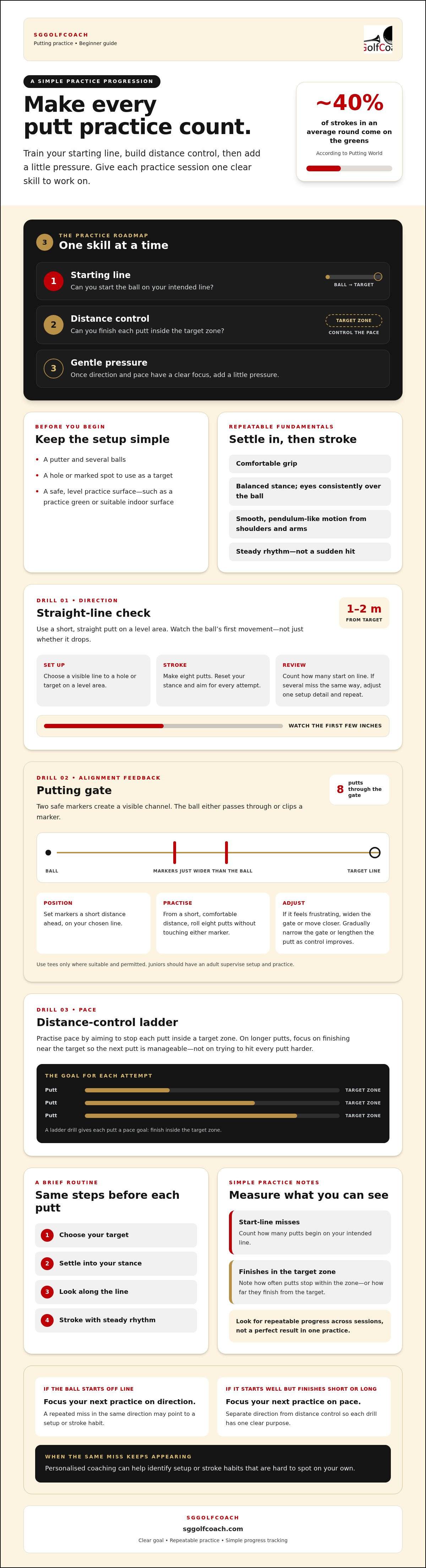
Start by training your starting line, then work on distance control, and finally add a little pressure. This guide covers approachable drills for each step, along with a routine you can repeat. You’ll learn how to check alignment, develop more reliable pace, and build confidence over short putts, without expecting every long putt to drop.
Table of Contents
Putting Drills for Beginners: What to Practise First
Putting is the stroke used to roll the ball toward the hole once it’s on the green. Because the movement is controlled and repeatable, beginners can work on one part at a time: direction, distance control, or setup. Focusing on one skill makes it easier to see what’s happening instead of changing several things after every miss.
Beginner putting practice turns a vague attempt into one clear skill you can repeat and measure. To get started, you’ll need a putter, several balls, a target such as a hole or marked spot, and a safe, level practice surface. A practice green or suitable indoor surface can work. For a quick introduction to the club itself, see this overview of the Putter.
What should a beginner focus on when putting?
Begin with a comfortable grip, a balanced stance, and a consistent position for your eyes over the ball. There’s no single setup that suits every golfer, so aim for a position you can return to without strain. Let your shoulders and arms move the putter in a smooth, pendulum-like motion, with a steady rhythm rather than a sudden hit.
Use a brief routine before each putt: choose your target, settle into your stance, look along the line, then stroke. Repeating these steps helps you focus on the drill instead of rebuilding your setup each time.
How can you tell whether a putting drill is useful?
Give each drill one observable goal. For example, place a target a short distance away and check whether the ball starts on your intended line. Tally makes and misses, or note how far each ball finishes from the target. A simple record can reveal patterns that are easy to miss when you rely on feel alone.
Look for repeatable progress across sessions, not a perfect result in one practice. If the ball repeatedly starts off line, focus on direction. If it starts well but finishes too far away or short, work on pace. Separating these skills gives each of the putting drills for beginners a clear purpose and helps you choose what to practise next.
Start-Line Putting Drills to Improve Aim and Alignment
A putt can start on the wrong line even if it finishes near the hole. Start-line practice helps you separate the ball’s initial direction from the effects of pace and the green’s slope. Keiser University College of Golf also highlights starting the putt on line among its putting improvement pillars.
Starting direction shows where the ball begins; its final resting place shows what happened along the way. Begin on a level section of practice green, or another safe surface, and use a short, straight putt so the ball’s first movement is easy to see.
How do you practise a straight putting stroke?
Choose a visible line toward a hole or small target. From a short distance, make a controlled stroke and watch the ball’s first few inches. Repeat the same putt before making adjustments. This makes it easier to notice whether your setup or stroke is influencing the starting line.
Set up: Place a ball about one to two metres from a hole or visible target on a level area. Pick a clear line between the ball and target.
Stroke: Make eight putts, resetting your stance and aim each time. Watch the ball’s initial direction rather than judging only whether it drops.
Review: Count how many start on line. If several miss in the same direction, adjust one setup detail, such as your foot position, then repeat the set.
How does a putting gate drill work?
A gate gives immediate feedback: the ball either passes between the markers or clips one. Use two tees only where suitable and permitted, or choose other safe markers. For juniors, have an adult supervise the setup and practice.
Set up: Place the markers just wider than the ball on your chosen target line, a short distance ahead of it.
Stroke: From a short, comfortable distance, roll eight putts through the gate without touching either marker.
Adjust: If the task becomes frustrating, widen the gate or move the ball closer. Narrow the gate or lengthen the putt gradually as your control improves.
Keep the goal simple: guide the ball through the gate, not force a perfect stroke. These putting drills for beginners make aim easier to assess because each attempt has a visible result. If you’d value an experienced eye on a persistent alignment habit, explore personalised golf coaching.
Distance-Control Putting Drills for Better Pace
Pace control means choosing a stroke that sends the ball an appropriate distance, not simply trying to hit every putt harder. On longer putts, practise finishing near the target so the next putt is manageable. The PGA’s collection of best putting drills includes exercises for reliable putting fundamentals. A measured ladder drill is a straightforward way to focus specifically on pace.
How can beginners practise lag putting?
Pick a longer putt and define a broad stopping zone around or just beyond the hole. Your goal is to finish inside that area, not to make every attempt. Vary your starting point, but keep the target and pre-putt routine consistent. Let the stroke grow gradually with the distance while maintaining a comfortable tempo and balanced finish.
Record each putt as short, long, or inside your chosen zone. This simple note helps you see whether your pace is becoming more reliable.
What is a putting ladder drill?
A ladder builds distance awareness by moving your starting point farther from one target. Choose distances that suit the practice surface, such as 3, 6, and 9 metres, and use the same stopping zone for each ball. The challenge is to adapt your stroke length without rushing or changing your routine.
Mark the zone: Choose a target and define a generous area around it where a putt can finish safely. Use existing green markings where possible, or place suitable markers clear of other players’ lines.
Set the ladder: Place four balls at progressively increasing distances from the target. Keep them on a similar line so you can compare pace.
Roll the balls: Putt each ball in order, taking time to reset before the next stroke. Aim to stop each one inside the zone.
Check your result: Count how many finish in the zone, then repeat the ladder. A clear success condition could be getting at least three of four balls inside it.
If longer attempts consistently finish short, lengthen the stroke slightly while preserving its rhythm. If balls run past the zone, reduce the stroke length rather than stabbing at the ball. These putting drills for beginners make pace something you can observe and adjust, one distance at a time.
Build a Beginner Putting Routine and Add Gentle Pressure
A simple routine turns individual drills into practice you can repeat with purpose. Keep the order consistent: settle into your setup, check your start line, work on pace, then finish with a short-putt challenge. You don’t need a long session. Choose a manageable number of attempts and track one or two measures, such as how often putts start on line and finish inside your target zone.
How often should a beginner practise putting?
Choose a practice rhythm that fits your schedule and lets you stay attentive. Regular, manageable sessions make it easier to compare results than an occasional marathon. Repeat the same routine and record your chosen measures each time. If your focus or stroke quality starts to fade, take a break or finish for the day.
How can you make putting practice feel like the course?
Add gentle pressure once the basic tasks feel comfortable. For example, choose a short putt and restart the challenge if you miss. Keep the consequence light: the aim is to practise focus, not turn every session into a test. As confidence grows, vary the target or starting distance while keeping your routine steady.
Try this sequence, adjusting the number of attempts to suit your available time and space:
Set up: Take a moment to choose a target and settle into your usual stance and grip.
Check direction: Roll a small set of putts toward a clear line, noting how many start where you intended.
Practise pace: Put balls from different distances toward a chosen finishing zone, and record whether each finishes short, long, or inside it.
Finish with a challenge: Make a set of short putts in succession. If you miss, restart or adjust the challenge so it remains encouraging and appropriate to your experience.
If you have only a short practice window, do a few putts for each step rather than rushing through a large number. In a compact, safe space, shorten the distances and use a clear target area. Preserve the sequence and keep your measures consistent. These putting drills for beginners are most useful when you can compare like with like, rather than changing your setup, target, and pace goal all at once.
For broader foundational instruction, explore beginner golf lessons and build your practice around clear, repeatable fundamentals.
When Putting Drills Need Personalised Coaching
Independent practice can show you a pattern, but it may not reveal its cause. Notice whether putts repeatedly start to one side, whether distance varies from a familiar spot, or whether your setup changes from attempt to attempt. Keep a brief note of what you observe. A recurring pattern is useful information, not a reason to overhaul your whole stroke.
What can a golf coach help a beginner improve?
A coach can observe how you aim, position yourself, and move the putter, then help you connect those habits to your practice goal. It can be difficult to notice your own alignment or movement while concentrating on the ball. Personalised feedback offers another perspective and can help you decide what to work on next, without assuming there’s one ideal putting style for everyone.
SgGolfCoach provides instruction for adults and juniors, including one-to-one, group, and bespoke coaching options. If you’re looking for broader foundations beyond putting, a beginner golf lessons guide can help you consider the instruction format that suits your learning needs.
Can indoor practice support putting development?
Indoor screen golf provides a controlled setting for golf practice. It can be an option when you want to practise indoors, though the experience may differ from working on a putting green. Check what a particular booking includes rather than assuming it provides specific putting analysis. An indoor golf guide can offer more detail about the practice experience.
Keep practising independently, and bring your notes if you decide to seek guidance. A record of repeated misses or variable pace gives a coach a clear starting point for discussing your setup, routine, and next steps. If you’d like individual feedback, consider professional coaching with SgGolfCoach. The aim is not a promised result, but a more informed, focused approach to practice.
Take Your Next Confident Step on the Green
Better putting starts with a clear focus, not a complicated routine. Use a short, straight putt to check your start line, then practise pace by aiming to finish inside a chosen zone. Keep your setup and routine consistent, and track a few results so you can spot patterns over time.
The most effective putting drills for beginners build one skill at a time, then add a gentle challenge when the basics feel comfortable. If the same miss keeps appearing or your pace remains difficult to judge, personalised feedback can help you understand what to work on next.
SgGolfCoach provides professional instruction for adults and juniors, with one-to-one, group, and bespoke coaching options. Indoor screen-golf experiences are also available as a practice setting. Explore professional golf coaching options and find guidance suited to your learning goals.
Stay patient, keep practice purposeful, and let each repeatable session build confidence over the ball.
Frequently Asked Questions
What are the best putting drills for beginners?
The best putting drills for beginners isolate one skill at a time. Start with a short, straight putt to check direction, then practise rolling balls into a chosen distance zone. A gate drill, using two markers slightly wider than the ball, also gives clear feedback on your start line. Once these feel comfortable, finish with a short-putt challenge to practise focus without making every attempt feel high stakes.
How can a beginner practise putting at home?
Practise at home on a flat, clear surface where a slowly rolling ball won’t hit people, pets, or fragile objects. A putting mat can provide a consistent target. On carpet, check how its texture affects the roll and focus on setup and stroke rhythm rather than comparing distances with a green. Use a cup or safe marker as a target, and collect each ball before repeating the same routine.
How often should beginners practise putting?
Choose a regular practice rhythm that fits your schedule and lets you stay focused, rather than forcing a fixed number of sessions. Repeat the same short routine so you can compare results, such as how often the ball starts on your chosen line or finishes in a target zone. If your concentration fades or your stroke becomes rushed, pause or end the session. Quality and consistency matter more than practising while tired.
How do I improve my putting accuracy as a beginner?
Improve accuracy by choosing a clear target and checking whether the ball starts on your intended line. Practise short, straight putts first, using a visible line or a gate made from two safe markers. Keep your stance and routine consistent, then make only one adjustment at a time if putts repeatedly start to one side. Track starting direction rather than judging success only by whether the ball drops, since a good line can still miss.
Why do I keep leaving putts short or hitting them too far?
Putts that finish short or long often point to pace that varies between strokes. Your stroke length, tempo, or setup may change from attempt to attempt, while slope and surface conditions can also affect how far the ball rolls. Practise from a few distances toward the same finishing zone. Record each result as short, long, or in the zone, then adjust stroke length gradually while keeping your rhythm comfortable.
Do beginners need a golf coach to improve putting?
No, beginners can build putting skills through focused independent practice. A coach may help if the same miss keeps appearing or you can’t identify why your pace varies. Feedback can draw attention to setup, alignment, and routine habits that are difficult to observe while putting. SgGolfCoach offers professional instruction for adults and juniors, including one-to-one, group, and bespoke coaching options, so learners can consider a format that fits their needs.
How long should a beginner putting practice session be?
There’s no single session length that suits every beginner. As a practical starting point, try 15 focused minutes: spend a few minutes on setup and start line, practise distance control, then finish with a short-putt challenge. Reduce the number of attempts if you have limited time, but keep the sequence clear. Take a break or stop when focus and stroke quality decline, rather than extending practice just to complete more putts.
Explore SgGolfCoach’s adult and junior coaching options for personalised guidance on your golf practice.


Comments