

Building Confidence in Your Golf Game: A Practical Guide

What if confidence on the golf course came less from perfect shots and more from knowing what to do after an imperfect one? A poor drive or missed putt can unsettle the rest of a round, but building confidence in your golf game isn’t about eliminating mistakes. It’s about having a steady process you can return to when doubt creeps in.
It’s frustrating when practice feels reliable but doesn’t translate to play. Pressure can make it harder to choose a shot and commit to it. Confidence grows through preparation and evidence of progress, not forced positivity. This guide will help you set realistic goals, develop a repeatable pre-shot routine, and practise in ways that better prepare you for the course.
You’ll also learn how to respond more calmly after a poor shot and track progress using controllable measures, such as following your routine or making a clear decision. Tailored instruction can help identify a manageable next step, while indoor screen-golf experiences offer another setting for purposeful practice. The aim isn’t flawless golf. It’s greater trust in your approach, one shot at a time.
Table of Contents
What Does Building Confidence in Your Golf Game Really Mean?
Golf confidence is trust in your preparation and your ability to commit to a chosen shot, while accepting that the result is never certain. It doesn’t promise that the ball will go where you intend, and it doesn’t require you to feel fearless before every swing. It means making a considered decision and carrying it out without needing certainty first.
That distinction matters because you can’t control every outcome in golf. You can choose a sensible target, make a familiar swing, and still miss. Confidence doesn’t erase uncertainty; it gives you a steadier way to meet it. You can feel prepared, notice some nerves, and still swing with a clear intention.
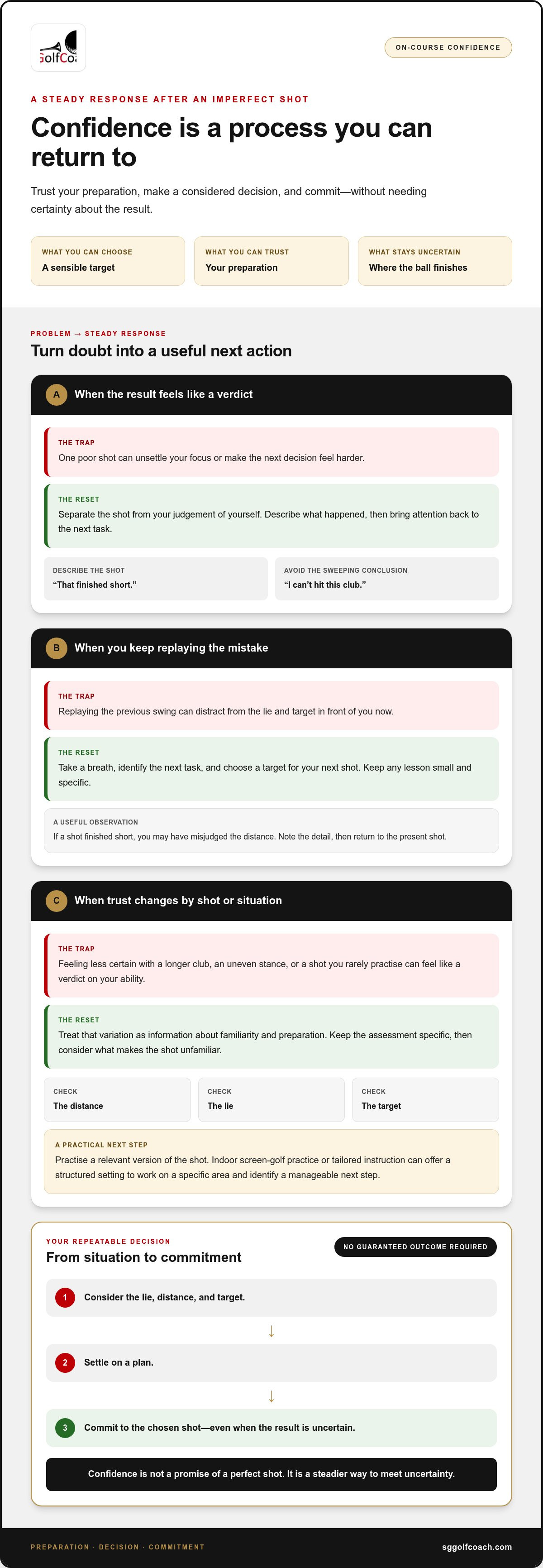
Confidence isn’t a fixed mood that has to stay high throughout a round. One poor shot can disrupt your focus or make the next decision feel more difficult. Instead of treating that reaction as proof that you’ve lost your ability, notice what happened and bring your attention back to the task ahead. Your feelings may shift, but you can still choose your next action.
How does confidence show up during a round?
Look for observable choices, not just a feeling of certainty. Consider the lie, distance, and target, then settle on a plan and commit to it. Reconsidering endlessly or changing targets at the last moment can make it harder to swing freely, even when your original choice was reasonable.
After a miss, separate the shot from your judgement of yourself. “That finished short” describes what happened. “I can’t hit this club” turns one result into a sweeping conclusion. To reset, take a breath, identify the next task, and choose a target for your next shot. You may still feel disappointed, but you don’t have to let that feeling make the decision for you.
Why confidence is specific to golf
Trust can vary by club and situation. You might feel comfortable with a short iron from a level lie but less certain with a longer club, an uneven stance, or a shot you rarely practise. That variation is useful information. It points to differences in familiarity and preparation, not a verdict on your potential.
If a particular approach shot feels uncomfortable, consider what makes it unfamiliar. Is it the distance, the lie, or uncertainty about the target? Practising a relevant version of the shot can help you make a more informed decision. Indoor screen-golf practice or tailored instruction can provide a structured setting to work on a specific area and identify a manageable next step.
Building confidence in your golf game begins with noticing where trust is already present and where experience is still developing. Low confidence around one shot doesn’t mean you lack ability. It may show that you need more relevant practice, clearer feedback, or time to become familiar with the situation. Keep the assessment specific. That makes progress easier to recognise without expecting every part of your game to feel equally assured.
Why Golf Confidence Changes Under Pressure
A shot can feel different when the result seems to matter. On the practice area, you may repeat a familiar movement without thinking about the score. During a round, a narrow target, an awkward lie, or the thought of protecting a good hole can draw your attention towards what might go wrong. That shift can make a well-practised shot feel less dependable, even though your underlying skill hasn’t suddenly disappeared.
Uncertainty is part of golf. You can’t fully control the lie, the strike, or where the ball finishes, and expectations can add another layer of pressure. If you demand a particular outcome, your attention may drift from the decision you can make to the result you can’t guarantee. Nerves may appear in that moment. They’re a response to perceived importance, not proof that you’re incapable of making the shot.
Golf confidence can change from shot to shot because each situation brings different uncertainty, expectations, and demands on your attention.
How self-talk and expectations affect decision-making
Absolute thoughts can turn one concern into a bigger judgement: “I always miss this shot” or “I can never get this right.” Such statements leave little room for a useful decision and can lead you to second-guess your plan. Notice the wording, then bring your focus back to something you can act on, such as choosing a clear target or identifying the intended ball flight.
This isn’t about replacing every doubt with forced optimism. Telling yourself “I’ll definitely hit it perfectly” doesn’t prepare you for the shot. A more grounded cue might be, “Pick the target, then make my normal swing.” It gives your attention a practical job and respects your preparation without demanding a guaranteed result.
Why a mistake can feel bigger than it is
After an error, replaying the swing can use up attention you need for the next decision. You might keep asking why the previous shot went wrong while overlooking the lie and target in front of you now. Learning from a mistake is useful, but a full technical review in the middle of a round can turn reflection into distraction.
Keep the lesson small and specific. If a shot finished short, one observation could be that you misjudged the distance. A global criticism such as “I’ve lost my swing” offers no clear next step. Note the practical detail, then return to the present shot. Building confidence in your golf game includes learning to distinguish feedback from self-criticism.
Practice can feel easier because the setting is familiar and each shot carries fewer immediate consequences. Make preparation more relevant by adding a simple decision before each practice shot: choose a target, settle on a club, and follow your usual routine instead of hitting automatically. This won’t remove uncertainty, but it lets you rehearse your choices as well as your swing.
If a recurring pressure point is difficult to untangle alone, tailored golf coaching can help clarify a manageable practice focus. The aim is supportive guidance and useful feedback, not a promise that nerves or imperfect shots will disappear.
Golf Confidence Myths That Can Hold Your Game Back
Some ideas about confidence sound motivating but create an impossible standard. If you believe you must feel calm, swing perfectly, or post a low score before you can trust your game, confidence becomes something you’re always waiting to earn. A more useful approach is to question these assumptions and look for signs of progress you can influence.
Healthy confidence trusts your preparation while accepting uncertainty; unrealistic certainty expects the shot to go exactly as planned. That difference leaves room to learn, adapt, and keep making considered decisions, even when a round includes mistakes.
Myth: confidence means never doubting yourself
Doubt can show up before a shot without deciding what happens next. You might wonder whether you’ve chosen the right club or feel nervous over a demanding target. The aim isn’t to force those thoughts away or treat ordinary nerves as a flaw. Acknowledge the feeling, take a breath, and bring your attention back to the shot in front of you.
Try a short reset: “I’m feeling unsure. What’s my target?” Naming the feeling can help keep it from becoming a judgement about your whole game. Then make a clear choice and follow your routine. Confidence is reflected in the action you take, not in whether your mind stays perfectly quiet.
Myth: confidence comes from waiting for a perfect swing
Waiting until your swing feels flawless can keep progress out of reach. Golfers develop through observation, practice, and adjustment, not by reaching a point where every shot feels effortless. A useful practice goal might be to finish in balance or maintain a smooth tempo with a selected club. These are specific cues you can work on without demanding a perfect result every time.
After practice, note what you were working on and whether you gave that cue your attention. If something felt inconsistent, treat it as information for your next session, not evidence that you’re incapable. Building confidence in your golf game is easier to sustain when your standard is purposeful effort and learning, rather than perfection.
Myth: confidence only comes from lower scores
Scores matter, but they can vary for reasons beyond one swing or one decision. A single strong round may feel encouraging, but it doesn’t automatically establish lasting trust. Likewise, a higher score doesn’t erase every sound choice you made. Track process measures alongside results so you can recognise actions within your control.
Did you choose a clear target before the shot?
Did you use your routine rather than rush?
After a mistake, did you return your attention to the next decision?
These observations don’t replace scoring or guarantee lower results. They help you see whether your preparation and decisions are becoming more consistent, even when the day’s score doesn’t reflect every effort. Over time, that evidence can give confidence a firmer foundation than one unusually good round.
How to Build Confidence in Your Golf Game Step by Step
Confidence becomes more dependable when practice gives you clear evidence to draw on. Rather than trying to change your whole game at once, use a simple cycle: choose one controllable goal, practise it with intention, reflect on what happened, and adjust your next session. The goal isn’t to guarantee a result. It’s to make your preparation more focused and your decisions easier to trust.
Build confidence through purposeful practice
Pick one manageable skill or situation, such as making a balanced finish with a particular club or choosing a target before each shot. Start with focused repetitions so you can give attention to the cue. As it becomes familiar, vary the target or shot situation. This helps you practise adapting instead of relying only on repetition from one setup.
Afterward, record what you attempted and learned, not just which shots worked. For example, note whether you kept to your chosen tempo or found that a certain situation needs more practice. A coach’s observation can help identify a useful next step. Tailored instruction offers structured feedback without promising a particular score.
Use a routine before and after each shot
Keep your pre-shot routine simple: choose a target, make a clear decision about the shot, then commit to that plan. Repeat the same sequence often enough that you know what comes next, while letting the club and target change with the situation.
After a difficult shot, pause briefly. Notice your reaction without replaying the swing, then take one useful observation if there is one. A slow breath or a short phrase such as “next shot” can mark the reset. Shift your attention to the lie, target, and decision in front of you. This gives frustration room to settle without letting it take over your next choice.
Use this sequence to make building confidence in your golf game a practical part of your routine:
Set a process goal. Choose one action within your control, such as selecting a target before every shot.
Practise with purpose. Begin with focused repetitions, then add variation when the cue feels familiar.
Reflect on evidence. Record what you tried, what you noticed, and where you stayed committed to your plan.
Adjust one thing. Use your observations to choose a realistic focus for the next practice session.
Consistency matters more than complexity. Keep the goal manageable, review it honestly, and refine it as your needs change. To work on a personalised practice focus with professional guidance, book tailored golf coaching.
Turn Golf Confidence Into a Sustainable Coaching and Practice Plan
Confidence is easier to sustain when your practice has direction. If the same shot keeps creating uncertainty, or you’re unsure what to work on next, an outside observation can help distinguish a useful practice priority from the vague feeling that your whole game needs fixing. A coach can help identify a manageable learning goal and shape practice around it, without promising instant confidence or lower scores.
When can golf coaching support confidence?
Structured feedback can make a challenge more specific. Instead of repeatedly wondering why a shot feels uncomfortable, work with a coach to identify an aspect of the shot to practise and decide how to approach it. One-to-one instruction offers focused guidance, while group classes provide a shared learning environment. Either can support progress in a way that suits your preferences and current needs.
If you’re still building your fundamentals, a beginner golf lessons guide can help you understand how structured instruction fits into learning the game. Treat coaching as a source of feedback and direction, not as a quick fix for nerves or a guarantee of particular results.
Create a confidence plan you can maintain
Keep the next stage of learning simple: select one practice focus and one process measure. For example, work on a shot that often feels unfamiliar and track whether you complete your preparation before each attempt. The focus gives practice a clear purpose. The measure helps you notice whether you’re following through on the action you chose, regardless of where every ball finishes.
Review the plan from time to time. If the skill becomes more familiar, adjust the practice task to introduce a new challenge. If your circumstances change or a different uncertainty appears, choose a revised focus. A plan should guide your development, not become another standard you feel pressured to meet perfectly.
Personalised instruction can help make these choices more considered. SgGolfCoach provides tailored golf instruction for adults and juniors, with one-to-one coaching and group options. A coach can observe your current approach, discuss what you want to work on, and help shape a practical next step. That support can make practice more purposeful while leaving room for confidence to develop at its own pace.
If guided feedback would help you build a more focused plan, explore professional golf coaching guidance and consider SgGolfCoach’s tailored instruction. A thoughtful plan won’t remove every uncertain moment, but it can give you a clearer direction for learning and a steadier basis for building confidence in your golf game.
Take Your Next Step with Steady Confidence
The next time you practise, choose one useful, achievable intention. Let it guide your attention, then give yourself credit for following through, whatever the ball does. Confidence can grow through these small acts of trust, repeated over time, rather than waiting for a perfect round to feel ready.
If you’d value guidance in shaping that next step, SgGolfCoach offers professional instruction for adult and junior golfers, with tailored one-to-one and group lesson options, as well as indoor screen-golf experiences. Each provides a setting to work on your game with support, without expecting confidence to arrive all at once.
Take a considered step towards building confidence in your golf game. Explore tailored golf coaching and take your next step with confidence. Keep learning at your own pace, stay curious about your progress, and use each purposeful practice session to approach the next shot with greater clarity.
Frequently Asked Questions
How can I build confidence in my golf game?
Build confidence by collecting evidence that you can prepare and make decisions, even when a shot feels challenging. Choose one situation that regularly unsettles you, such as a first tee shot, and practise approaching it deliberately. After a round, write down one decision you handled well and one area to work on. This keeps building confidence in your golf game grounded in real experiences rather than relying on a single score.
Can you play golf well if you feel nervous?
Yes, feeling nervous doesn’t automatically prevent you from playing well. You can feel tension and still make a useful choice, such as taking an extra moment to assess the lie before selecting a shot. If nerves make you rush, use a simple physical cue, such as loosening your grip between shots, to slow your pace. The aim isn’t to eliminate every anxious feeling, but to avoid letting it make decisions for you.
Why do I lose confidence after one bad golf shot?
A poor shot can feel like a warning about what might happen next, especially if you’re worried about repeating it. That concern can draw attention away from new information, such as the current lie or the safest target. Before the next shot, describe what happened in neutral terms, then ask what this situation requires now. Separating the previous result from the next task helps keep one mistake from defining the rest of your round.
How do I stop overthinking before a golf shot?
Reduce the number of decisions you make at the ball. Before stepping into your stance, settle on the club and intended landing area, then use one simple cue, such as “smooth tempo.” If you catch yourself adding extra swing thoughts, step back and restart rather than addressing the ball while uncertain. This creates a clear boundary between planning the shot and carrying it out, without requiring you to empty your mind completely.
Does practising more make you more confident at golf?
More practice can help when it has a clear purpose, but repeating shots without attention may not address the uncertainty you feel on the course. For example, if uneven lies cause hesitation, include practice from different stances rather than only hitting from a level surface. Pause occasionally to note what changed and what still feels unfamiliar. Useful practice builds experience you can draw on, though confidence and scores can develop at different paces.
What is a good pre-shot routine for golf confidence?
A helpful routine is short enough to repeat without feeling mechanical. Stand behind the ball to choose your target and picture the shot, then step in, set your feet, and take one comfortable look at the target before swinging. Keep the sequence consistent, but let the shot choice respond to the conditions. Rehearsing this routine during practice can make it easier to follow on the course when your attention is divided.
Can golf lessons help build confidence?
Golf lessons can help by giving you an informed perspective on a skill or decision that feels uncertain. Rather than trying to change several parts of your game at once, an instructor can help focus learning on a manageable area. SgGolfCoach offers professional instruction for adults and juniors, with tailored one-to-one and group lesson options. Lessons provide guidance and feedback, but they don’t guarantee a particular score or remove nerves from every round.


Comments