

First Time Playing Golf: A Beginner’s Guide (2026)

What if your first golf round is successful even when the scorecard isn’t? Playing on a golf course for the first time can feel daunting when you’re unsure what to bring, when to take your shot, or whether you’re holding up the group. Those concerns are understandable, but a smooth first round isn’t about playing perfectly. It’s about arriving ready, keeping a considerate rhythm, and enjoying the experience.
This beginner’s guide will help you feel more at ease from the first tee to the final green. You’ll learn what to prepare, how a round typically flows, and the simple etiquette that helps everyone play comfortably. You’ll also see how to respond when a shot goes off course, without letting one mistake define your day.
Take it one shot at a time. With a little preparation and realistic expectations, your first round can be a rewarding introduction to golf and a chance to build confidence as you go. If you’d like extra support, professional beginner coaching can help you practise foundational skills at your own pace.
Table of Contents
Playing on a golf course for the first time: what to expect
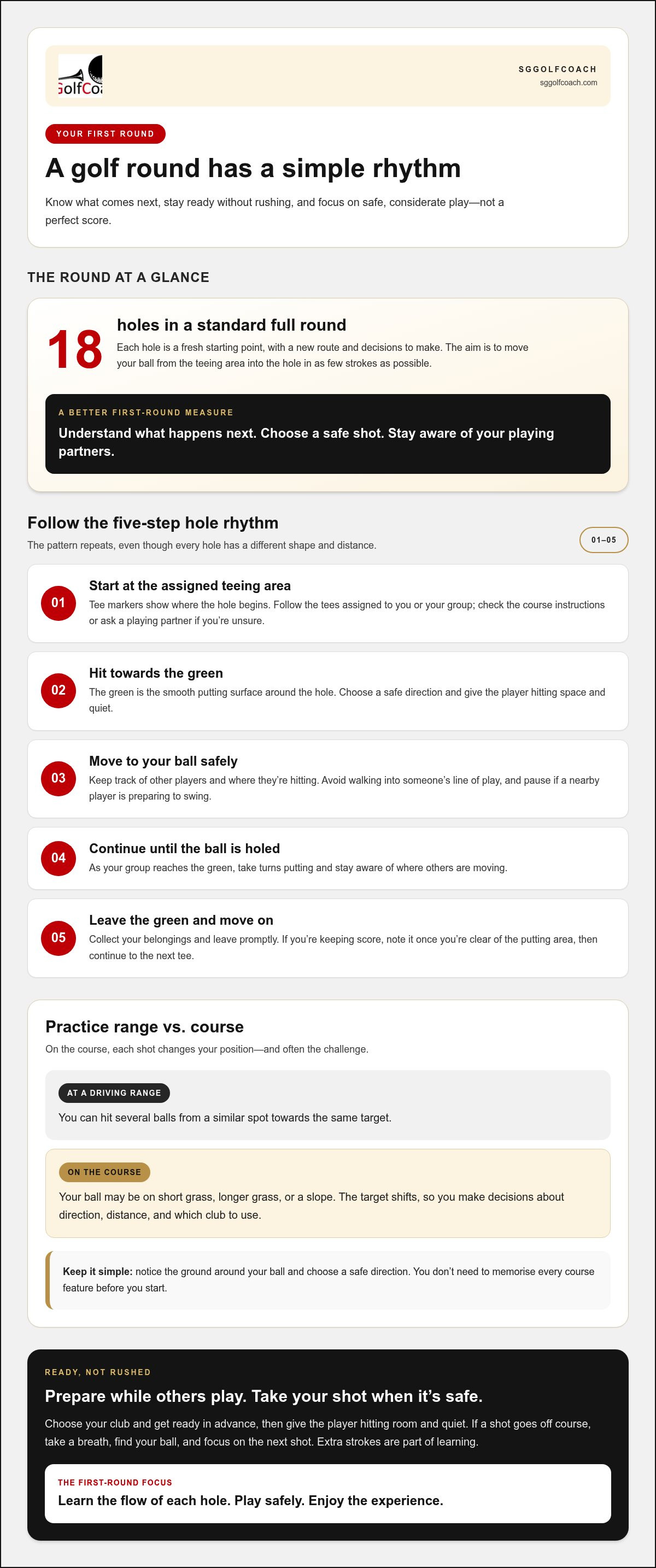
Playing on a golf course for the first time is a chance to discover how the game works beyond a practice area, not a test of your golfing ability. The basic aim is straightforward: move your ball from the teeing area into the hole in as few strokes as possible. A standard full round usually has 18 holes. Each one gives you a fresh starting point and a new set of decisions.
You don’t need a low score to have a worthwhile day. As a beginner, measure progress by whether you understand what happens next, choose a safe shot, and stay aware of the people playing with you. Some shots will go where you intended; others won’t. That’s part of learning to play on real ground.
What makes course play different from practice?
At a driving range, you can hit several balls from a similar spot towards the same target. On a course, each shot changes your position and often the challenge. Your ball may rest on short grass, longer grass, or a slope, while the next target shifts farther ahead. You’ll make decisions about direction, distance, and which club to use instead of repeating one swing.
Each hole has a teeing area where play begins, a route towards the green, and a hole in the green for the ball to finish in. The route commonly includes a fairway, while bunkers and water or other marked hazards may affect where you aim. For a helpful overview of golf course components and layout, see how these features fit together. You don’t need to memorise every detail before you start. Notice the ground around your ball and choose a safe direction to play.
Set a comfortable goal for your first round
Choose a goal that rewards learning rather than scoring. Try to follow the sequence of each hole, notice how the course changes from tee to green, and enjoy being outdoors with your playing partners. If you mishit, take a breath, find your ball, and focus on the next shot. Extra strokes are normal when you’re still learning how contact, distance, and direction come together.
Success can be practical: stay alert to nearby players, be ready when it’s safe to play, and treat the course with care. You could also pick one detail to observe, such as how the ball behaves on the green or how a slope affects its lie. Small observations make the round easier to understand without adding pressure to fix every part of your game at once.
On your first round, prioritise safe, considerate play and learning the flow of each hole, not achieving a particular score. That mindset gives you room to enjoy the experience and build confidence one decision at a time.
How a golf course round unfolds, from the first tee to the final hole
Playing on a golf course for the first time feels more manageable when you know the broad rhythm: arrive, get organised, begin at the tee, follow the ball towards the green, then move on to the next hole. You don’t need to memorise every rule before you start. Pay attention to your group’s routine and take each stage as it comes.
From arrival and warm-up to the first tee
Give yourself enough time to check in, organise your clubs and balls, and get oriented without rushing. A light warm-up and a few simple practice swings can help you feel ready; there’s no need for a long routine. Before heading to the teeing area, make sure your group is together and prepared so you can begin smoothly when it’s time to play.
The usual sequence for playing a hole is simple:
Start from the assigned teeing area.
Hit your ball towards the green.
Move to your ball safely and take the next shot.
Continue until the ball is in the hole.
Leave the green and move to the next tee.
Tee markers show where a hole begins. Use the tees assigned to you or your group rather than choosing a set based only on what looks easiest. If you’re unsure which markers apply, follow the course’s instructions or check with a playing partner before anyone tees off. Your group can agree on the order of play. Be ready when it’s your turn, then give the player hitting space and quiet.
Follow the ball from fairway to green
After each shot, move towards your ball while keeping track of where other players are and where they’re hitting. Avoid walking into someone’s line of play, and pause if a player nearby is preparing to swing. The green is the smooth putting surface around the hole, your target for finishing the hole. As your group reaches it, take turns putting and stay aware of where others are moving.
When your ball is in the hole, collect your belongings, leave the green promptly, and continue to the next tee. If you’re keeping score, note it once you’re clear of the putting area rather than holding up the group. The pattern repeats, even though each hole has a different shape and distance. If you lose track of what comes next, watch the player ahead and follow your group’s lead.
If you’d like to feel more prepared before heading out, beginner golf lessons can help you practise foundational skills and become familiar with the game’s basic rhythm.
Golf course etiquette and pace: play considerately without feeling rushed
Good pace isn’t the same as rushing. You don’t need to hit perfect shots or hurry through every decision. Considerate habits help the group keep moving while giving everyone time to play safely. If you’re playing on a golf course for the first time, focus on being prepared for your turn, staying aware of the people around you, and following the course’s instructions.
Each group has its own rhythm, and course guidance takes priority. Listen to your playing partners, especially if they explain a local process or suggest how to handle a delay. You can ask a quick question when there’s a natural pause. A little communication is better than guessing and creating confusion.
Simple habits that keep play moving
Once you’ve played your shot, walk towards your ball at a steady pace while staying alert to other golfers. As you move, you can decide which club you may need and get it ready, provided you’re not distracting someone or entering an unsafe area. Keep items such as your glove and headcover together, and check that you haven’t left anything behind when you move on.
Be ready to play when it’s your turn, without rushing your setup.
Keep your clubs and personal items organised so you can move on easily.
If a hole is taking longer than expected, follow the group’s or course’s guidance on whether to pick up or adjust play.
“Ready golf” means being prepared to play when it’s safe and appropriate, rather than waiting passively for every other player to finish. It doesn’t mean hitting while someone else is in danger or interrupting their shot. If you’re unsure, pause and let the group guide you.
Safety and courtesy around other golfers
Give the person playing plenty of space. Stay still and quiet while they prepare and swing, and don’t walk across their line of play, the path between their ball and target. Before you hit, look ahead and make sure people are safely out of the area where your ball could travel. If you can’t tell whether it’s clear, wait.
After your shot, check where your playing partners are before moving. A ball can travel in an unexpected direction, so stay alert even when you’re not the one hitting. If a shot goes astray, acknowledge it calmly and follow the group’s guidance on what to do next. There’s no need to apologise at length or let a mistake disrupt the round. Reset, take the next sensible step, and allow others to continue.
Consideration is simple: prepare while there’s time, stay safe while others play, and move along when your group is ready. That balance helps you contribute to a comfortable pace without feeling pressured to rush your swing.
First golf course round checklist: prepare your equipment and arrival
A short checklist can make playing on a golf course for the first time feel much less daunting. You don’t need specialised gear or a perfect setup. Focus on having the basics ready, dressing comfortably, and understanding the venue’s instructions before you leave.
What should a beginner bring?
Start with the essentials you’ll use during play. A functional set is enough to get started; premium or highly specialised equipment isn’t necessary for a first round. If you’re unsure about the basics of grip, stance, or making contact, a beginner golf lessons guide can help you understand what to practise before you play.
Golf clubs: Bring the clubs you have available and can use comfortably.
Golf balls and tees: Pack several balls and enough tees to start each hole.
Comfortable clothing: Choose clothes that let you move freely, along with suitable footwear for walking and swinging.
Weather-appropriate layers: Bring a light layer or rain protection if the forecast suggests changing conditions.
Water and personal essentials: Carry water and any items you normally need when spending time outdoors.
Keep your essentials together in your golf bag or another practical carry option, so you can find them without rummaging before each shot. Optional extras can stay optional. If you’re new to the game, a manageable kit is easier to organise than a bag full of equipment you haven’t learned to use.
Plan your timing and course requirements
Before travelling, review the course’s booking, dress, arrival, and play instructions. Requirements can vary between venues, so don’t assume that one course follows the same process as another. Confirm your booking details, note where the venue asks you to check in, and allow enough time to arrive and get organised calmly.
Check the forecast before setting out and adjust your clothing and water accordingly. If you’re travelling with others, agree who is bringing shared items such as extra balls or tees, so you don’t end up with avoidable gaps or duplicates. Keep any booking information easy to access, and follow the venue’s directions when you arrive.
Access requirements can also differ, so read the course’s guidance rather than relying on assumptions about handicaps or certificates. For a separate explanation of that subject, see this PC and golf handicap guide.
Preparation can also include building familiarity with the basic skills. If you’d like guided support, explore beginner golf coaching to practise foundational techniques at your own pace.
Build confidence after your first round and choose your next step
Your first round gives you useful information about what to work on next. Before the details fade, take a few minutes to remember what felt comfortable, what surprised you, and which moments left you unsure. You don’t need to analyse every shot or judge the day by your score. A simple reflection turns the experience into a practical starting point for your next session.
Turn first-round surprises into a simple practice plan
Choose one or two skills to focus on, rather than trying to change everything at once. If making contact felt inconsistent, start with basic contact and a balanced setup. If you felt less certain near the green, practise short shots and putting. These foundational skills come up throughout a round, so becoming more familiar with them can make the game feel easier to follow.
Track confidence and consistency alongside your score. You might note whether you felt comfortable choosing a club, whether a short putt felt less intimidating by the end, or whether you remembered to prepare before your turn. These observations show progress that a scorecard alone may not capture. If you’d like to think more about decisions during play, explore this golf course management guidance as a further learning resource.
Keep the practice plan clear and manageable. For example, spend a session working on contact first, then devote another practice to short shots and putting. Adjust your focus as you see what feels more natural. The aim isn’t to perfect every technique before returning to the course; it’s to build familiarity one step at a time.
When coaching can make the next round feel easier
Professional feedback can help you understand which fundamentals to prioritise and how to practise them with purpose. Rather than guessing at several swing changes, you can work on a clear foundation at a pace that suits your experience. Tailored instruction is available in individual and group sessions, giving beginners different ways to learn and practise.
For someone playing on a golf course for the first time, coaching can also provide space to ask basic questions and develop comfort with the skills used during a round. Progress is personal, so focus on building understanding and confidence rather than expecting a particular score or a quick transformation. Each practice session can help you feel more prepared for the next opportunity to play.
If you’d like guidance as you build your fundamentals, explore beginner-friendly golf coaching. It’s an optional next step, whether you’re preparing for a first round or reflecting on what you’d like to practise afterwards.
Carry one new lesson into your next round
Your first outing doesn’t need to settle what kind of golfer you’ll become. Treat it as the start of a continuing practice: choose one thing you’d like to feel more comfortable doing, then give yourself time to work on it. Playing on a golf course for the first time can open the door to a rewarding routine built around curiosity, steady progress, and enjoying the game with others.
SgGolfCoach provides professional instruction for players of all levels, with tailored adult and junior lessons in one-to-one and group formats. Indoor screen-golf experiences also offer a setting for practice and social play.
Explore beginner-friendly golf coaching and take a supportive next step at a pace that feels right for you. Every round offers another opportunity to learn, settle in, and enjoy the game a little more.
Frequently Asked Questions
Is it okay to play on a golf course as a complete beginner?
Yes. Playing on a golf course for the first time is possible without a polished swing or a low score. Start by learning how to stay safe around other players and follow the venue’s instructions. Before you book, review its access and playing requirements, since these can vary. If you’d feel more comfortable with some preparation, a beginner lesson or practice session can help you get familiar with the basics.
Can I play golf without an official handicap?
It depends on the course and the type of access or booking. Some venues may have proficiency or handicap conditions, so read the relevant guidance before making plans. A handicap represents playing ability; it isn’t a measure of whether you’re allowed to learn golf. If you don’t have one yet, focus on understanding the course’s requirements and what your first outing will involve.
How long does it take to play a round of golf?
There isn’t one fixed duration. The time depends on factors such as the number of holes, group size, course layout, and how busy play is. A full round takes considerably longer than a brief practice session, so avoid arranging a tight appointment immediately afterwards. Review the course’s guidance on expected pace, then plan your arrival and other commitments with enough flexibility.
What should I wear for my first golf course visit?
Check the course’s dress guidance before choosing what to wear, as expectations can differ between venues. Select comfortable clothing that allows you to bend and swing freely, and footwear suited to walking and standing. If the forecast suggests changing conditions, bring a light extra layer. Following the venue’s own instructions is the simplest way to arrive appropriately dressed without guessing at a universal dress code.
Do I need a full set of golf clubs for my first round?
No, a full set isn’t essential for learning the basics, though the clubs you need depend on the course and how you’ll play. Avoid buying equipment simply because you assume every golfer needs a complete set from day one. Review what the venue permits or provides, then focus on becoming familiar with a few useful clubs. Comfort and confidence with your equipment matter more than owning specialised gear.
What happens if I lose a golf ball during my first round?
Stay calm; losing a ball can happen, especially while you’re learning to judge direction and distance. Look for it only while it’s safe and without delaying play. Your group can guide you on whether to continue and how to proceed under the applicable rules and course instructions. Carrying spare balls can make the situation less stressful. There’s no need to feel embarrassed; simply follow the group’s lead and continue.


Comments