

Overcoming Golf Performance Anxiety: A Practical Guide to Playing with Confidence

What if a committed swing didn’t depend on feeling completely calm? You’re over the ball, the consequences of a poor shot start to crowd your thoughts, and your usual rhythm slips away. Overcoming golf performance anxiety isn’t about forcing nerves to disappear. It’s about recognising how pressure affects your focus and having a reliable way to return your attention to the shot in front of you.
If nerves disrupt your concentration or leave you hesitating over decisions, you’re not alone. Practice doesn’t always translate to the course: pressure can change how you approach a familiar shot, even when you have the skills to play it. The aim isn’t to demand perfection from yourself. It’s to build a routine you can trust when the moment feels important.
This guide will help you identify your pressure triggers, use a simple reset and pre-shot routine, and practise making decisions with greater intention. You’ll also learn how structured practice, including screen-golf sessions, can help you rehearse your approach. The goal is steady progress: playing with nerves when they show up, rather than waiting for them to vanish.
Table of Contents
What Golf Performance Anxiety Feels Like, and Why It Appears
Golf performance anxiety is a pressure response: thoughts, emotions and physical changes that can interfere with the shot you intend to play. It may show up as a rushed club choice, a tighter grip, shallow breathing, or attention fixed on the score instead of the target. These reactions can occur together or separately. They don’t automatically mean anything is wrong with your technique or ability.
Pressure triggers differ from one golfer to another. A score expectation, an unfamiliar shot, waiting while others watch, or fear of being judged can all make a moment feel more consequential. Ordinary nerves may sharpen alertness while still allowing you to follow your routine. If tension repeatedly interrupts your decisions or becomes persistent distress beyond an occasional pressured shot, take that experience seriously without trying to label or diagnose it yourself. The sports concept of choking under pressure is explored in this overview of pressure-related performance changes. Golf’s yips are not simply another name for anxiety: they can involve involuntary movement difficulties, and pressure may be one factor rather than a complete explanation.
How can you tell nerves are affecting your golf?
Notice what changes from your usual approach. Is your breathing shallow, your grip tighter, your tempo quicker, or your decision-making less settled? Some alertness before a shot is normal. A more useful signal is tension that repeatedly pulls you away from the routine you intended to follow.
After a round, make a brief, neutral note of the situation, the thought that came up, and what you noticed in your body or decisions. For example: “Approach over water, worried about the score, rushed the target choice.” Look for patterns, not faults. This simple record can help you understand your pressure response with less self-criticism.
Why can a good range session feel different from the course?
On the range, you may hit several balls in succession, with little consequence attached to each attempt. On the course, you choose a target, wait, account for hazards or the score, and commit to a single shot while others may be watching. Those conditions can change how much pressure you perceive, even when the swing itself is familiar.
That contrast doesn’t mean anxiety explains every inconsistent result. A technical issue, a difficult lie, or a poor decision can also affect a shot. Recognising the context helps you identify what to practise. This awareness is a practical starting point for overcoming golf performance anxiety: understand what shifts under pressure before deciding how to respond.
How to Calm Golf Nerves Before and During a Shot
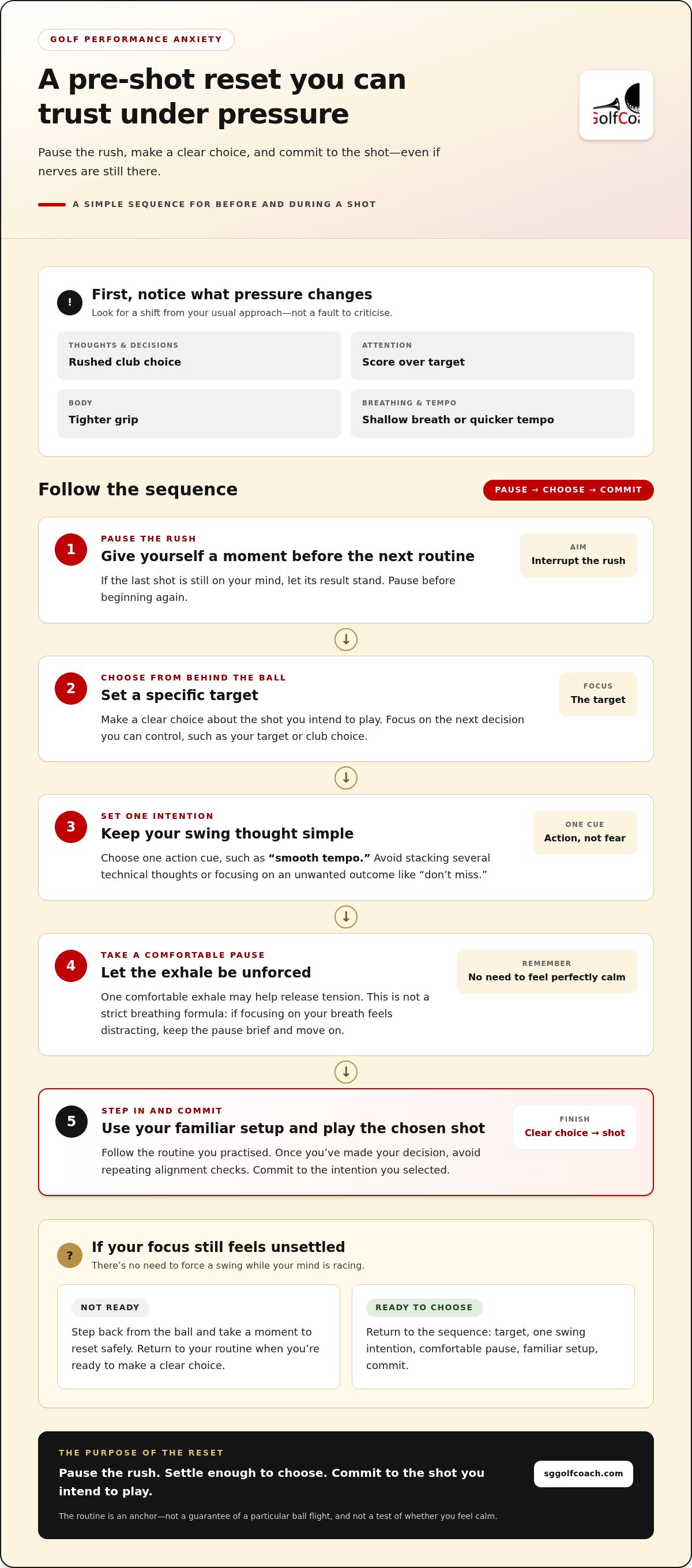
A useful reset gives your attention somewhere steady to go. It doesn’t need to make you feel perfectly calm, and it can’t guarantee a particular ball flight. Its purpose is simpler: pause the rush, settle enough to choose, then commit to the shot you’ve selected.
Pause, lengthen your exhale, choose a clear target, and commit to your shot. Treat this as a flexible sequence, not a strict breathing formula. One comfortable, unforced exhale may help you release tension. If focusing on your breathing feels distracting, keep the pause brief and move on. The best reset is one you can repeat without turning it into another test of performance.
What should a simple pre-shot routine include?
Start behind the ball and choose a specific target. Next, settle on one swing intention, such as a smooth tempo, rather than stacking several technical thoughts. Take a comfortable breath or pause, then step in and use your familiar setup. Keep the sequence concise, and avoid repeating alignment checks after you’ve made your decision.
Practise the routine when you feel settled so it’s familiar when pressure rises. It should be personal and consistent, but brief enough to respect the pace of play. The PGA shares useful ways to practice playing under pressure, including bringing a deliberate process to challenging situations.
What can you do when anxiety spikes mid-round?
If a previous shot is still occupying your mind, pause before starting the next routine. Let the last result stand, then identify the next decision you can control: your target, club choice, or intended tempo. A neutral cue such as “smooth tempo” can direct attention to the action, while “don’t miss” keeps it fixed on an unwanted outcome.
If your focus still feels unsettled, step back from the ball and take a moment to reset safely before beginning again. There’s no need to force a swing while your mind is racing. Return to your routine once you’re ready to make a clear choice.
With practice, this sequence can become a dependable anchor for overcoming golf performance anxiety, even when nerves remain. Structured golf instruction can help you rehearse shot choices and routines; tailored golf coaching can provide a practical setting to work on skills you can carry into play.
Does Golf Performance Anxiety Mean You Lack Confidence?
No. Feeling nervous before a demanding shot doesn’t prove you lack talent, preparation, or confidence. A golfer can know their game, trust their practice, and still feel tension when the outcome matters. Confidence doesn’t have to mean feeling calm or certain. It can mean trusting your next decision and following a familiar process while nerves are present.
That distinction matters. If you wait to feel completely comfortable before committing, nerves may start to feel like a signal that you’re not ready. Instead, notice them without treating them as a verdict on your ability. You can acknowledge the pressure, choose a clear target, and give your attention to the shot you intend to play. This is a practical foundation for overcoming golf performance anxiety, not a promise that every shot will go as planned.
Can you play well while feeling nervous?
Yes. The aim isn’t to erase every nervous feeling; it’s to make a deliberate choice despite it. Imagine noticing that your hands have tightened over the club. Pause, release some tension, settle on your target, and return your attention to your intended tempo. The shot may still feel important, but you’ve shifted from reacting to the nerves to following your plan.
A routine can support that shift, but it can’t guarantee a good result. A committed swing may still meet a difficult lie or an imperfect strike. Measure confidence by whether you made a considered decision and followed through on your process, not only by where the ball finished.
When is it more than ordinary competitive pressure?
Occasional nerves around a challenging shot are part of many golfers’ experience. Consider seeking support from a qualified mental-health or healthcare professional if anxiety feels overwhelming, repeatedly interferes with your enjoyment or participation, affects your daily wellbeing, or extends beyond golf. An article can offer general information, but it can’t assess or diagnose a mental-health concern.
Persistent involuntary movements during a swing or putting stroke may also deserve individual assessment. The term “yips” is used for certain movement difficulties in golf, but it shouldn’t be applied as a diagnosis based on a frustrating round or a missed putt. A golf instructor can help you work on technique, decisions, and structured practice. Golf coaching is distinct from clinical care and isn’t a substitute for it.
How to Practise Playing Under Pressure Without Overthinking
Pressure practice isn’t about forcing perfect shots. It’s rehearsal of controllable actions, such as choosing a target, following your routine, and committing to your intention, while the outcome remains uncertain. Build that skill gradually: first make your routine familiar, then add a meaningful target, and only then introduce a simple consequence that gives the attempt extra significance.
Start with a shot you can play comfortably. Before each ball, step back, choose a target, settle on one intention, and complete your routine. Once that feels familiar, change the target or club between shots so each attempt requires a fresh decision instead of another copy of the previous swing.
How can you make practice feel more like the course?
Give the practice a clear purpose without turning it into a test of your worth. Set a personal challenge, such as completing a planned number of committed routines, or choose a target and note whether you followed your process. If you add a consequence, keep it simple and constructive, such as repeating the routine after losing focus, rather than using a punitive penalty.
Track the process separately from the result. A shot can miss its target even when you made a sound decision and followed your routine. A brief note such as “target chosen, routine completed, missed left” helps distinguish execution from outcome without inviting a full swing analysis after every ball.
Indoor screen-golf practice is another way to rehearse decisions in a structured setting. Rather than hitting the same shot repeatedly, use each attempt to choose a target and carry out your routine. Tailored golf instruction can help you shape practice around your current skills and make those decisions more deliberate.
How can you stop overthinking after a poor shot?
Separate what happened from what you controlled. Ask yourself, “Did I choose a clear target and commit to my intention?” If the decision was sound, let the result stand. If you noticed one useful adjustment, such as allowing more time to settle, keep it simple. Avoid rebuilding your swing mid-round or carrying several technical thoughts into the next shot.
Then return to the next target. A short reflection is enough; the rest can wait until practice or a post-round review. Repeating this approach supports overcoming golf performance anxiety by turning each shot into a chance to practise a process, not a verdict on your ability.
Structured golf coaching can help you work on decisions and routines as part of your practice. Learn more about tailored golf coaching.
Build a Personal Plan for Overcoming Golf Performance Anxiety
A useful plan doesn’t need to cover every challenging moment at once. Choose one situation that regularly raises the pressure, such as a first tee shot, a putt to protect your score, or a shot over a hazard. Then decide what you’ll practise doing in that moment, regardless of where the ball finishes. This gives your next practice session a clear purpose and makes progress easier to review.
How can you create a simple anxiety-management plan?
Write down three things: the situation that triggers pressure, the thought or physical reaction you notice, and one reset action to rehearse. For example, if you tend to rush after waiting to hit, your plan might be to pause, make a clear target choice, and complete your usual routine. Practise the response in a comfortable setting first, then review what helped after a round. Adjust one element at a time.
Set a process goal for your next session, such as choosing a target before every shot or completing your routine without adding extra checks. After practice or play, review whether you followed the plan and how clearly you made decisions. A single score can be affected by many factors, so it isn’t a complete measure of progress. Look for patterns across experiences instead.
When can golf coaching support your next step?
Once you’ve identified a recurring pressure situation, tailored golf instruction can help connect your goals with technique, shot decisions, and practice habits. One-to-one or group lessons provide a structured setting to work on golf skills and rehearse a consistent approach. Feedback can help you distinguish a technical adjustment from a decision or routine you want to practise, so you’re not trying to change everything at once.
Keep the plan manageable. If you’re working on overcoming golf performance anxiety, the aim is not to remove every nervous feeling, but to build a response you can return to. With a clear process goal and thoughtful review, each practice session can give you useful information for the next one.
For structured, tailored practice, SgGolfCoach lessons can help you develop your skills around your goals.
Take Your Next Confident Step
Playing with confidence doesn’t require perfect calm. It starts with recognising how pressure affects you, returning to a simple routine, and choosing a process goal you can practise. For overcoming golf performance anxiety, measure progress by the quality of your decisions and how consistently you follow your approach, not by one score or shot.
Structured instruction can help connect your technique, course decisions, and practice habits. SgGolfCoach offers professional golf instruction for adults and juniors at different playing levels, with one-to-one, group, and indoor screen-golf learning formats. Each provides a setting to develop your skills and rehearse a repeatable approach.
Ready to build a practice plan around your goals? Explore tailored golf lessons with SgGolfCoach. Keep your next step simple, stay curious about what you can learn, and let confidence grow through the process.
Frequently Asked Questions
What causes performance anxiety in golf?
Golf performance anxiety can arise when a shot feels especially consequential. Score expectations, fear of judgment, unfamiliar situations, waiting, or concern about hazards may all contribute, though triggers differ from golfer to golfer. Pressure can affect thoughts, emotions, and physical responses, such as tightening your grip or rushing a decision. Notice which situations change your usual routine; understanding your pattern is more useful than assuming one cause explains every difficult shot.
How do I calm my nerves before a golf shot?
Use a short, repeatable reset: pause, make a comfortable exhale slightly longer, choose a clear target, then commit to your shot. Keep the breathing natural rather than forcing a particular pattern. Behind the ball, decide on one swing intention, then step in and use your familiar setup without adding extra checks. This routine can guide your attention, but it can’t guarantee a particular shot result.
Can you play good golf when you feel nervous?
Yes, you can play well while feeling nervous. Confidence doesn’t require complete calm; it can mean trusting your preparation and making a deliberate choice despite some tension. For example, if you notice your grip tightening, pause, settle on your target, and return your attention to your intended tempo. The shot may not go as planned, but following your process is still a useful measure of composure and progress.
How can I stop choking under pressure in golf?
You may not be able to prevent every pressure response, but you can practise what to do when it appears. Simplify your attention to one controllable cue, such as target or tempo, and follow the same brief pre-shot routine you use in practice. Avoid adding technical instructions at the last moment or commanding yourself not to miss. If persistent involuntary movements occur, an individual assessment can help clarify what support may be appropriate.
Why do I hit the ball well at the range but not on the course?
Range practice often involves repeating a shot with little consequence attached to each attempt. On the course, you must wait, choose a target and club, account for the situation, and commit to one shot. That added decision-making can change how pressure feels. Technical factors, lie, and strategy can also affect results, so anxiety isn’t the only possible explanation. Practise by changing targets or clubs and tracking your decisions as well as outcomes.
What should I do if golf anxiety keeps affecting my enjoyment?
If anxiety repeatedly affects your enjoyment, participation, or wellbeing beyond the golf course, consider speaking with a qualified mental-health or healthcare professional. A golf article or lesson can’t assess or diagnose a mental-health concern. You can also note the situations and reactions that feel difficult, which may help you explain your experience when seeking support. You don’t have to wait until the problem feels unmanageable to take your wellbeing seriously.
Can golf lessons help with performance anxiety?
Golf lessons can help you develop technique, course decisions, and structured practice, which may make your approach more familiar under pressure. SgGolfCoach provides professional instruction for adults and juniors at different playing levels, through one-to-one and group lessons, as well as indoor screen-golf experiences. Coaching can support golf skill development and practice habits, but it isn’t mental-health treatment and can’t guarantee that anxiety will disappear.


Comments