

Indoor Golf for Non-Golfers: A Guide to Your First Visit

What if your first golf swing didn’t need to be impressive to make the experience worthwhile? Indoor golf for non-golfers offers a relaxed way to try the sport without first mastering the rules, learning a perfect swing or stepping onto a course. It’s understandable to wonder what happens in a simulator bay, or whether you need to bring clubs and wear golf clothing.
You don’t need prior experience to enjoy a first session. This guide explains what a screen-golf visit can involve, what to check before you go and how to approach your first shots without putting pressure on yourself. Equipment arrangements and simulator features can vary, so it’s worth confirming the details with the facility.
Think of your first visit as a chance to have a go, not pass a test. You’ll learn the basics of taking turns and following your shots on screen, plus when personalised coaching might help you practise with more focus. Curiosity is a perfectly good place to start.
Table of Contents
Indoor Golf for Non-Golfers: What the Experience Actually Is
You don’t need golf experience to try screen golf. A first visit can simply be a chance to make a few swings, see what happens and enjoy the experience at your own pace. You don’t have to arrive knowing the rules or how to produce a polished shot.
Screen golf involves hitting real golf balls towards a screen while simulator software represents each shot on screen. It’s more than watching a golf video game: you swing a real club and hit a ball, while the system creates a digital view of the result. Tracking technology, game formats and features vary between facilities. For a neutral overview of the technology, see Golf simulator.
What happens during a screen-golf session?
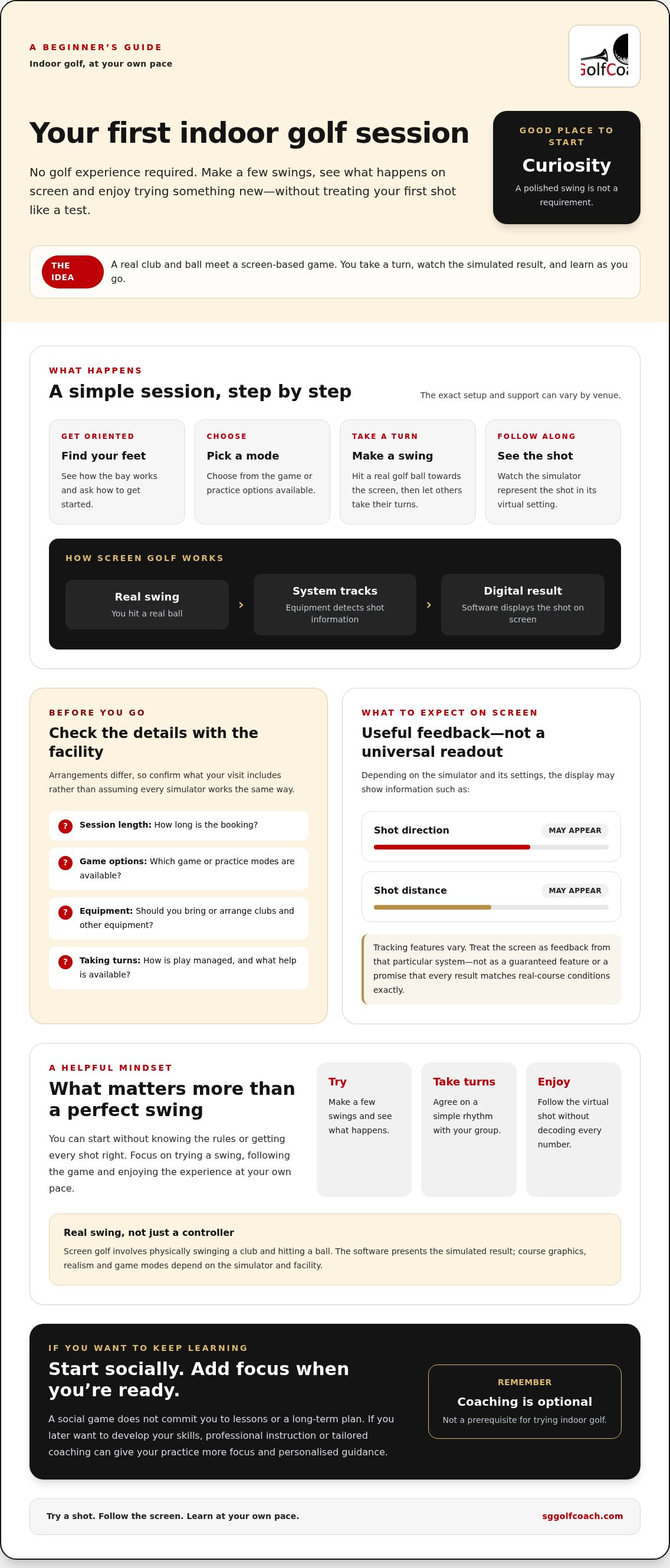
The basic flow is straightforward: get oriented, choose a game or practice mode, then take turns hitting. Depending on the setup, the software may display information such as a shot’s direction or distance. What it tracks and shows depends on the simulator, so treat the display as feedback from that particular system, not a universal measurement.
Staff guidance and booking arrangements vary by venue. Before you go, check how to get started, which game options are available and whether you should bring or arrange equipment. Confirming these details helps you know what to expect without assuming every facility works the same way.
Do you need golf experience to take part?
No. A first session can be about trying shots and learning as you go. Focus on the simple rhythm of taking a turn, seeing the result and having another go, rather than worrying about golf etiquette or getting every swing right. If you’re going with others, agree on how you’ll take turns. The pace and support available depend on your group and the facility.
There’s a difference between enjoying a social game and working on structured technique. You can choose the first without committing to lessons or a long-term plan. If you later want more focused practice, professional instruction, such as adult lessons or tailored coaching, can provide personalised guidance. Coaching is an option for developing your skills, not a prerequisite for enjoying indoor golf for non-golfers.
How an Indoor Golf Simulator Turns a Swing into a Shot
A simulator connects a real swing to a digital result. You hit a real golf ball towards a screen, and the system tracks the shot before software displays its path in a virtual setting. The exact tracking method depends on the equipment, so don’t assume every simulator measures shots in the same way.
Think of it as a physical action followed by a digital representation: you make the swing, the system detects information about the ball’s movement, and the software turns that data into an on-screen shot. The graphics might show a virtual course, but you’re not being sent onto a physical course. The rise of indoor golf reflects the appeal of experiencing the game indoors, with technology shaping how each shot is presented.
What does the simulator show after a shot?
Depending on its capabilities, a simulator may display a shot’s direction or distance, along with other feedback. These are examples, not guaranteed features. The system and settings determine what appears on screen.
For a beginner, the most useful feature may be the simplest: seeing where the shot travelled in the simulated game. You don’t need to understand every number to follow the action or enjoy taking your turn. Treat the display as feedback from the simulator, not a promise that every result will match conditions on a real course exactly.
Is indoor golf the same as playing a video game?
Not quite. In a video game, you typically control a character or action with a controller. In screen golf, you physically swing a club and hit a ball; the software presents the simulated result on screen. The player makes the movement, and the simulator translates what it detects into the game.
That combination is part of what makes indoor golf for non-golfers easier to understand than the technology might first suggest. You can watch the virtual shot unfold without needing to interpret every measurement. Course graphics, realism and game modes depend on the simulator and facility, so check what’s available before booking rather than expecting identical features everywhere.
For an example of an indoor session, see the screen golf experience.
Indoor Golf for Beginners: What Matters More Than a Perfect Swing
A common misconception about golf is that you need to learn the rules before you can try it. You don’t. A first screen-golf session can begin with the simple rhythm of taking a turn, making a swing and following the game on screen. Ask how the selected format works before you start, so you know what to do and what to expect.
You can enjoy your first game without making technical progress, and work on technique later if you choose. That distinction takes the pressure off. If your aim is to spend time with friends and try something new, you don’t need to treat each shot as a lesson or analyse every piece of feedback.
Do you need to know golf rules or etiquette?
For a casual session, basic turn-taking is enough to get started. The details can depend on the game format and the group, so ask how turns work and what to do before play begins. These are practical questions, not signs that you’re unprepared. Staff guidance varies by facility, so check what help is available rather than assuming someone will provide an introduction.
If you’re playing with friends, agree on a comfortable pace and let each person take a turn. There’s no need to memorise formal golf rules for a relaxed first visit. Follow the instructions for your chosen game and ask if anything is unclear.
What can feel different from outdoor golf?
Screen golf takes place indoors, with course play represented on a screen rather than experienced on a physical course. You can focus on your turn and see the shot’s displayed result without managing the full setting and flow of outdoor play. Still, the space, atmosphere and game options vary between facilities, and simulator features aren’t identical everywhere.
Indoor play is an introduction to golf and an activity in its own right, but it can’t recreate every part of being out on a course. You won’t experience the same outdoor surroundings or conditions. If you’re exploring indoor golf for non-golfers, think of it as a way to try swinging and discover what you enjoy, not a test of ability or a complete substitute for playing outdoors.
Your First Indoor Golf Session: A Simple Plan for Beginners
A little preparation can make your first visit feel more relaxed. The goal isn’t to arrive knowing golf. Choose a session that suits you, understand what to expect and give yourself room to enjoy trying something new. For broader context on simulator play and indoor golf, read this complete guide to indoor golf.
Choose a format that feels comfortable. If you’re going with friends, pick companions who are happy to learn together rather than turning every shot into a comparison. A relaxed approach makes it easier for everyone to take turns and enjoy the experience, whether you’re trying a game or exploring a practice mode.
Check the details with the facility. Ask about session length, available game options, group size, booking conditions and equipment arrangements. If you’re new, check whether an orientation or basic assistance is available; don’t assume it’s included. Confirming these details helps you plan without relying on guesswork.
Wear something comfortable to move in. Choose clothing that lets you swing freely. Ask the facility whether it has specific requirements, and check equipment arrangements before deciding what to bring. Don’t assume a formal golf dress code applies or that equipment will be provided.
Give yourself time to get oriented. Arrive with enough time to ask questions and understand the controls before play begins. Find out how the selected game works and how turns are managed. A quick explanation can help you focus on the experience instead of working everything out mid-session.
Focus on the moment, then reflect. Start by making contact and following your shots on screen. You don’t need to compare results or perfect your swing. Afterwards, think about what you enjoyed and whether you’d like to try another casual session or explore more structured learning.
That’s the heart of indoor golf for non-golfers: take one manageable step at a time, without pressure to turn a first visit into a commitment. The screen-golf experience is one way to try your first swing indoors.
From Trying Indoor Golf to Learning at Your Own Pace
Your first visit doesn’t have to lead anywhere. You can enjoy screen golf as a one-off social experience, or let it spark an interest in learning more. There’s no required next step. If you’re curious about why a shot travelled a certain way or how to feel more comfortable with your swing, professional feedback may help you choose a useful focus for future practice.
When might a beginner consider golf lessons?
Lessons may suit you if you’d like structured feedback, more confidence as you practise or a clearer sense of what to work on. Rather than trying to fix everything at once, discuss what you want to learn and get guidance suited to your experience. SgGolfCoach offers adult lessons, group classes and tailored coaching. Group instruction and personalised coaching offer different learning experiences, so consider whether you’d prefer to learn alongside others or focus on guidance shaped around your own questions. For a closer look at getting started, read this beginner golf lessons guide.
Lessons aren’t a requirement for enjoying indoor golf. They’re an option if you want to turn your curiosity into more focused learning at a comfortable pace.
How can you decide what to try next?
Let what you enjoyed guide your next move. If the social side appealed most, consider another screen-golf session and ask the facility which formats are available. If you’re more interested in developing technique, explore adult lessons or group classes and think about which learning style feels right. You can also ask what each option involves before deciding.
That choice can stay flexible. Try screen golf for enjoyment, explore coaching if you want guidance, or pause after one visit with a new experience behind you. Indoor golf for non-golfers can be a first step, not a commitment. SgGolfCoach’s screen golf and coaching options include ways to try indoor play or work on your skills.
Take Your First Swing with Confidence
Your first screen-golf visit can be about trying something new, not proving you already know how to play. The simulator turns real swings into an on-screen game, while its format and features depend on the facility. Checking session details and equipment arrangements beforehand can help you feel more at ease.
That’s what makes indoor golf for non-golfers an inviting starting point: you can enjoy a social session and decide later whether you’d like to develop your skills. If you want more structure, professional feedback can help focus your practice. SgGolfCoach offers indoor screen-golf experiences, professional instruction for players of all levels, adult lessons, group classes and tailored coaching.
You don’t need to commit to lessons to enjoy a first visit. Start with the experience that suits you, then choose your next step when you’re ready. Explore screen golf and coaching with SgGolfCoach and take your first swing at your own pace.
Frequently Asked Questions
Can you play indoor golf if you have never played golf before?
Yes, you can try indoor golf without having played before. You don’t need to memorise golf rules or arrive with a polished swing. Ask the facility how its session works and what support, if any, is available for first-time visitors. You can simply take a turn, see how the activity feels and decide afterwards whether you’d like to play again or explore lessons.
Do you need to bring your own golf clubs to an indoor golf session?
It depends on the facility, so check its equipment arrangements before booking rather than assuming clubs are provided. If you already have clubs, ask whether they’re suitable for the simulator setup. If you don’t own any, ask what options are available to visitors. Confirming this in advance helps you arrive prepared and avoids relying on equipment availability that hasn’t been verified.
What should a beginner wear for indoor golf?
Choose comfortable clothing that lets you move and swing freely. There’s no need to assume a formal golf dress code applies, but individual facilities may have their own requirements, so check before your visit. Wear footwear that feels stable and comfortable for standing and taking turns. If you’re unsure about clothing or footwear restrictions, ask the venue when confirming your session details.
Is indoor golf difficult for beginners?
It can feel unfamiliar at first, but you don’t need to master golf to enjoy a session. Start by learning how turns work and trying a few swings, without worrying about perfect contact or interpreting every simulator reading. Game formats, pace and available guidance vary by facility. Ask for an explanation of the chosen format if you’re unsure what to do next.
How does an indoor golf simulator work?
You hit a real golf ball towards a screen, and the simulator uses its tracking system to represent the shot in software. Depending on the system, the display may show details such as direction or distance, but features vary. You can follow the virtual game without understanding every measurement. The on-screen result is a simulation, so it shouldn’t be treated as identical to every outdoor playing condition.
Can indoor golf help you learn to play golf?
Indoor play gives you a way to try swinging and observe simulator feedback, while professional instruction can offer more structured guidance. SgGolfCoach provides adult lessons, group classes and tailored coaching for different experience levels. Lessons aren’t necessary to enjoy a first session, but they may suit you if you want feedback, confidence or a clearer practice plan. Ask about the learning options that match your goals.
Is indoor golf suitable for a social outing with friends?
It can be a shared activity, especially if everyone is comfortable taking turns and learning as they go. Before booking, check the facility’s group arrangements, session length and available game formats, since these differ by venue. Agree on a relaxed pace and focus on enjoying the experience rather than comparing shots. Screen golf can suit a casual get-together, even if no one in the group has played before.


Comments