

Increase Golf Swing Speed: A Practical Training Guide

What if your next longer drive came from moving better, not swinging harder? You can practise regularly and still feel stuck when drives stay short, while adding effort makes contact and direction less reliable. If you're looking to increase golf swing speed, the answer isn't brute force.
Useful speed comes from a coordinated sequence: a balanced setup, an athletic turn and a smooth transfer of energy through impact. That coordination is a more dependable foundation than simply trying to muscle the club faster, while keeping control and physical comfort in view.
This practical guide breaks the process into movement principles, focused drills and a progressive practice plan you can adapt to your level. You'll learn what to track, how to build speed without sacrificing balance or consistency, and where strength and mobility work may fit. Rather than chasing a personal-best swing on every ball, you'll develop repeatable effort and review your results over time.
Table of Contents
What Does It Mean to Increase Golf Swing Speed?
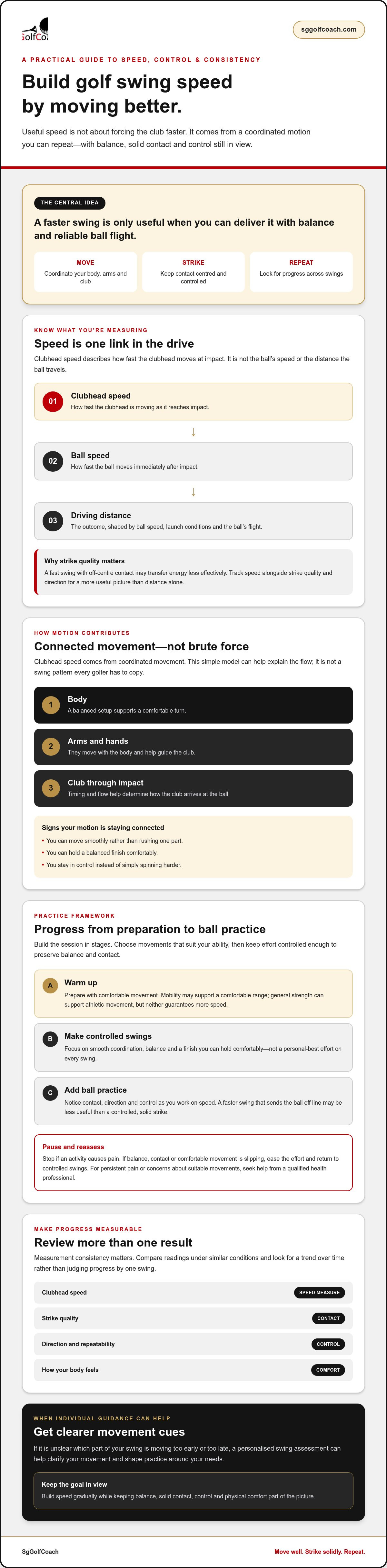
Golf swing speed, or clubhead speed, is how fast the clubhead is moving at impact. It describes the club’s movement, not the speed of the ball or how far the ball travels. The distinction matters: speed creates potential, but the quality of the strike and the ball’s launch help determine how much of that potential becomes distance.
To increase golf swing speed effectively, don’t focus on a single reading in isolation. A drive also depends on centred contact, launch conditions, direction and repeatability. A faster swing that produces a glancing strike or sends the ball off line may be less useful than a controlled swing that makes solid contact. The goal is speed you can deliver with balance and reliable ball flight.
Clubhead speed, ball speed, and distance: how do they differ?
Clubhead speed is the speed of the clubhead as it reaches the ball. Ball speed is the speed of the ball immediately after impact. Driving distance is the outcome further down the chain, shaped by ball speed, launch conditions and the ball’s flight.
For example, a fast-moving club that strikes the ball off-centre may transfer energy less effectively than a well-centred strike. Even with similar clubhead speed, differences in contact and launch can affect how the ball flies. That’s why tracking speed alongside strike quality and direction offers a more useful picture than chasing distance alone.
Why swinging harder does not always mean swinging faster
Tensing your arms or rushing down from the top can disturb the timing between your body, arms and club. The result may be less centred contact, a loss of balance or a finish you can’t hold comfortably. A coordinated swing can feel smoother while still delivering speed through impact.
Think of speed as one measure of a successful drive, not the whole scorecard. Specialist professional long drivers focus on maximising distance, but recreational golfers also need a repeatable swing they can direct. The right balance varies from player to player.
Progress depends on your technique, physical readiness and the quality of your practice. Measurement consistency matters too: compare readings taken under similar conditions, and look for a trend rather than judging progress by one swing. Build speed gradually while paying attention to contact, control and how your body feels.
How the Golf Swing Creates Clubhead Speed
Clubhead speed comes from coordinated movement, not one isolated action. In a broad, plain-language model, motion begins with the golfer’s body, then continues through the arms and hands to the club. The timing and flow between these parts help determine how the club is delivered to the ball. This sequence looks different between golfers, so treat it as a way to understand movement, not a swing pattern everyone must copy.
Imagine trying to throw a ball while moving your whole body as one stiff unit. The movement would likely feel restricted. A golf swing also needs connected motion: the body turns, the arms move with it, and the hands guide the club through impact. Rushing one part or spinning the body harder doesn’t automatically improve the sequence. It can make the club harder to control.
What is sequencing in a golf swing?
Sequencing describes how body motion and the movement of the arms, hands and club relate in time. It doesn’t mean forcing a particular order or trying to spin as quickly as possible. Better timing can help the club arrive at impact more consistently, while poor timing may make solid contact harder to repeat. If you can’t tell which part is moving too early or too late, an individual swing assessment can offer clearer cues than guessing.
The ground is part of this movement, too. Golfers use their feet to stay balanced and support the turn, but there’s no need to forcefully push or copy a prescribed pressure pattern. Notice whether you can move smoothly and hold your finish. For ideas on structured practice, explore these simple drills from PGA Coaches, then choose movements you can perform comfortably and with control.
How balance, mobility, and strength support speed
A stable posture gives you a useful base for turning and swinging, while a balanced finish is a practical sign that you stayed in control. Mobility may help you move through a comfortable range, and general strength can support everyday athletic movement. Neither guarantees more speed, and neither replaces coordination between your body and the club.
Keep physical preparation individual. Choose activities that suit your current ability, and avoid forcing a stretch or exercise to imitate a swing position. Stop if an activity causes pain. For persistent pain or concerns about which movements are appropriate, seek help from a qualified health professional.
If your movement cues still feel unclear, personalised instruction can help assess your swing and shape a practice focus around your needs. Bespoke golf coaching is one option to explore, without assuming a particular speed outcome.
Practical Drills to Increase Golf Swing Speed
A useful speed session has a clear progression: prepare your body, rehearse a balanced motion, then add faster swings before introducing the ball. Keep speed-focused swings separate from ordinary shot practice. This makes it easier to notice whether added effort changes your balance, contact or control. Start comfortably, and progress only while the movement stays smooth.
A progressive practice sequence for speed work
Dynamic warm-up and rehearsal swings.Purpose: prepare to move freely before swinging faster. Setup: stand in a comfortable space with your club, or rehearse without one. Execution: make gentle practice swings, gradually moving through a comfortable range and finishing in balance. Stop condition: stop if you feel pain, dizziness or unusual discomfort. Don’t force a range of motion.
Controlled speed swings.Purpose: practise increasing your intent without losing your finish. Setup: use a clear space and make relaxed rehearsal swings first. Execution: gradually swing faster, focusing on a smooth transition and a balanced finish you can hold. Pause between swings so you can reset. Stop condition: slow down or end the drill if you can’t stay balanced, your motion becomes rushed or discomfort appears.
Golf-ball contact swings.Purpose: transfer controlled movement to a real shot. Setup: use your usual ball position and pre-shot routine. Execution: begin with a comfortable swing and prioritise centred contact and a predictable finish. Add speed gradually only while contact and direction remain manageable. Stop condition: return to a slower swing if strikes become consistently off-centre or you lose control.
How to practise speed without losing control
Change one variable at a time. For example, keep your routine and setup the same while adjusting only how quickly you swing. After each shot, note how the contact felt, whether you held your finish and where the ball travelled. Don’t treat one fast swing as proof of progress. Look for speed you can repeat without giving up control.
Rest when you need it instead of forcing a set number of swings or sessions. Stop or scale back if pain, dizziness or loss of control occurs. If an indoor setting suits your practice, this guide to indoor golf practice offers another option. Use the same gradual approach there: prepare, rehearse, then add speed only when the movement still feels composed.
Build a Safe, Measurable Golf Speed-Training Plan
A thoughtful plan gives your body time to adapt and gives you useful feedback. Maximum effort at every session isn’t a shortcut: fatigue can make it harder to maintain balance, coordinate your movement and strike the ball consistently. Instead, vary the emphasis across your week. Include focused swing practice, physical preparation suited to your ability, lighter skill work and recovery. Leave recovery between demanding speed sessions, and adjust the plan to how you feel.
Progress gradually. Increase either the challenge or the amount of practice, rather than raising both at once. Before each session, check in with yourself: Do you feel unusually tired? Is your balance steady? Are your strikes becoming less reliable? Does anything hurt? If discomfort, fatigue or deteriorating control is affecting your swing, reduce the effort or stop and recover. Persistent pain is a reason to seek appropriate professional advice.
What should golfers measure when training swing speed?
If reliable measurement equipment is available, record clubhead speed under consistent conditions. A reading is useful only in context, so pair it with how the strike felt, the ball’s flight and your perceived effort. A higher number may not reflect useful progress if contact or direction has become less predictable.
Keep comparisons fair. Use the same club, a similar warm-up and comparable conditions each time you measure. Note the date and relevant changes to your session, then review the pattern across multiple practices instead of reacting to one unusually high or low reading. Without reliable speed measurement, you can still track strike quality, balance and how repeatable your swings feel.
How should practice and recovery progress over time?
Think in terms of a flexible weekly rhythm, not a rigid formula. Where possible, place focused speed work apart from other demanding sessions, use lighter practice to reinforce control and make room for recovery. If you feel fresh and your movement stays consistent, continue gradually. If fatigue changes your balance or contact, scale back. Don’t add more swings and more effort at the same time.
If you’re unsure what to adjust, individual feedback can help identify a movement or practice bottleneck. Read this guide to professional golf coaching to consider what personalised instruction may involve. To shape a practice plan around your swing, explore bespoke coaching. Coaching can guide your next steps, but it can’t guarantee a particular speed gain.
When Personalised Golf Coaching Can Help You Add Speed
Drills and a measured practice plan can give you a strong starting point, but it can be difficult to diagnose your own swing while making it. If contact varies from shot to shot, your balance changes as you try to swing faster, or your practice cues feel confusing, an outside perspective may help you decide what to work on next.
Coaching isn’t a shortcut or a promise of added speed. It gives you a chance to have your movement assessed and your practice tailored, so you can work on a relevant priority instead of copying another golfer’s technique. To make a lesson more focused, bring a clear goal, such as improving repeatable contact at a quicker tempo, and share what you’ve already practised and how it felt.
How can a coach identify your speed bottleneck?
A coach can observe your swing and help explore whether timing, contact, balance or physical readiness may be affecting your results. Describe what feels comfortable, what feels difficult and what you hope to improve. That context matters: the aim is to find useful cues for your movement, not to impose someone else’s swing pattern or assume one cause explains every inconsistency.
Choose a next step that fits your learning style
One-on-one instruction offers space for individual feedback, while group lessons provide a shared learning setting. If you’re still building the fundamentals, a guide to beginner golf lessons may help you consider whether foundational instruction is the right starting point. The best fit depends on what you want to learn and how you prefer to practise.
If you’re ready to explore a more individual approach, explore tailored golf coaching. Bring your goal and recent practice notes, then discuss what feedback and next steps would suit you. With a clearer focus, you can continue working to increase golf swing speed while keeping contact, control and comfort part of the process.
Build Speed With Purpose
To increase golf swing speed, focus on coordinated movement rather than simply swinging harder. Progress from controlled drills to ball practice, and track speed alongside contact, direction and balance so you can see whether changes are useful and repeatable.
Give your body time to recover, adjust practice when fatigue affects your swing, and build gradually instead of chasing maximum effort every session. Consistent, thoughtful training can help you develop speed while keeping control and comfort in view.
If individual feedback would help you choose your next step, SgGolfCoach offers tailored one-on-one and group golf instruction, with indoor screen-golf experiences available for practice. Explore tailored golf coaching and find an approach that fits your goals. Keep practising with patience and purpose, one balanced swing at a time.
Frequently Asked Questions
How can I increase my golf swing speed as a beginner?
Beginners can increase golf swing speed by first building a balanced, repeatable swing rather than forcing extra effort. Practise comfortable rehearsal swings, then gradually add speed while maintaining control and centred contact. Keep sessions focused on one simple cue at a time, such as holding a balanced finish. If you’re unsure what to work on, tailored instruction can help clarify your technique and give your practice a useful direction.
Does getting stronger increase golf swing speed?
Strength can support the movement and stability used in a golf swing, but getting stronger alone doesn’t guarantee more clubhead speed. Coordination, timing and the ability to move comfortably also matter. Choose general strength and mobility work that suits your ability, and progress gradually rather than treating every exercise as golf-specific training. If you have health concerns or persistent pain, seek advice from a qualified professional before changing your exercise routine.
Can I increase swing speed without losing accuracy?
Yes, but build speed while keeping control as a priority. Start with a comfortable swing and increase your intent gradually, checking whether contact, direction and balance remain consistent. If strikes become less reliable, return to a speed you can manage and practise there before progressing again. Separating speed-focused swings from ordinary shot practice can make it easier to notice changes in your control and avoid judging progress by one fast swing.
How often should I practise to increase golf swing speed?
Choose a practice schedule that gives you time to recover and maintain good movement, rather than aiming for maximum effort every session. There’s no single frequency that suits every golfer, since experience, physical readiness and overall practice load differ. Space demanding speed work apart where possible, and use lighter sessions for technique or controlled ball practice. If fatigue, discomfort or strike quality worsens, scale back and allow time to recover.
Do weighted golf clubs help increase swing speed?
Weighted clubs are one option some golfers use for speed practice, but they aren’t essential and won’t suit everyone. Their usefulness depends on how they fit your technique, physical readiness and training goals. Avoid adding unfamiliar equipment or intense swings abruptly; begin conservatively and stop if you feel pain or lose control. If you’re uncertain whether this approach is appropriate, ask a qualified golf instructor to help you assess your practice options.
How do I know whether my golf swing speed is improving?
Use reliable measurement equipment to track clubhead speed under comparable conditions, such as using the same club and a similar warm-up. Review readings across multiple sessions instead of reacting to a single result. Also record strike quality, ball flight, balance and perceived effort. A speed reading is most useful when you can maintain control and repeat the movement, rather than producing one faster swing with inconsistent contact.


Comments