

Common Reasons for a Golf Plateau and What to Improve

A better swing isn’t always the missing piece when your golf scores stop improving. Common reasons for a golf plateau include repetitive practice without clear feedback, expectations that outpace steady progress, neglected putting and short-game skills, mental habits that disrupt commitment, and equipment that doesn’t suit your game. Often, several factors overlap rather than one flaw causing the problem.
It’s natural to focus on swing mechanics when progress stalls, especially after working hard on your technique. But lower scores also depend on how you practise, choose targets, manage imperfect shots and stay composed from hole to hole.
This article explains how to identify patterns that may be holding you back and what to work on first. You’ll learn why purposeful, varied practice matters, how to set realistic expectations, where scoring skills can help, and how routines and equipment affect your progress. A clearer view of the cause can give your next practice session a specific purpose.
Table of Contents
1. Practising varied lies and on-course situations
Poor swing fundamentals can stall progress by making contact and direction inconsistent. Face angle, swing path and strike quality are useful checkpoints as you practise with different clubs and targets, rather than repeating one comfortable shot. A plateau can persist when the same fault shows up across the range without being noticed or addressed.
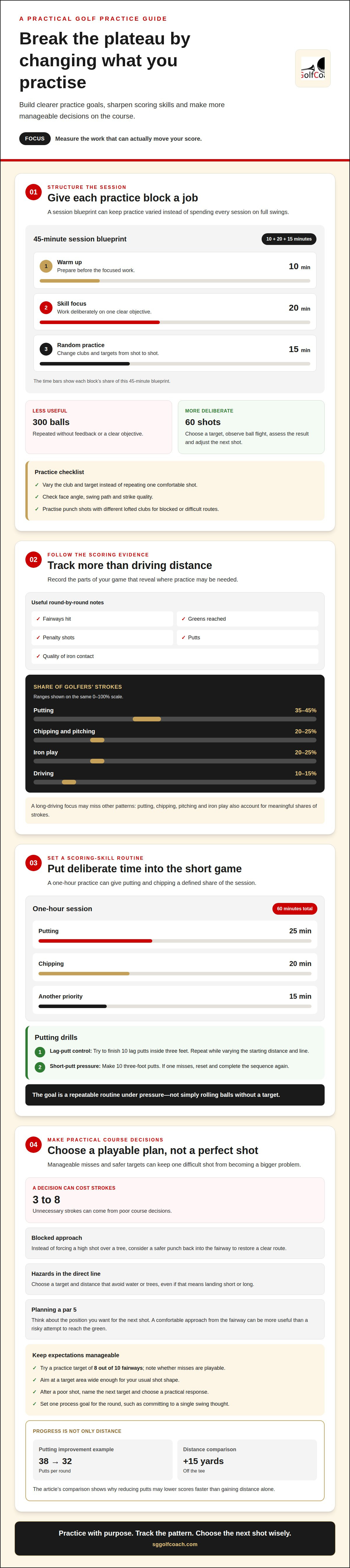
Structure practice so each part has a job. One session blueprint uses 10 minutes to warm up, 20 minutes for a skill focus and 15 minutes for random practice. Separately, a practice allocation can devote 40% of time to putting and 30% to short-game work. These approaches both discourage spending every session on full swings.
Make the skill block deliberate. Instead of hitting 300 golf balls without feedback, hit 60 with a clear objective: choose a target, observe the ball flight, assess the result and adjust the next shot. Then vary the club and target from shot to shot. For a pressure drill, set a fairway target and treat each attempt as a new decision rather than a repeated swing.
Practise recovery shots as well as ideal lies. Hit punch shots with different lofted clubs to learn how high and far each sends the ball. For example, imagine a low branch blocks the direct route, then choose a club and ball flight that stay beneath it. This builds a practical response to trouble, where a full, high swing may not fit the available space.
Track results that reveal where practice is needed. Note fairways hit, greens reached, penalty shots, putts and the quality of iron contact. Driving accounts for 10-15% of golfers’ strokes, while iron play accounts for 20-25%, so a long-driving focus may miss other patterns. A coach can use those records and observed swings to identify a skill priority; tracking turns “I’m stuck” into specific evidence.
Fitness, mobility or injury can also affect balance, rotation and your ability to repeat a swing comfortably. Research cited by the National Library of Medicine found that low-handicap golfers were stronger and had more flexible hips and torsos. How long it takes to move through a plateau depends on its cause and whether practice addresses it consistently. A coach can assess movement, strike patterns and practice choices, then help you build a focused plan instead of adding unfocused repetitions.
2. Setting realistic expectations and managing imperfect shots
Expecting every shot to finish exactly as planned can make a round feel like a sequence of failures. Judge shots against a realistic target, not an ideal result. For example, a shot that misses the green but leaves a straightforward chip can still support a sensible plan. Manageable misses are part of good golf, not proof that your swing has failed.
Choose practice goals that measure control rather than perfection. One drill is to aim for 8 out of 10 fairways, then note whether misses are playable. That target tests repeatability without demanding every drive land on a precise spot. On the course, set a target area wide enough for your usual shot shape. Aiming at the safest side of a fairway can be smarter than chasing a narrow line.
Course management matters because poor decisions can add 3 to 8 unnecessary strokes. A blocked approach provides a clear example: trying to hit a high shot over a tree may bring another obstacle into play. A safer punch back into the fairway can restore a clear route to the green. Choose the shot that reduces trouble, even if it doesn’t look as ambitious.
Plan around hazards before choosing a club. If a direct line brings water or trees into play, select a target and distance that avoid them, even when that means landing short or long. On a par 5, think about the position you want for the next shot rather than forcing maximum distance immediately. A comfortable approach from the fairway can be more useful than a risky attempt to reach the green.
Set one process goal for the round, such as committing to a single swing thought. Trying to correct several mechanics during one shot can divide your attention and make decisions harder. After a poor shot, name your next target and choose a practical response. For instance, after driving into the rough, aim for an open section of fairway instead of attempting a difficult recovery.
Keep score expectations grounded in the skills you’re developing. Lowering putts per round from 38 to 32 may reduce scores faster than gaining 15 yards off the tee. That comparison highlights why distance alone doesn’t define progress. During a round, focus on the next decision, accept a manageable miss, and measure success by executing the plan. If a forgiving course has flatter fairways and greens, with fewer hazards, it can also help build confidence while you practise those choices.
3. Developing scoring skills beyond swing mechanics
A refined swing cannot compensate for repeated missed putts or weak chips. Putting accounts for 35-45% of golfers’ strokes, while chipping and pitching account for 20-25%. Those figures show why a plateau may persist when practice focuses almost entirely on full swings. Scoring skills deserve deliberate attention, not just leftover time.
Use a one-hour practice session to give those skills a clear share. Spend 25 minutes putting and 20 minutes chipping, then use the remaining time for another priority. This structure keeps the session centred on shots that directly shape scores. It also makes improvement easier to assess than an unplanned mix of drills.
Make putting practice measurable. Try to finish 10 lag putts inside three feet, then repeat the drill while varying the starting distance and line. For short-putt pressure practice, make 10 three-foot putts. If one misses, reset and complete the sequence again. The aim is to build a repeatable routine under pressure, not simply to roll balls without a target.
Make short-game practice reflect the shots you face around greens. Choose a landing spot before each chip, then notice how the ball rolls after landing. Change the starting lie or target between attempts. This develops touch for different situations, such as chipping from short grass or pitching over rough. Choosing the right shot matters as much as making good contact.
The scoring opportunity extends across the approach area: 60-70% of a golfer’s shots occur within 100 yards of the green. Practise controlling distance from several positions, rather than hitting every shot toward the same flag. A shorter, controlled approach that leaves a makeable putt can serve the score better than a difficult attempt at a perfect finish.
Track results that point to a specific skill gap. Record putts, chips that finish within a comfortable distance for the next shot, and missed greens that lead to difficult recoveries. If putting costs too many strokes, prioritise distance control and short-putt consistency. If chips regularly leave long second putts, work on landing spots and rollout. These patterns give practice a sharper purpose.
Round length can shape scoring focus, too. Playing 9 holes often may leave a golfer less prepared to maintain concentration through an 18-hole tournament. Practise carrying the same decision-making discipline across the full round: choose a clear target, commit to the shot, then assess the next position. Scoring skills connect technique to decisions, so progress depends on improving both.
A plateau can persist when strong swings bring little scoring benefit around the green. Set separate practice goals for putting, chipping and pitching, then review whether those skills are improving. For example, compare how often lag putts finish inside three feet across sessions. Specific measures show whether practice is producing more manageable next shots.
4. Mental barriers and pre-shot routines
A sound decision can unravel when you feel rushed or fear making another mistake. After missing a short putt, for example, a player may hurry the next attempt to avoid holding others up. That urgency can shift attention from the target to the previous error. A repeatable routine gives each shot a fresh starting point, even after frustration.
Build a routine from clear actions: choose a target, picture the ball flight, rehearse, then address the ball. Keep each step familiar instead of adding a new correction after every miss. On an approach shot, choose a safe landing area before settling over the ball. That decision gives your attention a useful task rather than leaving room for competing swing thoughts.
Short putts can reveal how pressure changes behaviour. Rushing may lead you to skip your pre-shot routine, swing too fast, lose focus and miss. Give yourself an extra three seconds to set up for a short putt and commit to your routine. Use those seconds to settle your feet, look at the line and return your eyes to the ball. The aim is deliberate preparation, not a longer pause filled with doubt.
Notice when your routine breaks down. Perhaps you check the target repeatedly, change your grip pressure, then hit before you feel ready. Or a missed drive prompts several swing thoughts before the next tee shot. Identify the interruption, then return to the same sequence: select the target, rehearse the intended motion and begin when ready. Recognising the pattern makes the mental barrier easier to manage.
Keep your post-shot reaction brief and specific. After a shot finishes in a bunker, note the result, choose your next target and prepare for the recovery. Replaying the swing as you walk can carry frustration into your next decision. After a successful shot, don’t treat it as a formula you must copy perfectly. Focus on the next situation, such as a downhill lie or a narrow approach.
Practise your routine outside competition, too. On the range, choose a different target for each ball and use the same preparation before swinging. When putting, alternate between a short straight putt and a breaking line while keeping your routine consistent. Each rehearsal then includes a decision as well as a stroke. During a round, use one clear swing thought and let your routine guide the rest. Consistent preparation helps keep your attention on the shot at hand.
5. Equipment limitations
Equipment can affect how consistently you strike and control the ball, but it rarely explains every stalled score. A club that feels difficult to swing may encourage compensations, while a comfortable setup can support repeatable contact. For example, repeated heel strikes with one iron deserve attention. First distinguish a pattern tied to one club from one that appears across the bag.
Start with the clubs that create the clearest problem. If long irons launch inconsistently but shorter irons feel manageable, note the difference. If the driver feels difficult to control, observe whether the miss tends to curve or start off line. These clues can help separate equipment comfort from broader technique issues. Avoid changing several clubs at once, as that makes cause and effect harder to judge.
Club fit involves more than the clubhead. Length, lie angle, shaft feel, grip size and overall weight can affect your setup and swing. A club that feels too long, for example, may encourage a cramped or altered address position. An uncomfortable grip can distract you from the intended motion. Notice these signs during normal swings, not just after an unusually poor shot.
Condition matters, too. Check for a loose clubhead, a damaged grip or a shaft that appears bent. Worn grooves may also change how the face interacts with the ball, particularly when clean contact matters. These signs don’t prove that equipment caused a plateau, but they can point to a practical issue. Record the club and shot type whenever the same concern appears.
Compare performance before considering a change. Use the same target and a similar shot, then note contact location, starting direction and ball flight. If one club repeatedly produces a different result from the others, consider whether setup, swing or equipment best explains the pattern. A coach can observe your swing alongside the club’s behaviour, helping prevent an equipment change from masking a technique issue.
A new club isn’t automatically the next step. If contact varies across every club, a swing pattern may matter more than the equipment. If discomfort or an inconsistent setup occurs with one club, examine that relationship carefully. Keep notes on which club, shot and miss occur together. This evidence makes any equipment discussion more focused and less dependent on one frustrating round.
For a clearer view of how equipment and technique interact, get a focused coaching perspective before making changes. A measured assessment can help identify whether the pattern follows the golfer, the club, or both.
SgGolfCoach: Screen Golf Booking
SgGolfCoach’s Screen Golf Booking offers a focused setting to work on specific shots when your progress feels stuck. Use a session to practise with a clear target or repeat a shot that causes difficulty, such as controlling an approach or recovering from trouble. Keep your goal simple, then note whether your choices and execution become more consistent.
If the pattern points to a technique issue, Adult Lessons can help you work on swing fundamentals, while Junior Programs support younger golfers’ development. PC & Handicap can also help you organise your playing progress. Choose the option that matches the challenge you’re addressing, rather than changing several parts of your game at once.
For a considered next step, contact SgGolfCoach to discuss your golf goals.
Make your next practice session count
Understanding the common reasons for a golf plateau gives you a starting point, not a final diagnosis. Choose one pattern you’ve noticed and focus on it in your next session. Keep the goal clear and pay attention to what changes. A small, observable adjustment can give you more useful direction than trying to rebuild your whole game at once.
Progress also means giving yourself room to learn. Not every practice session will bring a breakthrough, and one score doesn’t define your ability. Stay curious about what each shot reveals, and use that insight to shape your next decision. Over time, deliberate attention can help turn uncertainty into a more confident approach to the game.
If you’d like support identifying a practical next step, contact SgGolfCoach to discuss your coaching goals. Keep your focus on steady learning, and let each session move you forward.
Frequently Asked Questions
Quick Summary: Why is my golf game plateauing?
Your scores may have stopped improving because one part of your game is limiting the rest. You might strike irons well but lose shots through penalties, poor distance control or inconsistent putting. Look for a recurring pattern across several rounds rather than drawing conclusions from one difficult day. Start by identifying where your score changes most often, then choose one skill to address.
Why do most golfers plateau?
Golfers often plateau when their practice and playing habits stop revealing what needs work. Repeating familiar shots can feel productive, but it may leave a weakness untested. For example, someone who always practises from a flat lie may struggle when the ball sits above their feet. Progress also depends on choosing shots that suit your current abilities, rather than attempting ones that require control you haven’t yet developed.
Why is my golf handicap not going down?
Your handicap may stay steady if recent rounds include the same costly mistakes, even as parts of your swing improve. Compare rounds for recurring patterns: penalties, difficult recovery positions or missed opportunities after a good approach. Also consider whether you judge progress only by your best round. A more useful measure is whether poor holes are becoming less damaging and strong holes more repeatable.
What are the most common reasons golfers hit a plateau?
Common reasons for a golf plateau include practice without a clear objective, unrealistic expectations, weak scoring skills, disrupted focus and equipment that feels poorly suited. These factors can overlap. For instance, a golfer struggling with contact might change equipment and swing thoughts at the same time, making the cause harder to identify. Notice when the difficulty appears, then consider the club, shot type and situation together.
How do practice habits and lack of deliberate practice affect golf improvement?
Practice without a specific purpose can make it hard to tell whether a skill is improving. Before each drill, define what a successful attempt looks like, such as starting the ball toward a chosen window. Afterward, note what happened and decide whether the next attempt needs an adjustment. This creates a learning loop and helps distinguish a technique issue from an unrealistic target or decision.
Can course management and decision-making limit a golfer's scores?
Yes. A golfer can lose scoring opportunities by choosing a shot that leaves little room for error. Imagine an approach with a clear landing area short of a green guarded by a hazard. Choosing that safer area may set up a manageable next shot, while chasing a tight flag risks a difficult recovery. Better decisions start with assessing the lie, available space and likely miss before choosing a target.
How can mental game issues, pressure, and confidence stall golf progress?
Pressure can shift your attention from the intended shot to feared outcomes, making a familiar action feel uncertain. Confidence may also suffer when you remember recent misses more clearly than successful shots. After each round, record one decision that worked and one situation that felt difficult. Over time, this creates a more balanced view of your performance and can reveal whether tension appears around a particular club, target or score situation.
What practice plan helps golfers break through a plateau?
A useful plan starts with one clear priority based on recurring patterns on the course. Divide practice between that skill and related scoring shots, then test the skill in changing situations. For example, if you struggle with approach distance, alternate targets and clubs instead of repeating one shot. Keep brief notes after each session so your next practice builds on evidence rather than guesswork.



Comments