

Learning golf in your 30s: choose a course and build your skills

Starting golf in your 30s doesn’t mean you’ve missed your chance. Begin on a par-3 or executive course, then build towards a nine-hole round before taking on a full 18-hole course. With patient, professional coaching, learning golf in your 30s can be a steady progression, not a test of how quickly you master the game.
It’s understandable to wonder whether your swing, fitness or busy schedule will make it harder to start. This guide explains how a suitable first course can make the game more approachable, how coaching can help adapt your swing, and which rules and etiquette will help you feel comfortable on the course. You’ll also see how lessons can shape your progress over time, from learning the fundamentals to developing greater consistency, so you can choose a clear and enjoyable next step.
Table of Contents
How golf coaches use par-3 or executive courses to teach adult beginners
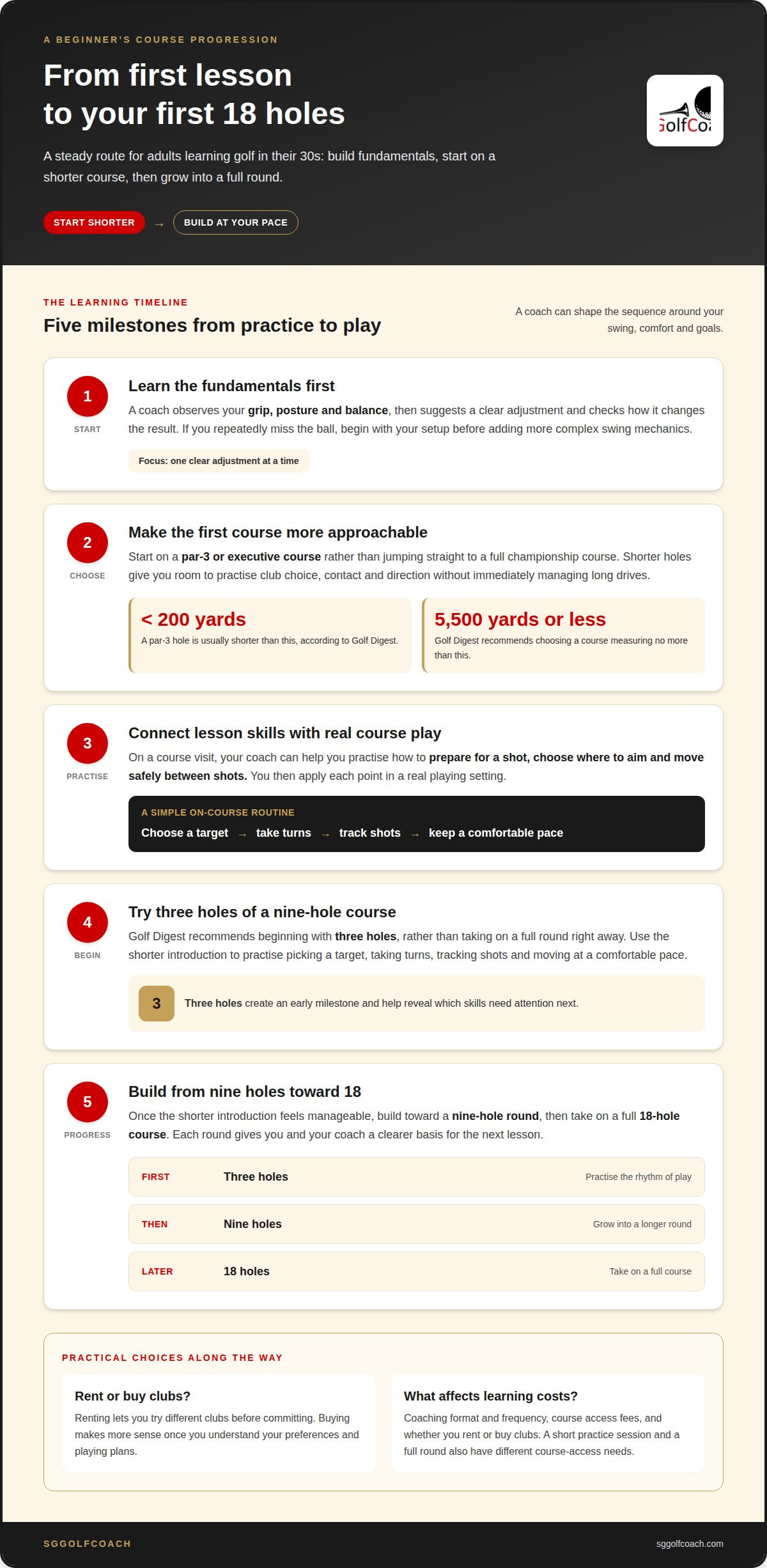
A par-3 course gives an adult beginner a simpler setting to practise golf shots. Golf Digest describes a par-3 hole as usually less than 200 yards long. A shorter hole lets a coach focus on club choice, contact and direction without immediately asking a beginner to manage long drives. An executive course can also offer a more approachable introduction than a full championship course.
Golf Digest recommends starting on a par-3 or executive course before attempting an 18-hole championship course. It also recommends choosing a course measuring 5,500 yards or less. A coach can use that first course visit to connect practice with play: explain how to prepare for a shot, where to aim, and how to move safely between shots. The learner then applies each point in a real course setting.
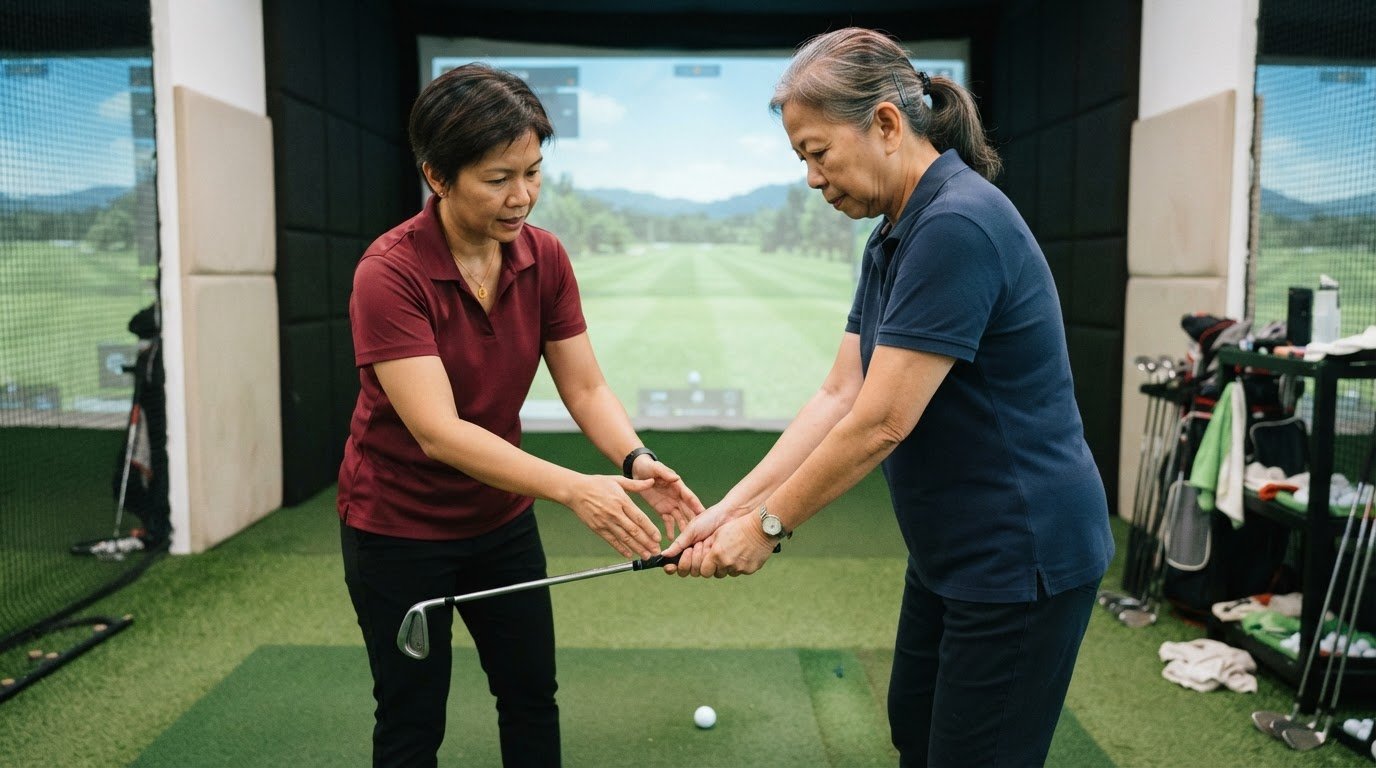
For adults learning golf, coaching starts with the fundamentals that affect every shot. The coach observes your grip, posture and balance, then suggests a clear adjustment and checks how it changes the result. If you repeatedly miss the ball, for example, the coach can work on your setup before introducing more complex swing mechanics. This makes professional coaching a guided progression, not a collection of disconnected tips.
A nine-hole course can introduce the rhythm of play without starting with a full round. Golf Digest recommends beginning with three holes of a nine-hole course, then building towards 18 holes. A coach can use those first three holes to practise choosing a target, taking turns, tracking shots and moving at a comfortable pace. The lesson also helps identify which skills need attention next.
Can a golf coach help a beginner decide whether to rent or buy clubs? Yes. A coach can assess how the clubs feel during practice and explain which features affect comfort and control. Renting lets you try different clubs before committing to a set; buying makes more sense once you understand your preferences and playing plans.
What affects the cost of learning golf in Singapore, including clubs and course fees? The main factors are coaching format and frequency, course access fees, and whether you rent or buy clubs. A coach can explain how those choices fit your practice plan. Course selection matters too: a short practice session and a full round have different access needs.
To get started, choose a professional lesson focused on fundamentals, then build toward coached course practice. The coach can set the sequence around the beginner’s current swing, comfort and goals. For someone learning golf in their 30s, a par-3 course or three-hole introduction offers a practical first milestone, with each round creating a clearer basis for the next lesson.
How golf coaches adapt swings to physical limitations
At 30, a beginner may bring an old shoulder injury, limited hip rotation or simply less flexibility than expected. Learning golf in your 30s doesn’t require copying a professional’s full backswing. A coach can first observe how you stand, turn and balance, then adjust one movement at a time. For example, if a full shoulder turn feels restricted, the coach may teach a shorter backswing that keeps the motion controlled and comfortable.
Good swing adjustments start with the player, not an idealised model. A coach can assess your stance width, posture and grip, then note which positions feel natural. If bending forward feels uncomfortable, the coach can adjust your setup and check whether the club still meets the ball cleanly. If your balance shifts during the swing, the coach may simplify the movement and focus on stable feet before adding speed. Each adjustment should have a clear purpose.
Your range of motion also affects how you generate power. If you can’t rotate freely, a compact swing and accurate contact may be more useful than forcing a larger turn. A coach can compare a few controlled swings, identify where tension appears, and adjust your body position or club path. A shorter movement isn’t a shortcut; it gives you a repeatable pattern to build on during play.
Comfort matters throughout practice. A coach can pause when a movement feels painful, then revise the drill instead of asking the player to push through it. Golf Digest recommends a dynamic leg-swinging warm-up, with 10 swings for each leg and a gradual increase in height. The coach can also select gentle practice swings before a full shot, helping the learner notice stiffness or imbalance before increasing effort.
Physical limitations vary, so your teaching plan should suit you. A coach can observe your movement, suggest one adjustment, practise it with a controlled swing, then review the result. For example, if your flexibility is limited, you might work on balance and solid contact before practising with a longer club. This keeps feedback specific and makes progress easier to assess from lesson to lesson.
If an existing condition or health concern affects exercise, advice from a doctor or exercise professional can help guide your participation. Your golf coach can then tailor instruction to your stated comfort and range of movement. Mention practical limits early, such as difficulty turning or standing for extended practice, so the coach can choose relevant drills. The goal is a functional swing you can repeat, not an identical copy of someone else’s technique.
How golf coaches teach beginners the rules and etiquette
A coach can teach course behaviour through real situations rather than a long recital of rules. Before you play, the coach can explain where to stand while another player swings, why to wait until the group ahead is clear, and how to keep practice swings away from others. On the course, use a simple routine: pause, check the landing area, then take your shot only when it’s safe. These habits protect other players and make the round easier to follow.
Pace of play is another early lesson. According to Golf Digest, most courses ask players to finish 18 holes in four-and-a-half hours. A coach can demonstrate how to prepare for a shot while others play, walk directly to the next ball, and keep score after moving away from the green. Golf Digest also suggests that beginners limit themselves to a maximum of seven strokes per hole to help maintain pace. This gives a new player a practical way to move on rather than hold up friends or strangers.
Lost balls and out-of-bounds shots can feel stressful without a clear next step. According to Golf Digest, golfers should spend no more than five minutes looking for a lost ball before taking a one-stroke penalty. If a ball goes out of bounds, Golf Digest says to replay from as close as possible to where it was hit and add a one-stroke penalty. A coach can explain these situations beforehand, then calmly guide you through the procedure during practice.
Group etiquette is part of learning to play, too. If you arrive alone, you may be paired with three strangers, so a coach can help you practise introductions, turn-taking and concise communication. Players can agree whose turn it is before approaching the ball, while everyone stays clear of the active swing. If you need help locating a ball, the group can look briefly, then resume play promptly. Small courtesies make shared rounds more comfortable.
A coach can also teach you to care for the course as part of your shot routine. After a swing leaves a mark, repair it where course practice allows; after a bunker shot, smooth the disturbed sand. On the green, walk carefully around another player’s putting line and stay quiet during a putt. These examples turn etiquette into visible actions rather than abstract expectations.
Learning the reasons behind each rule helps the lesson stick: safety prevents avoidable accidents, pace respects everyone’s time, and course care preserves playing conditions. A coach can introduce one situation at a time, ask the beginner to explain the next step, then practise it in context. By the end of a coached round, the player has applied rules, shown consideration for friends and playing partners, and gained a clearer sense of how to behave on the course.
4. Lesson progression and learning timelines
Your progress is easier to assess when each lesson has a defined focus. A coach might begin with grip and setup, then work on balanced contact before introducing direction or distance. The next lesson builds on what you can repeat, rather than adding several swing changes at once. This measured sequence helps you see what has improved and what still needs attention.
Progress also has different markers. A beginner may need a few weeks to a few months to feel confident with golf skills. Reaching a consistent score under 100 for 18 holes typically takes adults 6 to 12 months. These timelines describe different milestones: confidence with basic skills can come before reliable scoring across a full round. Neither measure replaces feedback on a learner’s individual technique.
Coaching can progress through clear stages: establish fundamentals, practise repeatable shots, then apply them in play. For example, once you can make balanced contact in practice, you might work on choosing a target and controlling shot direction. Later, the coach can see how that skill holds up with different lies or clubs. Each stage gives the next lesson a specific purpose.
Is it better to learn golf through group lessons or private coaching? Group lessons make learning social and let you observe how others practise the same fundamentals. Private coaching lets the instructor focus feedback on your swing and goals. The better fit depends on whether you prefer shared practice or individual attention.
How often should a coach recommend that a beginner practise golf to improve? Your coach should base the practice plan on your available time, current skills and ability to repeat movements comfortably. A sustainable routine with focused practice between lessons is more useful than an ambitious schedule you can’t maintain. Your coach can adjust the plan as your consistency develops.
Regular practice matters because golf movements need repetition, but that repetition should reinforce sound technique. Your coach can set one priority for a practice session, such as keeping your balance through the finish, then review it at the next lesson. Hitting more balls without a clear focus can make it harder to identify what needs correction. A brief record of lesson goals can help you keep practice purposeful.
Progress may also include physical benefits. After 12 weeks of golf, balance and coordination can improve by 15-20%. Walking during practice or play adds movement, while coached drills help develop control. For adults learning golf in their 30s, patience with the fundamentals creates a stronger basis for later goals. A coach can recognise reliable changes, refine the next priority and keep each stage connected to real play.
5. Where can beginners take golf lessons in Singapore?
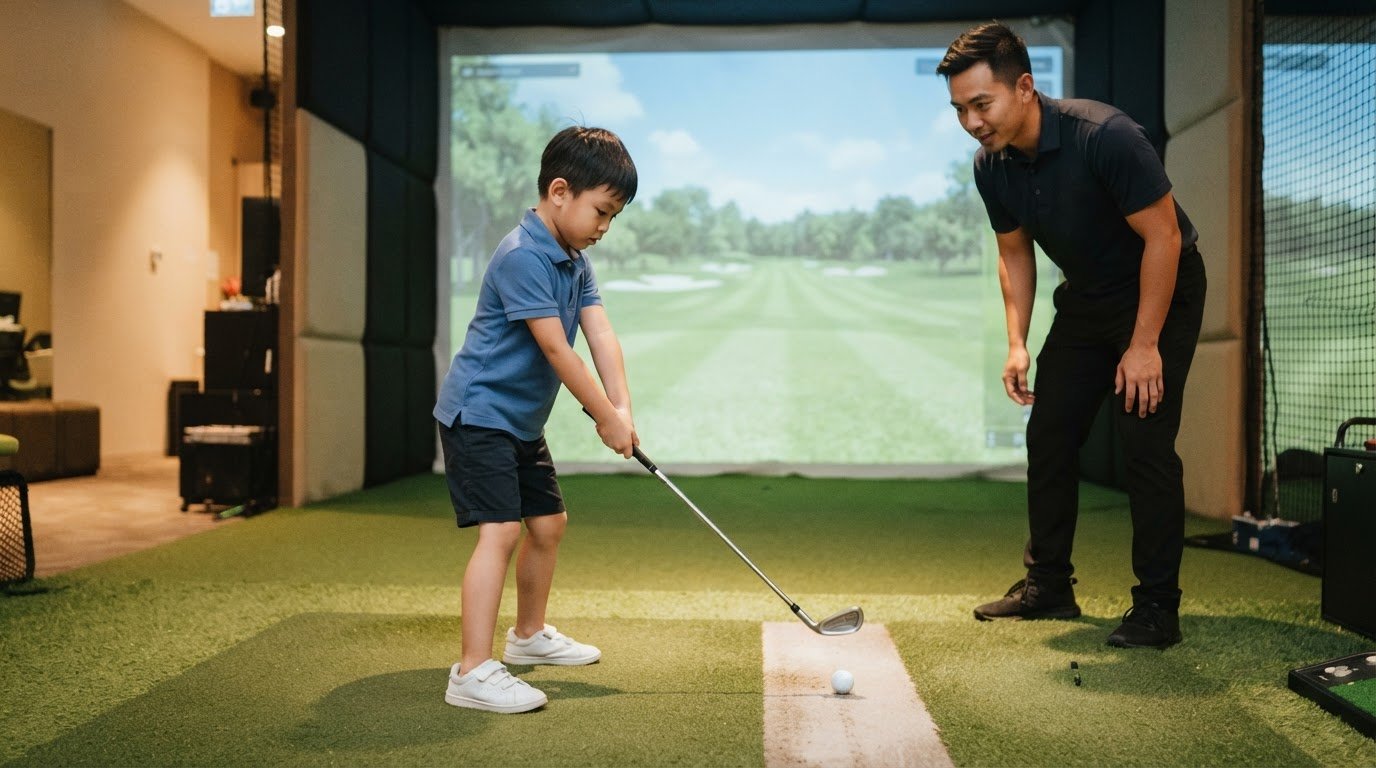
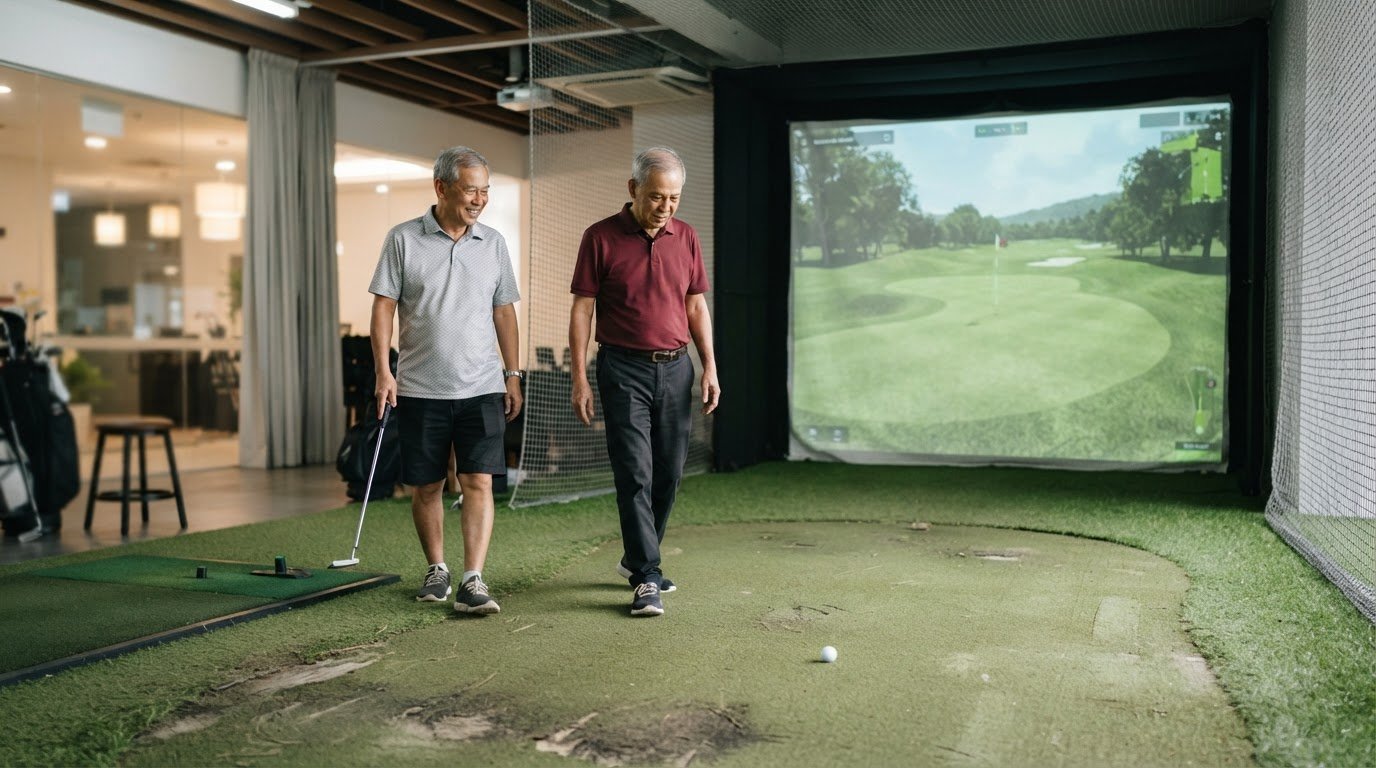
In Singapore, beginners can learn through professional coaching in indoor practice settings, at a driving range or on a golf course. Each setting supports a different part of the learning process. An indoor screen-golf session can help your coach focus on swing movement and shot feedback. A range offers space to practise repeated shots, while course instruction applies skills to real playing situations.
Choose your setting based on the skill you want to develop first. If you’re unsure about grip and contact, for example, a focused practice session may help before you play a round. If you can strike the ball consistently, you may gain more from learning shot choices and course routines. A coach can sequence different settings to connect these stages rather than treating each lesson as separate.
Lessons for adults in Singapore also need to fit around work and family commitments. A professional can shape your progression around your schedule, preferred practice format and goals. If travel time makes frequent course visits difficult, indoor practice offers a place to work on technique. You can then move on to course-based coaching and apply those movements to changing lies and targets.
Lesson format affects the kind of attention you receive. One-to-one coaching gives the instructor more opportunity to observe your swing and adjust feedback in the moment. Group classes offer shared practice and the chance to learn by watching another beginner work through a similar skill. The key distinction is your priority: personalised correction or a social learning environment.
Professional instruction should connect each session to a specific learning goal. Your coach might observe your setup, identify one change, then check whether it improves contact. In a later practice setting, the coach can assess whether the movement holds up with a different club or target. This makes lessons purposeful and gives you a clear sense of what each session develops.
Before you begin, decide what you want coaching to address: swing fundamentals, confidence in practice or preparation for playing on a course. Share your previous experience and any physical considerations with the instructor. This helps the coach shape relevant feedback, choose a suitable practice environment and plan how you’ll progress from drills to play.
For adults starting golf in Singapore, professional coaching can bring structure to the first stages and connect practice with longer-term goals. Choose an initial focus, then let the coach build a progression around it. Explore professional golf coaching to take the next step toward developing your game.
SgGolfCoach: Screen Golf Booking
SgGolfCoach offers Screen Golf Booking for learners who want to include screen-golf sessions in their practice routine. If you’re ready for professional guidance, Adult Lessons can help you develop foundational swing skills and play with greater confidence. Coaching can be shaped around your experience and improvement goals, giving each session a clear learning focus.
For adult beginners, screen-golf bookings and lessons offer different ways to build your skills. Choose the option that fits your next step, whether you want a screen-golf session or structured instruction. Contact SgGolfCoach to discuss getting started.
Make your next practice session count
Your next step doesn’t need to be ambitious. Choose one skill to develop, such as steadier contact or more confidence using different clubs, and bring that goal to your next lesson. A focused starting point gives your coach a useful way to shape your instruction and helps you notice progress beyond your scorecard.
Learning golf in your 30s can become a rewarding part of your routine when your goals fit your life and your coaching evolves with your skills. SgGolfCoach also offers Junior Programs, creating a coaching pathway for younger learners in the family. For your own next step, contact SgGolfCoach about lessons and begin building a practice plan around the game you want to play.
Frequently Asked Questions
Can adults start golf at age 30?
No. Learning golf in your 30s is entirely possible; coaching can start from your current movement, experience and goals. A practical first aim is controlled contact and sensible target selection, rather than matching another player’s distance. If work or family limits practice time, explain that to your coach. They can shape instruction around a routine you can maintain and skills you want to develop.
How long does it take an adult beginner to learn golf?
There’s no single timeline for learning golf; progress depends on the skill you’re measuring and how consistently you practise. Learning golf in your 30s can begin with solid contact and basic shot choices, then progress towards more consistent play. Ask your coach to set observable milestones, such as repeating a movement or managing a particular shot. These markers show progress without relying only on a final score.
What are the first steps a golf coach takes when teaching an adult beginner?
A coach typically starts by understanding your goals, previous experience and any movement concerns, then uses that context to plan instruction. In an initial lesson, the coach may ask what you hope to achieve, observe a few swings and identify one priority for feedback. For example, if you’re preparing to play socially, your early focus may differ from that of someone seeking a more consistent swing.
What golf rules and etiquette should beginners learn first?
Start with safety, turn-taking and respect for other players’ concentration. Wait until the group ahead is clear, stay quiet during another player’s shot and follow the course’s local instructions. It also helps to understand scoring: reaching the green in regulation means arriving in par minus two strokes. A coach can explain scoring terms in context, making them easier to remember during play.
What are common golf injuries for adult beginners and how can they be prevented?
Don’t assume discomfort is simply part of learning. Build practice progressively, use controlled movements, and pause if a swing causes pain rather than forcing more repetitions. If you have an existing condition or health concern, consult a doctor or exercise professional about suitable activity. Share relevant movement limits with your golf coach, who can adapt instruction to your comfort and help avoid unnecessary strain.
Comments