

How to start golf after retirement in Singapore as a beginner

Starting golf after retirement in Singapore can begin with a guided lesson, even if you’ve never held a club before. Beginners can learn the fundamentals at 50 or 60 just as they can at 25, and an introductory lesson can include equipment so you can try the game before buying clubs. A patient, well-paced start makes room to build confidence alongside your technique.
It’s natural to wonder whether golf will suit your fitness, mobility and preferred pace of learning. This guide explains how a professional can adapt instruction to your current swing, how to track your progress and what the Proficiency Certificate means before playing on a Singapore course. You’ll also learn how the World Handicap System works here, and how golf can offer a welcoming community as well as a new personal challenge.
Table of Contents
Are these golf lessons suitable for complete beginners?
Yes. Professional golf lessons can suit adults with no playing experience, including people starting after retirement. A coach introduces the core movements and guides your practice, so you learn with feedback rather than repeating swings without direction. Starting golf after retirement in Singapore can begin with lessons, then progress towards confident practice and course play.
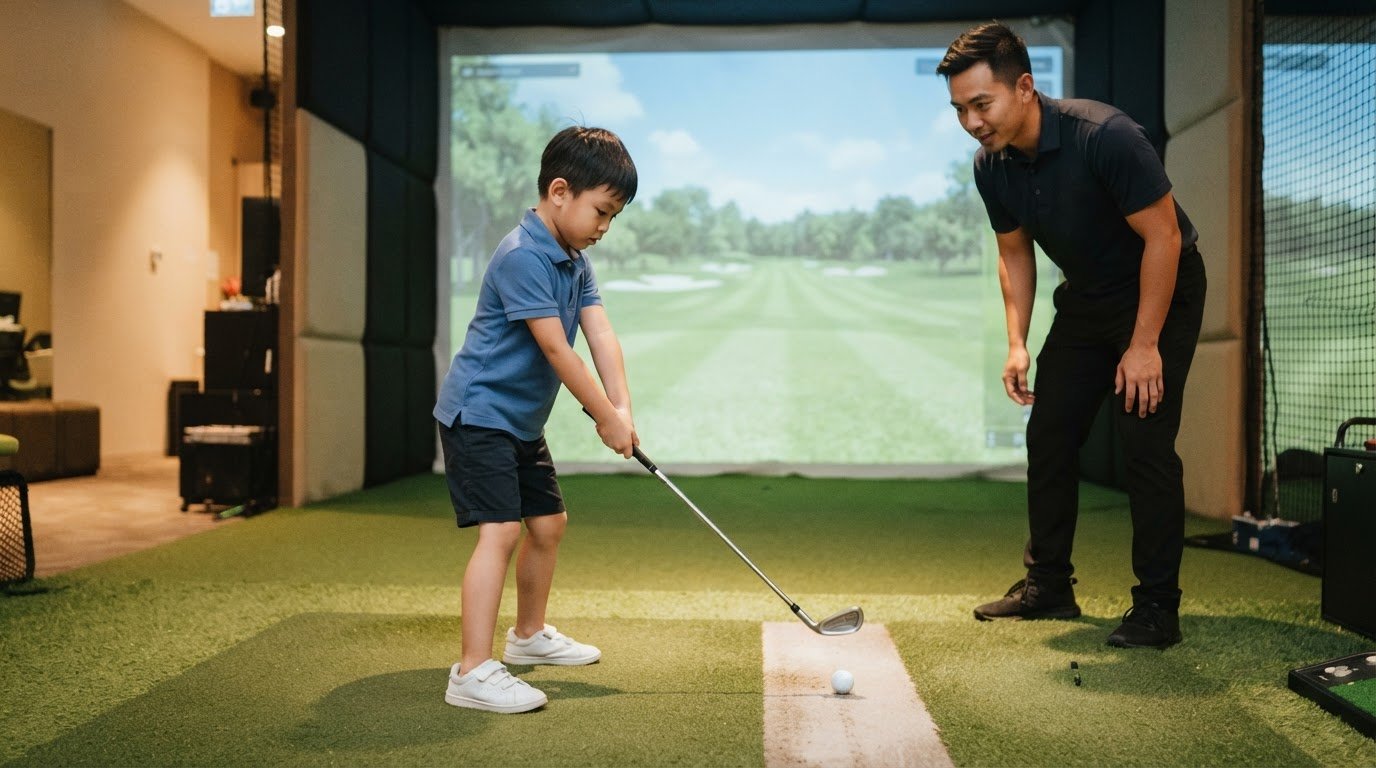
Choose Introductory Lessons for Adult BeginnersBegin with a guided introduction rather than practising alone at a driving range. A coach can introduce grip, stance and setup, then guide you through controlled swings before you build a repeatable routine. Beginners can start at 50 or 60, as well as at 25. Some introductory lessons include equipment, which lets you try golf before deciding whether to buy clubs.
Prepare for the First LessonWear comfortable clothing and shoes that let you stand and turn securely. Bring water and any medication you normally need during activity. Ask whether equipment is included before bringing clubs. Tell the coach about any recent injury or mobility concern. If you have a specific medical condition, recent injury or ongoing mobility issue, speak with a doctor before starting a new physical activity.
Use coach-guided range practice to build fundamentals. Ask the professional to demonstrate a movement, then practise it with feedback before adding speed. A useful first sequence is grip, posture, alignment and a balanced finish. Focused practice helps the coach spot setup issues before they become repeated habits. Progress from simple swings to fuller shots at a pace that suits your comfort and mobility.
Plan costs and access around your goals. Starting golf after retirement in Singapore involves separate decisions about clubs, lessons, practice and course access. Total costs depend on what you choose and where you play. Club membership joining and monthly costs vary by club and membership arrangement. Singapore has 16 golf courses, but public access and booking arrangements differ, so course choice affects how you progress from lessons to play.
Understand course requirements before playing. Course access and public booking options depend on the individual course. Beginners generally need a Proficiency Certificate before playing on Singapore golf courses, and clubs set their own test requirements. A coach can help you develop basic skills and course etiquette as you prepare. This gives starting golf after retirement in Singapore a practical next step beyond range practice.
Learning support and progress assessment
Follow a clear learning sequence, then review specific skills with a coach. Progress is easier to see when each practice session builds on the last.
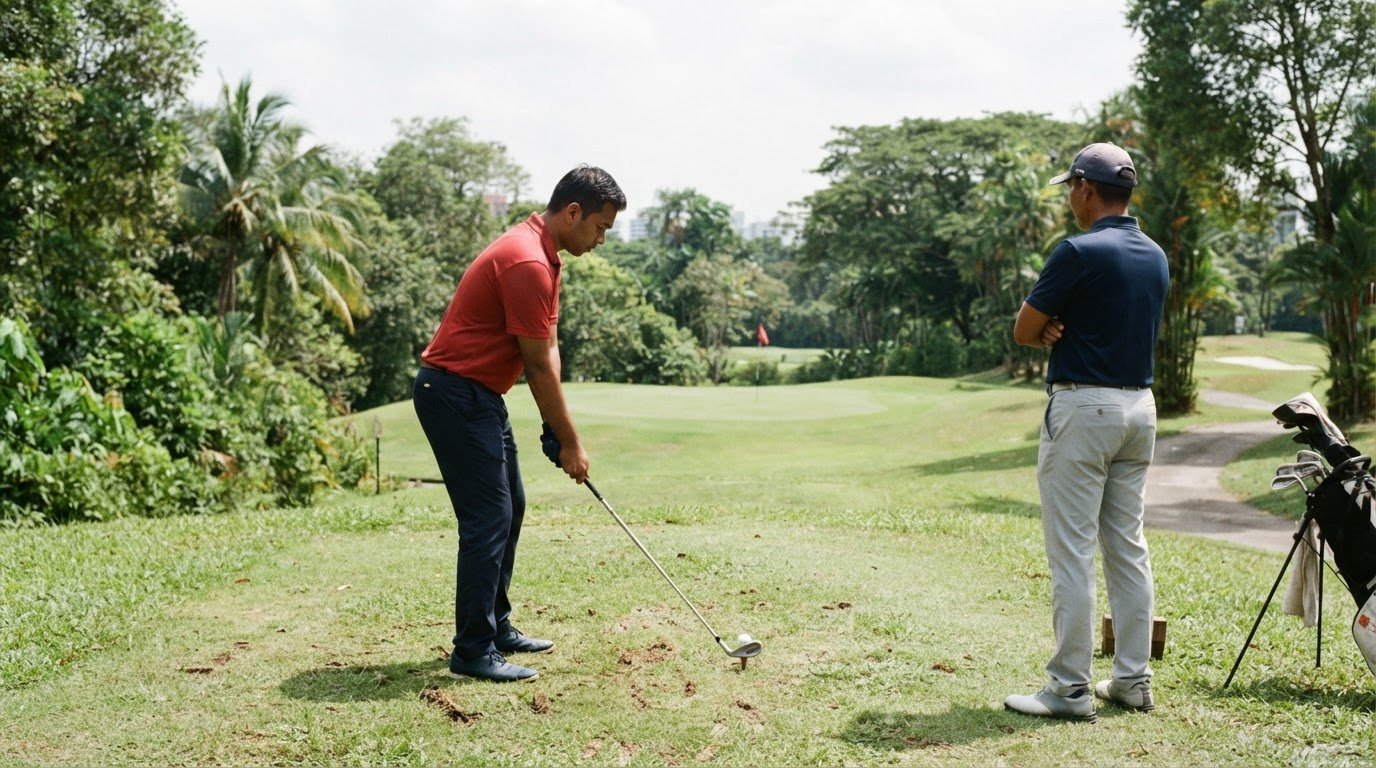
Follow a course that builds skills in sequence. Beginner instruction generally moves from grip and setup to short-game practice, then playing on a golf course. Each stage develops a different part of your game. For example, short-game work helps you practise shots near the green before taking on the decisions and pace of course play. Ask the coach how each lesson connects to the next.
Agree on a practical focus for each lesson. Choose one skill to work on, such as making consistent contact or controlling the direction of a short shot. A focused lesson gives you a clear practice point, rather than several changes competing for attention. At the end, summarise the coach’s key instruction in your own words. This gives you a simple reference for your next practice session.
Record observations after practice. Note the date, club used, type of shot and result. For example, record whether a short shot travelled towards your chosen target and whether you finished in balance. These notes help you and your coach compare sessions without relying on memory alone. Look for recurring patterns, then use them to choose a sensible focus for your next lesson.
Review progress with your coach regularly. Bring your practice notes to a lesson and discuss what feels repeatable, what remains difficult and which adjustments helped. A coach can use those details to refine your next practice focus. If an instruction feels uncomfortable or causes strain, say so before continuing. Your lesson plan can then account for your current mobility and ability.
Use the Proficiency Certificate as a learning milestone. It confirms that a beginner understands basic golf skills, rules and etiquette. Treat preparation as a chance to connect technique with responsible course behaviour, not simply as a test of distance. Clubs set their own test requirements, so the relevant requirements depend on where you plan to test. Keeping a clear record of the skills covered can help organise your preparation.
For structured support between lessons, adult golf lessons can give your practice a coach-led focus. Bring your observations and questions into the next session, so instruction can respond to what you’re experiencing rather than relying on guesswork.
Obtaining a golf handicap under the World Handicap System with professional support
A Proficiency Certificate is generally required before beginners can play on Singapore golf courses. A handicap is a separate measure, established through scored rounds under the World Handicap System (WHS).
Understand the two milestones. Treat course readiness and handicap registration as separate goals. The Proficiency Certificate confirms that a beginner understands basic golf skills, rules and etiquette. A handicap reflects a golfer’s playing record instead. Working towards the certificate first helps you prepare for course play; scored rounds then provide the basis for a first handicap.
Learn how the WHS operates in Singapore. The Singapore Golf Association is the authorised body for the World Handicap System in Singapore. This is the relevant framework for golfers seeking a handicap here. Ask a professional how handicap support fits alongside your lessons, so you understand the process before arranging scored play.
Build a reliable scoring foundation. Golf clubs usually require a set of scored rounds before issuing a first handicap. A practice session or informal estimate cannot replace the rounds required by the club. As you progress, focus on playing complete rounds and recording scores accurately. Consistent records give the club the information it needs for its handicap process.
Use professional support to prepare. A coach can help you develop skills that make scored rounds more manageable, including controlled shots, course decisions and familiarity with the rules. For example, practise choosing a sensible target and keeping track of each hole’s score. Professional support can also help you understand where preparation ends and the club’s handicap administration begins.
Take the next step when you’re ready for scored play. Ask the relevant golf club about its requirements for submitting rounds and issuing a first handicap. Club procedures determine how scores are handled, so keep your records clear and follow the club’s process. PC and handicap support can help organise these milestones alongside your ongoing development, without treating a handicap as a substitute for learning course etiquette.
Some golf programmes in Singapore advertise a route to a handicap in about three months, but that timeline is not a promise of results. Confirm expectations with the programme.
Senior golfing community in Singapore
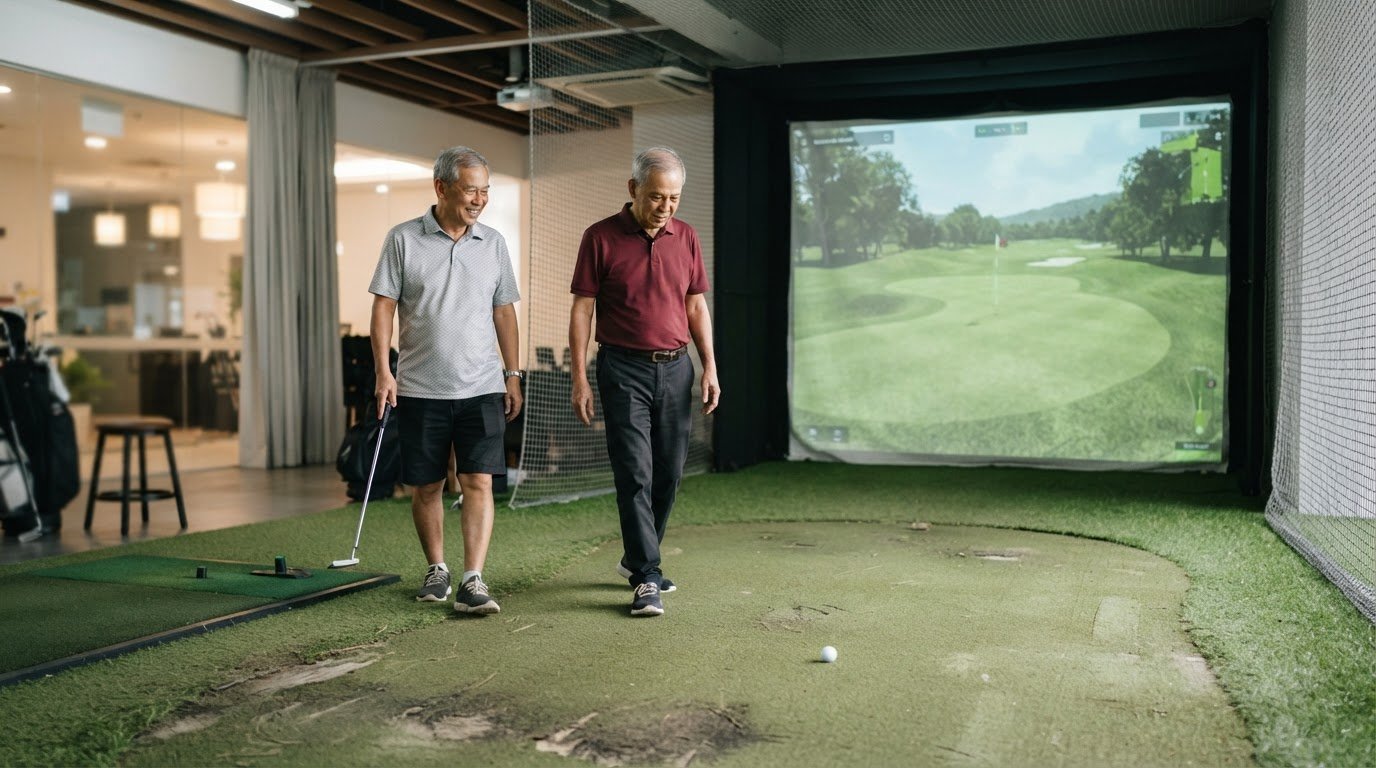
Golfers can continue playing into their seventies and beyond. The Singapore Seniors' Golfers Society organises tournaments and events specifically for older players, offering a way to connect through the game.
Explore senior-focused events. Consider the Singapore Seniors' Golfers Society for organised play with other older golfers. Its tournaments and events provide a natural setting to meet people who share your interest. Before joining an event, think about your playing experience and comfort with the format. A social round can be a gentler first step than a competitive tournament.
Build connections through regular play. Choose a recurring playing routine that fits your energy, schedule and goals. Familiar faces make it easier to form playing groups, share course experiences and enjoy golf as a social activity. For example, you could arrange a regular round with people you meet at a society event. Keep the pace and format comfortable for everyone taking part.
Ask coaches to support the transition into group play. A coach can help you prepare for practical situations during a round, such as choosing a target, following playing order and keeping a steady pace. Use lessons to clarify rules or etiquette that feel unfamiliar. This preparation can make your first group round more enjoyable, as you can focus less on uncertainty and more on the people and play around you.
Match course plans to your comfort and access needs. Before arranging a round, consider the course layout, travel, playing format and how much walking feels comfortable. A shorter practice session or more relaxed format may suit your current fitness better than a demanding day of play. If you have an ongoing mobility concern or health condition, consider medical advice before taking up a new physical activity or changing your routine.
Ask each course about senior and off-peak rates. Discounts and daytime or weekday rates are course-specific, with each operator setting eligibility and playing times. Compare the conditions that matter to your plans, such as permitted tee times and whether a rate applies to your membership or booking type. Choosing a suitable time can help you organise regular play around your budget and preferred pace.
Make room for social goals as well as scores. Set a personal goal for each round, such as learning a playing partner’s name or enjoying a relaxed conversation between shots. A society event, coach-guided practice or regular group can each offer a different kind of connection. Over time, these small routines can make golf a welcoming part of retirement life, not simply a test of technique. Many retirees also enjoy pairing active local hobbies with rewarding travel abroad; if you are planning a scenic holiday between practice sessions, Saparis Station offers reliable transport and curated travel routes to explore Northern Vietnam at a comfortable pace.
How professional coaching adapts the swing to age-related changes
A swing that suited a golfer at 40 may not suit the same player at 65. Coaching can adjust technique to current mobility, comfort and goals.
Start with a movement and comfort assessment. Tell the coach about stiffness, previous injuries and movements that feel restricted. Reduced flexibility in the hips, back and shoulders can affect how comfortably you turn. A coach can observe your stance and movement, then adapt the session to your current range. If you have an existing injury or health concern, consult a doctor or physiotherapist before changing your swing or training routine.
Set a backswing length you can control. A slightly shorter backswing can help senior players swing without forcing extra shoulder or hip turn. Ask the coach to compare a comfortable shorter motion with a longer one, checking balance and control rather than appearance. If the longer swing causes strain or makes your finish unstable, the shorter version may be the more practical starting point.
Build rotation and sequencing instead of adding effort. A coordinated turn and good sequencing can help the body and club move together. Your coach can guide the order of movement, then watch whether the club reaches the ball cleanly. Focus on centred strikes: better contact can add more distance than simply swinging harder. This approach is useful when natural changes in swing speed affect how far your shots travel.
Protect your lower back through technique and preparation. Ask the coach to adjust your stance, swing length and pace to avoid excessive strain on your lower back. A proper warm-up and regular mobility work can support continued play. For example, the coach can begin with comfortable movements before progressing to full swings. Stop and discuss discomfort instead of pushing through a painful movement.
Review the swing as your needs change. Use each coaching session to identify what feels comfortable, which shots make centred contact and where control breaks down. If your hips or shoulders feel less mobile on a particular day, the coach can modify your stance or shorten the motion. This personalised approach keeps practice aligned with your current ability, rather than making you repeat a swing designed for a different body or stage of life.
For a swing plan tailored to your mobility and goals, book bespoke golf coaching.
SgGolfCoach: Screen Golf Booking
SgGolfCoach offers Screen Golf Booking for indoor practice, alongside Adult Lessons for structured coaching. If you’re refining your swing to suit your mobility, professional instruction can help you work on technique at a considered pace. PC & Handicap support can also help you progress from learning fundamentals towards relevant golfing milestones.
Choose the next step that fits your current goal: book screen golf for practice, or choose Adult Lessons for a coach’s guidance. These options can complement your longer-term plans for course play and a WHS handicap.
Contact SgGolfCoach to discuss a suitable next step.
Make your first step a personal one
Starting golf after retirement in Singapore can be more than taking up a new activity. It can give your week a fresh rhythm and create space to enjoy learning at your own pace. Choose a next step that feels right now, whether that means developing your swing with a coach or trying indoor screen golf.
SgGolfCoach offers Adult Lessons for adult learners, Junior Programs for younger players and Screen Golf Booking for indoor practice. Each option serves a different need, so consider which best matches your immediate goal. You don’t need to map out every milestone before beginning. A clear first objective, such as becoming more comfortable with your setup, gives your learning a practical direction.
When you’re ready to explore your next step, contact SgGolfCoach about starting golf. Let your interest lead the way, and give yourself room to enjoy each stage of the game.
Frequently Asked Questions
Are there any age restrictions for the lessons?
Adults can begin learning golf at different ages, including after retirement. Beginners starting at 50 or 60 can learn the fundamentals, just as younger adults can. The right lesson focus depends on your experience, comfort and goals, rather than retirement age alone. For a first session, explain whether you’re completely new or have played before, so the coach can pitch instruction appropriately.
Can lessons be customised to my skill level?
Yes. SgGolfCoach provides tailored adult instruction for players at different levels. A new golfer, for example, may focus on setup and contact, while someone with previous experience may want to refine a particular shot or course decision. One-to-one coaching and group classes are available. Consider which format suits your learning preferences, then use your current goal to guide the lesson.
How can professional golf lessons help beginners start learning golf in Singapore?
Professional lessons give beginners a structured way to learn technique and course management. A coach can demonstrate a movement, observe your attempt and suggest a specific adjustment, such as refining your stance before changing your swing. This feedback helps you know what to practise next. For someone starting after retirement, a coach can also tailor the pace and movement to your comfort.
Where can beginners take golf lessons in Singapore, and what are the course prices?
Beginners can take professional golf lessons in Singapore through SgGolfCoach’s adult coaching. Lesson fees and golf-course charges are separate. Course prices depend on the facility, access arrangement and playing time, while coaching fees depend on the lesson arrangement. Set your priorities first, whether instruction, practice or course play, to see which costs apply to your plans.
How can a golf coach help retired beginners choose equipment to buy or rent in Singapore?
A coach can observe your swing and help identify equipment characteristics that suit your current speed and comfort. For example, a lighter shaft, greater loft or a more forgiving club head may help some senior golfers with slower swing speeds. Use this guidance to clarify what to look for, then decide separately whether buying or renting suits your needs.
What health, mobility and injury risks should older adults consider before starting golf?
Consider how your hips, back and shoulders move, and whether an existing injury affects turning or balance. If you have a specific medical condition, recent injury or ongoing mobility concern, speak with a doctor before starting golf or another new physical activity. Players with an existing injury or health concern should also seek medical or physiotherapy advice before changing their swing or training routine.
How can retirees in Singapore find golf groups, social games or beginner leagues?
Try an event organised by the Singapore Seniors' Golfers Society, which runs tournaments and activities for older players. When exploring group play, choose a format that matches your experience and ask about its pace and expectations. You can also build connections by attending events regularly and arranging a relaxed round with people you meet. Group options and formats vary.
Which Singapore golf courses are beginner-friendly and allow public bookings?
Mandai Executive Golf Course is described as Singapore’s only fully public course, but the material does not identify other beginner-friendly courses or confirm public booking arrangements. It is scheduled to close on 31 December 2026.
Comments