

Benefits of Playing Golf: More Than a Game

What if the value of golf isn’t measured by your score, but by how it gets you moving, thinking and connecting with others? The benefits of playing golf can extend well beyond the course, though you may wonder whether the game is active or engaging enough to justify the time.
Golf can feel intimidating at first, especially when each swing seems to involve a different technique. You don’t need to master the game before you can enjoy it. You can start with a simple goal and choose a format that feels comfortable.
This article looks at how golf can support movement, focus, social connection and personal growth. It also explains what affects those experiences, what learning involves and how different formats can suit different ages and abilities.
Whether you’re considering golf for yourself or a junior in your family, you’ll find practical ways to decide if it suits your interests and how to take a first step.
Table of Contents
What Are the Benefits of Playing Golf Beyond the Scorecard?
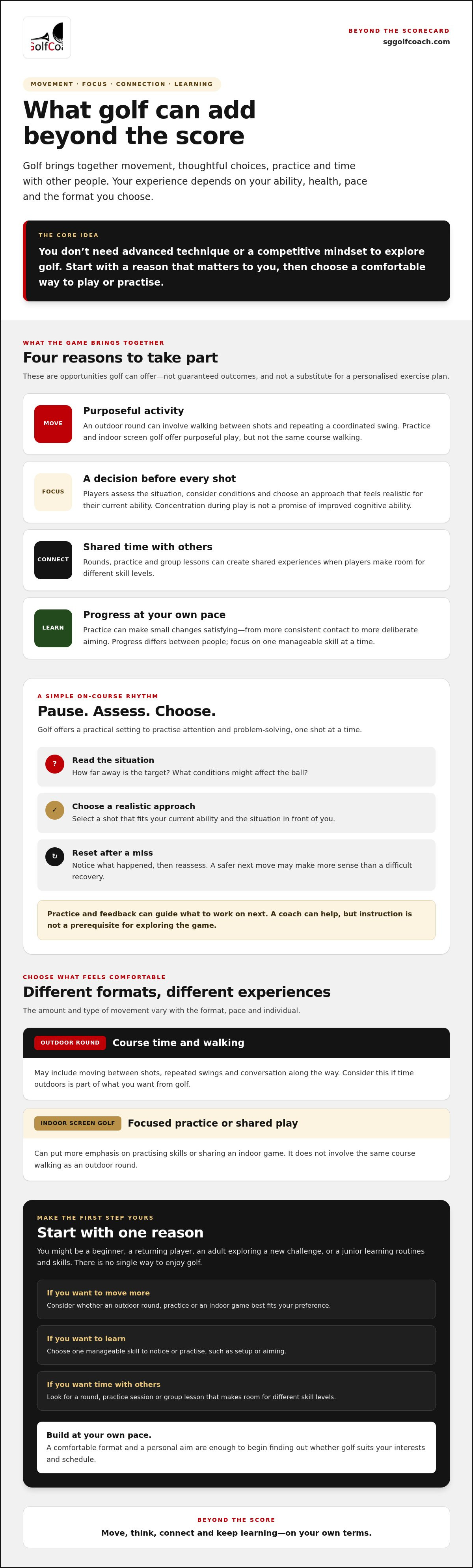
The benefits of playing golf aren’t limited to a lower score. The game combines movement, practice, decision-making and time with other people, giving players plenty of reasons to take part beyond competition. An outdoor round may include walking between shots and conversation along the way. A screen-golf session can put more emphasis on practising skills or sharing an indoor game.
Golf is a skill-based sport that brings together repeated swings, movement around a playing area, strategic choices and, often, social play. Players decide how to approach each shot, practise techniques and respond to the conditions or format. For a helpful introduction to the basics of golf, a foundational overview can explain how the game is played.
These elements can make golf physically active, mentally engaging and socially enjoyable. Learning also gives players opportunities to build confidence and persistence. Those outcomes aren’t automatic or a substitute for a personalised exercise plan. What golf feels like depends on factors such as health, experience, frequency of play and whether someone chooses an outdoor round, practice or an indoor format.
Why golf’s benefits extend beyond exercise
Golf gives movement a purpose: players move between shots, repeat a coordinated swing and pay attention while practising skills. That combination can make activity feel engaging. Indoor screen golf offers purposeful practice and play too, but it doesn’t involve the same course walking as an outdoor round.
Think of golf as one possible way to be active and learn, not a guaranteed route to a particular fitness result. The amount and type of movement vary with the format, pace and individual. When deciding what to try, consider whether you’d prefer time outdoors, focused practice or an indoor game.
Who can enjoy golf and benefit from playing?
A beginner may enjoy learning the basics, while a returning player might appreciate rebuilding a familiar skill. Adults may value a new challenge or shared activity. Juniors may enjoy practising, learning routines and playing with others. The rewards differ from person to person, and no single response is guaranteed.
Age, handicap and competitive ambition don’t have to define the experience. Start with a personal aim, such as moving more, learning a skill or enjoying time with others. Supportive coaching, including adult or junior lessons, can help newcomers build skills at a comfortable pace, but instruction isn’t a prerequisite for exploring the game.
How Golf Can Build Focus, Patience, and Problem-Solving
Each golf shot presents a small decision: How far away is the target? What conditions might affect the ball? Which shot feels realistic for your current ability? Players weigh those details, choose an approach and focus on carrying it out. As the PGA’s discussion of golf’s broader benefits suggests, the game can involve more than physical play. However, concentration during a round shouldn’t be mistaken for a guaranteed improvement in cognitive ability.
Golf asks players to read the situation, choose a shot that fits their ability and stay engaged with the next decision. That makes the game a practical setting for exercising attention and problem-solving, not a promise that every player will develop the same skills away from play.
Practice, feedback, and the satisfaction of progress
Learning golf can make small, visible changes satisfying. A beginner might notice more consistent contact during practice or become more deliberate about aiming before a shot. These are useful signs of learning, even if they don’t immediately lead to a lower score.
Technique and course management both take practice. Feedback from a coach, or reflection after a session, can help you decide what to work on next. Progress differs between people, so focus on one manageable skill at a time instead of expecting a particular timeline. For example, you might pay attention to your setup during one practice session, then focus on aiming during the next.
Staying composed when a shot does not go to plan
A missed shot can test patience. Instead of letting frustration dictate the next move, pause, notice what happened and choose a sensible response. If a shot lands short of the intended spot, for example, the next decision might be to take a safer route rather than attempt a difficult recovery.
Repeating this reset gives players a chance to practise persistence within the game. It won’t automatically change someone’s personality or make golf a treatment for stress or anxiety. The value is more modest: a mistake becomes a cue to reassess and continue, rather than a reason to abandon the round.
For beginners, structured feedback can make learning clearer without making coaching a prerequisite for enjoyment. If you’d like support building your skills at a comfortable pace, explore golf coaching for your skill level and use each session to focus on one practical goal.
How Golf Creates Social Connection and Shared Experiences
Golf gives people a shared focus as well as time to talk. A round unfolds through a series of shots and decisions, so conversation can happen naturally between turns. Practice sessions and group lessons offer a different kind of shared experience: players can work on a skill, ask questions and encourage one another.
The social value depends on the atmosphere. If everyone expects beginners to play like experienced golfers, a new player may feel pressure instead of welcome. When the aim is to learn, enjoy the session or spend time together, people with different abilities can take part without turning every shot into a comparison. The benefits of playing golf can include connection, though playing together doesn’t guarantee friendship or professional contacts.
Playing with friends, family, or a group
Learning or practising alongside someone at a similar pace can make a new activity feel more approachable. Friends can share small milestones as they get to grips with a skill. A group lesson lets learners practise together while receiving guidance. For a beginner who wants a clearer starting point, this beginner golf lessons guide explains what learning the fundamentals can involve.
Not every social golf experience needs to happen on a course. Indoor screen-golf play gives people a shared setting to practise or enjoy a game, while outdoor play offers time together across a round. Choose the format that suits the participants’ interests and comfort, not the one that looks most impressive.
Making golf welcoming across ages and abilities
Shared play doesn’t require everyone to have the same experience or goals. One person might focus on learning a new skill, while another enjoys the company and takes a more relaxed approach. Agreeing on a comfortable pace and keeping the emphasis on participation can help the group make room for both.
Golf is also an activity adults and juniors can explore together. A parent or caregiver might learn alongside a junior, or family members may simply enjoy having a common interest to discuss and practise. Their reasons for playing can differ, as can their progress. Adult lessons, junior coaching and group classes are possible ways to learn with guidance, but coaching isn’t required to share an interest in golf.
For a first shared session, set a simple expectation: enjoy trying something together instead of judging the experience by scores or skill. That leaves room for conversation, curiosity and the pleasure of learning at your own pace.
Is Golf Too Difficult or Time-Consuming to Enjoy?
Golf has a learning curve, and a full outdoor round may not suit every schedule or preference. The swing takes practice, the rules can seem unfamiliar, and some people simply prefer activities with a faster pace. Those are fair considerations. You don’t need to be naturally talented or commit to a demanding routine before trying the game.
Golf may suit people who enjoy learning a skill at their own pace and can choose a format that fits their time and interests. It may be less appealing if they dislike repetition or prefer a faster-moving activity. The benefits of playing golf don’t depend on competing, achieving a particular score or mastering advanced technique. Enjoyment can come from trying a new skill or making room for play.
Does golf take too long for a busy beginner?
There’s no single schedule every beginner needs to follow. Practice, lessons and different ways of playing offer different levels of commitment, so start by considering what you can realistically fit in. An indoor screen-golf session, for example, offers a different experience from an outdoor round. Check the format and booking details before making plans instead of assuming every option takes the same amount of time.
Rather than committing to an ambitious schedule, choose a manageable first step and see how it fits your routine. You might begin with a lesson to learn the fundamentals, then decide whether you’d like to practise or try another format. Consistency can help with learning, but your starting rhythm should feel sustainable, not like another obligation.
Do you need to be naturally athletic or competitive?
No. Beginners can learn the basic movements and decisions gradually. Progress depends on experience, practice and individual needs. Enjoyment doesn’t have to depend on athletic ability, a handicap or a competitive goal. You can value learning even if improving your score isn’t a priority.
If structured support feels reassuring, SgGolfCoach offers adult lessons and tailored coaching for players at different levels. A coach can help make learning more focused, but you don’t need coaching to decide whether you like golf. For guidance on choosing support that fits your needs, read this professional golf coaching guide.
Ready to explore the game with guidance? Explore adult golf lessons and coaching as a practical first step, then choose a pace that works for you.
How to Start Playing Golf and Make the Benefits Your Own
Make your first step personal. Instead of beginning with a score target, ask what you want from golf: a new skill to learn, enjoyable movement, focused practice or time with other people. A clear reason helps you choose a starting format and decide what progress means to you.
Choose a first step that fits your goals
There’s no single best way to begin. Consider what kind of support and experience would feel comfortable:
A coached lesson can suit someone who wants individual feedback and guidance on fundamentals.
A group class may appeal if learning alongside others helps you feel at ease and enjoy a shared goal.
Indoor screen golf offers a way to experience golf indoors, with the opportunity to practise or play.
Choose based on your priorities, not pressure to get straight onto a course or follow someone else’s route. Before booking, check what the session involves so you know it matches your expectations. Coaching can make learning more focused, but it isn’t required to find out whether you enjoy golf.
Build a sustainable routine and notice your progress
After trying a format, reflect on what you liked and what you’d change. If you want to continue, choose a practice rhythm that fits your schedule and comfort. You might work on one technique, repeat a familiar exercise or set a small goal for your next session. Adjust the routine if it becomes difficult to maintain.
Track more than scores. Notice whether you feel more confident setting up for a shot, more consistent with a movement or simply more engaged during practice. These observations make progress tangible without assuming every session will produce a breakthrough. The benefits of playing golf can look different for each person, so let your priorities guide what counts as a worthwhile step forward.
A coach can tailor feedback to your experience and aims, whether you’re an adult learning the fundamentals or a junior building skills over time. SgGolfCoach offers adult and junior coaching, including tailored one-to-one lessons and group classes. If guided progress would make starting feel easier, consider a coaching option that suits your goals, then begin at a pace you can sustain.
Choose a First Step That Feels Right
The benefits of playing golf reach beyond the scorecard. The game can bring movement together with concentration, shared experiences and the satisfaction of learning. What you take from it depends on your goals, how you choose to play and the pace that feels comfortable. You don’t need to be naturally athletic, competitive or immediately confident to find out whether golf is for you.
Start with one simple intention. Perhaps you’d like to learn the fundamentals, enjoy practice with others or try an indoor format before deciding what comes next. A small first step can help you discover which parts of the game you genuinely enjoy without committing to a particular schedule or outcome.
SgGolfCoach offers professional instruction for players at different levels, with adult and junior lessons, group classes and indoor screen-golf experiences. Tailored coaching can help you focus on your own priorities as you learn.
Explore tailored golf coaching and find a comfortable first step, then give yourself room to learn. The most rewarding way to begin is one that fits your life and keeps you curious about what comes next.
Frequently Asked Questions
Is golf good exercise for beginners?
Golf can provide physical activity for beginners, particularly during outdoor play that includes walking between shots and repeated swings. The amount of movement varies with the format, pace and player. Indoor screen golf, for example, doesn’t involve the same course walking. The benefits of playing golf aren’t a guaranteed fitness outcome, so consider your own health and comfort when choosing how to take part.
Can playing golf help improve focus and patience?
Golf gives players opportunities to practise concentration and patience, but it doesn’t guarantee lasting improvements in either. Before a shot, pause to assess the situation, choose an approach and focus on your next action. Practice also means repeating skills and accepting that progress varies. If a shot goes off course, treat it as one moment in the game, reset and decide what to do next.
What are the social benefits of playing golf?
Golf can create relaxed opportunities to talk and share an activity. Players might practise together, learn in a group class or chat between shots during a round. Shared goals, such as learning a new skill, can make the experience more enjoyable. Still, playing golf doesn’t automatically create friendships or professional connections. A welcoming group and realistic expectations can help newcomers feel more comfortable.
Is golf difficult to learn if you have never played before?
Golf has techniques and rules to learn, but beginners can approach them gradually rather than mastering everything before they start. Begin with a simple aim, such as learning a basic swing or understanding how to prepare for a shot. Practice and feedback can make unfamiliar movements clearer. Expect progress to vary, and judge the first experience by whether you enjoyed learning, not just by how well you played.
How often should a beginner play golf to enjoy its benefits?
There’s no single practice schedule every beginner needs to follow. Choose a frequency that fits your time, energy and interest, whether that means occasional lessons, practice sessions or screen golf. Notice whether your routine feels enjoyable and manageable. If it becomes difficult to maintain, adjust it. Regular opportunities to practise may support learning, but you don’t need an ambitious schedule to explore the game.
Can children and adults play golf together?
Yes, children and adults can share an interest in golf, though their skills, goals and preferred pace may differ. They might learn together, practise separately and then talk about what they’re working on. Keeping the focus on participation rather than comparing scores can make the experience more welcoming. Junior and adult instruction are also options for building skills while allowing each player to learn at a suitable pace.
Do you need golf lessons to start playing?
No, lessons aren’t essential for trying golf. A beginner can start by practising the fundamentals or exploring a format that feels comfortable. Lessons can be useful if you’d like structured guidance, clearer feedback or help choosing what to work on next. SgGolfCoach offers adult and junior lessons, group classes and tailored coaching for different levels. Choose instruction if it supports your goals, not because you must take lessons to enjoy the game.


Comments