

Beginner Golf Guide for Ladies: Start with Confidence

What if your first golf round felt less like a test and more like the start of something enjoyable? It’s natural to wonder which clubs you need, what etiquette to follow, and whether you should practise before stepping onto a course. This beginner golf guide for ladies turns those questions into a clear, manageable first step.
You don’t need to master every club or know every rule before you begin. A comfortable setup, a few dependable fundamentals, and a simple practice plan can help you feel more prepared as you learn.
Here, you’ll find practical ways to approach equipment, decide what to practise first, and feel more comfortable with golf etiquette and your first rounds. You’ll also learn how indoor screen golf can provide a practice or play environment, and when one-on-one or group coaching may give you useful structure and feedback. Take it one step at a time, building skills while making room for the pleasure of playing.
Table of Contents
Beginner golf for ladies: make your first steps feel welcoming
Golf can feel like a lot to take in at once: unfamiliar terms, questions about clubs and course etiquette, and the thought of playing beside people who already know the game. Those nerves are normal. A beginner golf guide for ladies should make the first steps manageable, not suggest you need to arrive with all the answers.
Think of learning as a series of stages. First, get comfortable holding a club and making contact with the ball. Next, practise aiming and controlling shots. Then take those skills onto a course when you feel ready. You don’t need to master every rule or shot before you begin. Focus on one useful skill at a time, and notice what changes as you practise.
Is golf a good sport for women beginners?
Golf can suit different fitness levels, interests, and learning speeds. Some people enjoy the time outdoors; others are drawn to the social side, the challenge of each shot, or the satisfaction of gradually improving. You can focus on the parts you enjoy while developing at your own pace.
Strength, age, and previous sporting experience don’t determine whether you can start. Women don’t need an entirely different learning process, either. Clear explanations and practice suited to your current ability matter more than comparisons with experienced golfers. Let your own progress set the pace.
What should a first-time golfer expect?
Early practice is about getting comfortable, not producing perfect shots. You’ll work on making contact with the ball, directing it more intentionally, and learning how the club feels in your hands. Some shots will travel differently from what you expected. That inconsistency is part of learning, not a verdict on your potential.
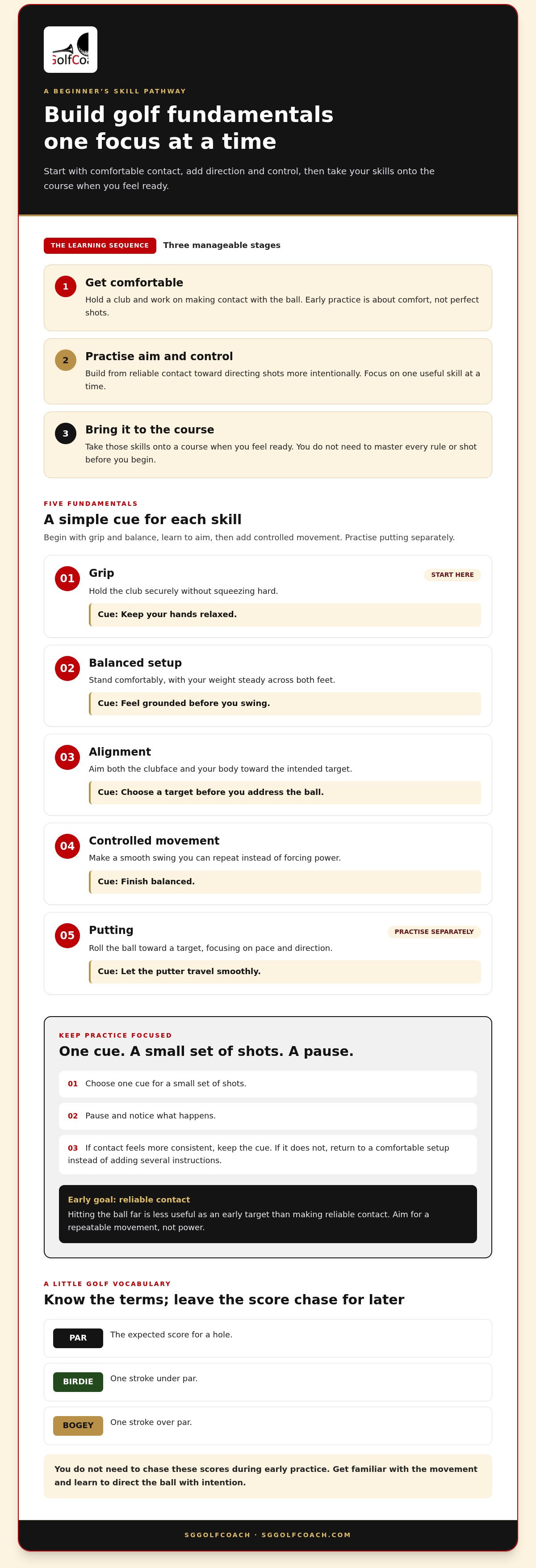
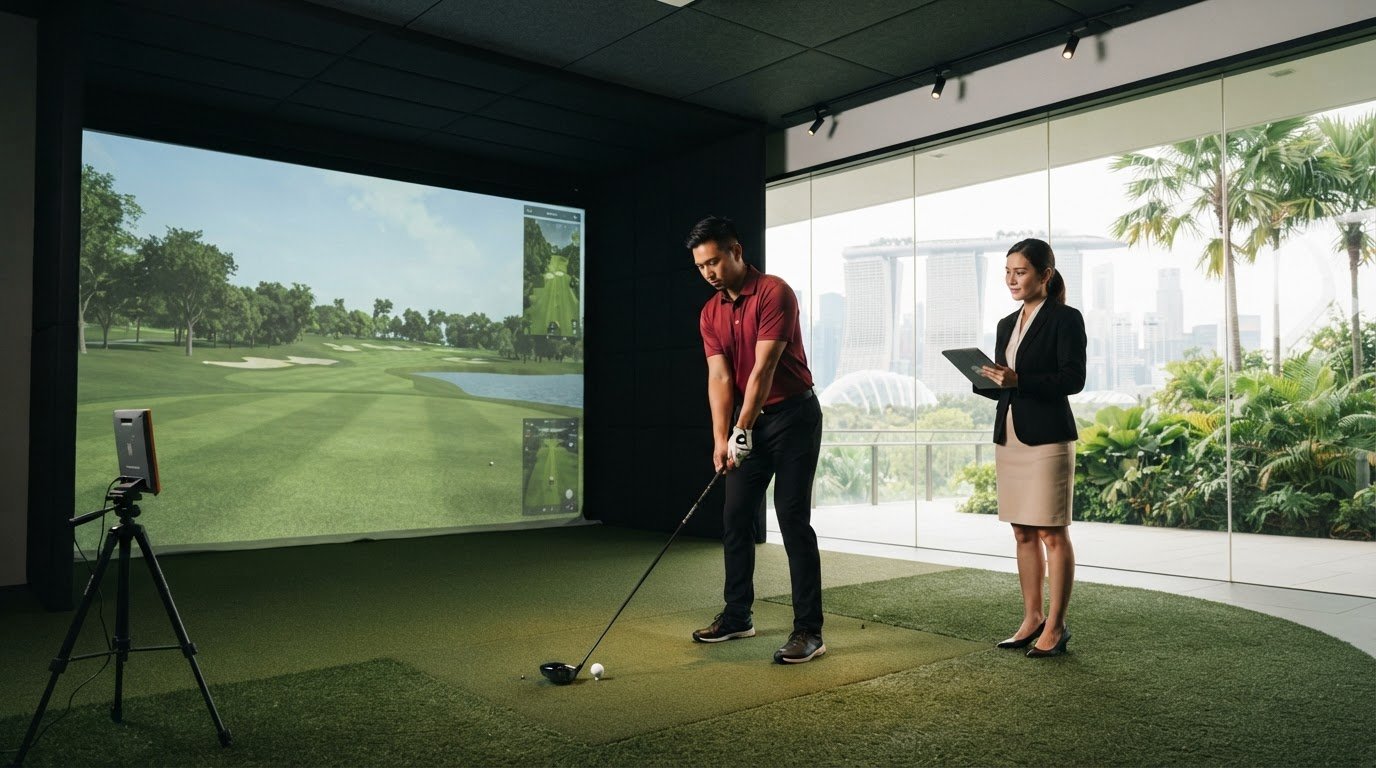
A practice area lets you work on shots without the decisions and pace of a full round. Indoor screen golf can also offer an environment for practice or play. If you’d prefer guidance, professional instruction can introduce fundamentals in manageable steps, with feedback shaped around what you’re working on.
There’s plenty to learn over time, from how play unfolds to the equipment and rules involved. For a broad reference, explore this overview of the history, rules, and equipment of golf. You don’t need to memorise it before your first practice. Start with curiosity, give yourself room to learn, and let each session make the next step more familiar.
Learn the golf fundamentals that make early practice more rewarding
A useful practice session has a clear focus. Rather than trying to fix your whole swing at once, work on one fundamental, notice what happens, then make a small adjustment. Reliable contact is a more useful early goal than hitting the ball far. This beginner golf guide for ladies keeps the essentials clear, so each practice visit has a purpose without becoming a technical checklist.
Which golf skills should a beginner learn first?
Begin with a comfortable grip and balanced setup, then learn to aim before adding speed. These cues offer a practical starting point:
Grip: Hold the club securely without squeezing hard. Cue: keep your hands relaxed.
Balanced setup: Stand comfortably with your weight steady across both feet. Cue: feel grounded before you swing.
Alignment: Aim the clubface and your body towards the intended target. Cue: choose a target before you address the ball.
Controlled movement: Make a smooth swing you can repeat instead of forcing power. Cue: finish balanced.
Putting: Roll the ball towards a target, focusing on pace and direction. Cue: let the putter travel smoothly.
Try one cue for a small set of shots, then pause and notice the result. If contact feels more consistent, keep that cue. If it doesn’t, return to a comfortable setup instead of adding several instructions at once. Practise putting separately: the shorter movement asks you to judge distance and direction with a different feel from a full swing.
How can women practise a golf swing without overthinking it?
There isn’t one swing style that every woman should copy. Your comfortable movement depends on your own body and coordination, so begin at an easy pace and aim to finish in balance. Focus on repeatable contact, not power. If the same difficulty keeps showing up, professional feedback can help you identify one adjustment to work on. Individual and group adult golf lessons offer structured instruction for building fundamentals.
Scoring terms make more sense when you connect them to the expected number of strokes for a hole: par is the expected score, a birdie is one stroke under par, and a bogey is one stroke over par. You don’t need to chase these scores during early practice. First, get familiar with the movement and learn to direct the ball with intention.
Keep practice encouraging by recording one observation after each session, such as “balanced finish” or “better contact with a slower swing.” This gives you a useful focus for next time without judging the whole session by one shot. For connection with other women golfers, the LPGA Amateur Golf Association is another resource to explore as your interest grows. A steady, personal approach makes fundamentals easier to carry from practice into play.
Choose beginner golf equipment for comfort and fit, not assumptions
It’s easy to think starting golf means buying a full set of clubs and a bag of accessories. You can begin more simply. A few manageable clubs are enough to explore basic shots, and a smaller setup keeps your choices focused as you learn what suits you. Equipment should support comfort and control, not create pressure to buy before you’re ready.
What equipment does a woman need to start golf?
For a first practice, think in essentials: a club or two, golf balls, tees, and footwear that feels secure and comfortable. A glove is optional. Some players like the grip it provides, while others prefer practising without one. You don’t need every club in a complete set to learn how to make contact and aim. Borrowing clubs or using practice equipment, where available, can help you explore before deciding what to purchase.
Use this comparison to choose a sensible first step:
How should a beginner think about women’s golf clubs?
A “women’s” label can be a helpful category, but it doesn’t tell you on its own whether a club suits you. Pay attention to length, weight, grip comfort, and how controllable the club feels through a smooth swing. Choose for fit and control, not gender stereotypes. Players vary, so don’t assume every woman needs the same club dimensions or feel.
As you try clubs, notice practical details: can you hold the grip without strain, set the club down comfortably, and move it at a pace you can control? If a club feels awkward, that’s useful information, not a sign that you need to swing harder. Avoid buying an advanced setup before you know which clubs you enjoy practising with.
Fitting can come later. Once regular practice gives you a clearer sense of what feels comfortable and where you want more control, a professional fitting can help you consider club dimensions in relation to your preferences. For now, start with what lets you practise comfortably, then refine your setup as your experience grows.
Prepare for your first practice session and golf round
A little structure can make your first visit feel far less uncertain. Start at a practice area, get comfortable with the routine, then consider a beginner-friendly round when you’re ready. This step-by-step approach gives you space to learn the setting as well as the shots, without expecting every part of golf to feel familiar on day one.
How should a beginner structure a first practice session?
Keep your first session focused and unhurried. Begin with a gentle warm-up, then choose one or two things to work on, such as comfortable contact and rolling putts towards a target. Pause between attempts to notice what happened. A brief reset can be more useful than hitting ball after ball without a clear purpose.
Settle in: Get familiar with the practice area and take a few easy swings without worrying about distance.
Work on longer shots: Use a club that feels manageable and focus on steady contact and direction, not power.
Make time for putting: Practise short rolls as well as longer shots, so your session includes more than full swings.
Review and finish: Notice one thing that felt comfortable and one question you’d like to explore next time.
What golf etiquette should a woman beginner know?
Etiquette helps everyone play safely and enjoy the round. Pay attention to whose turn it is, stay aware of where other players are standing, and don’t swing until the area ahead is clear. Be ready to play when it’s your turn, and keep moving with your group at a comfortable pace. If you’re unsure about a routine, ask your playing partner or instructor. Learning as you go is expected; perfect shots aren’t a condition for being courteous.
Before heading out, read the course’s instructions. Dress expectations can differ, so choose comfortable clothing that lets you move freely and follow the venue’s guidance. Lightweight, breathable layers and suitable footwear can help you feel at ease in Singapore’s warm conditions. There isn’t one universal outfit rule for every course.
When you’re ready to try a round, choose a setting and format suited to your confidence, and play with someone patient if possible. You can also use indoor screen golf as a practice or play environment before heading out to a course. A broader beginner golf lessons guide can help you shape what to learn next, while a structured adult golf lesson can offer practical instruction and feedback as you prepare. Take the first step at your pace, then let each visit make the next one feel more familiar.
Build a sustainable beginner golf plan with supportive coaching
Progress is easier to sustain when your golf routine fits your real life. Choose a rhythm around your available time, confidence, and goals rather than copying someone else’s schedule. If you’re curious about playing socially, prioritise getting comfortable with the basics. If there’s a particular shot or movement you want to work on, make that the focus of your next practice session.
A simple plan might include a practice opportunity during a week when your schedule allows, with a lesson or screen-golf session as another way to learn. On a busier week, a brief, focused session can help keep the game familiar. Aim for a rhythm you can return to, not a demanding timetable that makes golf feel like another obligation.
Should a beginner take golf lessons?
Lessons can provide structure, observation, and feedback matched to your current ability. An instructor can help narrow a frustrating pattern down to one useful adjustment, so you know what to try next instead of carrying a list of swing changes in your head. Individual coaching gives focused attention to your questions. Group lessons offer a shared learning experience and the chance to practise alongside others.
If you’re weighing those formats, a comparison of group and private golf lessons can help you consider which learning environment feels more comfortable. Either can support a beginner. The right choice depends on whether you value individual feedback, learning with others, or a blend of both.
How can beginners keep improving between lessons?
After a lesson, choose one takeaway and practise that idea before adding another. Keep a short note on what you noticed, such as whether contact felt more reliable, where the ball tended to travel, or how confident you felt setting up. These observations give your next practice session direction and help you describe specific questions when you meet your instructor again.
Practice doesn’t have to happen in only one setting. Indoor screen golf offers another environment for practice or play, and a guide to indoor golf can help you explore how it fits into your learning routine. Choose the format that makes it easier to stay engaged and work on a manageable goal.
A beginner golf guide for ladies is most useful when it leads to a plan that feels personal, flexible, and enjoyable. You can learn independently, add group instruction for a shared experience, or choose one-on-one coaching for focused feedback. There’s no need to have every goal figured out before starting. If you’d value a supportive structure, explore adult golf lessons and choose a learning approach that suits your next step.
Make your next step your own
Your golf journey doesn’t need a fixed timeline or a perfect first round. Let curiosity guide what comes next: perhaps you want to practise independently, feel more at ease playing with others, or get a clearer sense of what to work on. Choose a goal that makes you look forward to returning to the game.
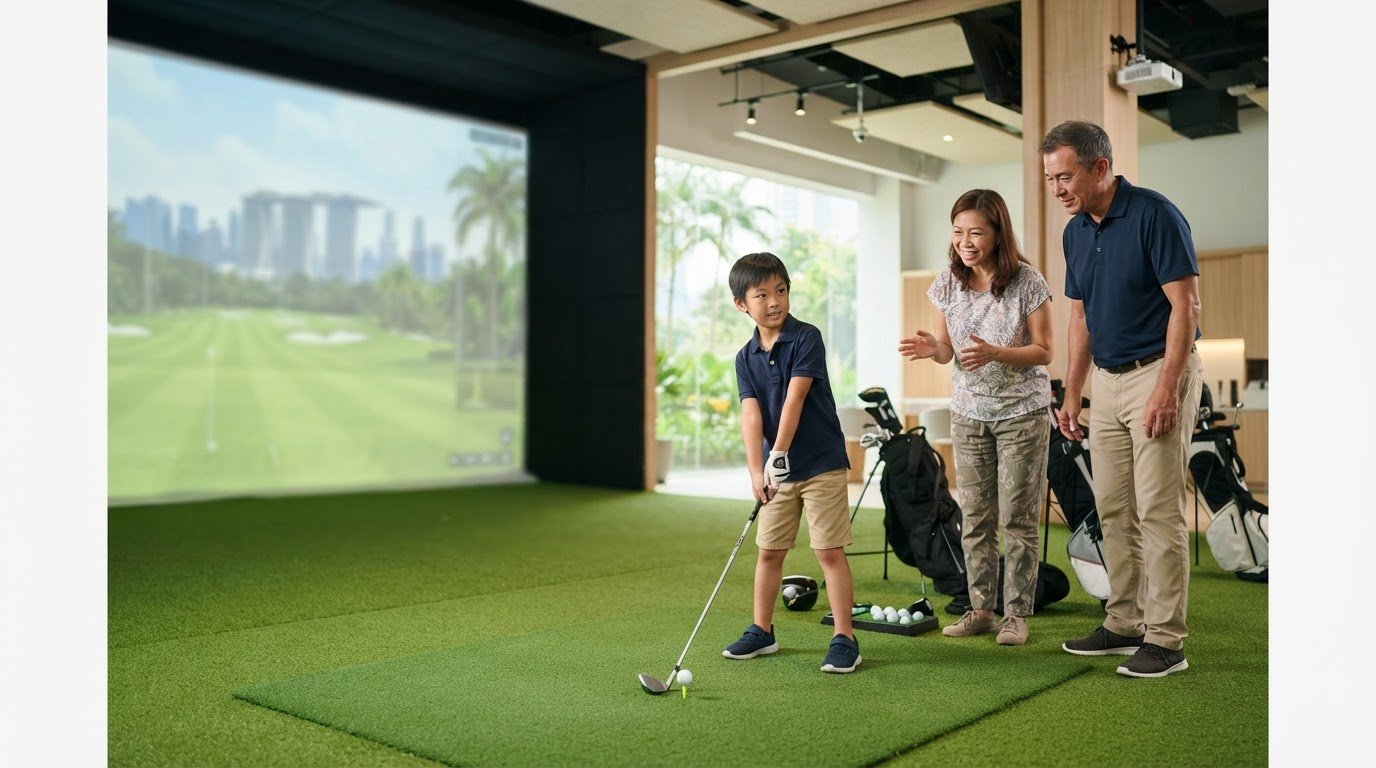
If you’d like support as you build confidence, professional instruction for adult learners can offer a welcoming place to continue. Choose the learning format that feels right for you, from individual lessons and group classes to indoor screen-golf experiences. Each offers a different way to learn, practise, and stay connected to your goals.
Keep the spirit of this beginner golf guide for ladies with you: progress doesn’t have to be rushed to be meaningful. Explore adult golf lessons and take your first step with supportive coaching. Your next chapter in golf can start with a single, comfortable step.
Frequently Asked Questions
Is golf difficult for a woman beginner?
Golf can feel challenging at first, but it isn’t inherently more difficult for women. Unfamiliar parts, such as choosing a club or knowing when it’s your turn, become easier with experience. In a beginner golf guide for ladies, a useful measure of progress is personal comfort, not matching another player’s skill. Try a practice setting first if joining a full round feels daunting.
Can I start playing golf without buying a full set of clubs?
Yes, you can begin without owning a complete set. Borrowing clubs or using equipment available at a practice venue can let you try different options before purchasing anything. If you’re attending a lesson, find out what you’ll need to bring for that session. Once you’ve practised enough to know which clubs feel comfortable and what kind of play interests you, you’ll have a clearer basis for choosing your own setup.
What golf clubs does a beginner woman need?
A beginner can start with a small selection rather than carrying a club for every possible shot. For example, a putter, a wedge for shorter shots, and a mid-range club can introduce different types of play. The best combination depends on what you’re practising and which clubs feel controllable. If you’re borrowing clubs, notice which ones you reach for naturally, then use that experience to guide future choices.
How should a beginner practise a golf swing?
Practise with one clear intention rather than trying to change several parts of your swing. For example, rehearse a slow movement without a ball, then make a few easy swings and notice whether you stay balanced. When you add a ball, focus on a comfortable, repeatable motion instead of distance. If you keep seeing the same issue, note what happens and bring that specific question to an instructor.
What should a woman wear for her first golf lesson?
Choose comfortable clothing that lets you turn, bend, and move your arms freely. In Singapore’s warm climate, breathable fabrics can help you stay comfortable during practice. Wear secure footwear suited to the lesson setting, and follow any clothing guidance provided for the venue. You don’t need a highly technical outfit to focus on learning, but clothes that restrict movement or footwear that feels unstable can make practice less comfortable.
Do I need golf lessons to learn how to play?
No, lessons aren’t essential for getting started. You can explore golf independently, practise at your own pace, and learn the basics as you go. Professional instruction can be useful if you’re unsure what to work on, want feedback on a particular difficulty, or prefer a more organised learning path. A lesson can help you focus your practice, while independent sessions give you room to become familiar with the game.
How long does it take to become comfortable playing golf?
There’s no fixed timeline because comfort depends on your practice, goals, and how often you encounter different situations. You might feel at ease at a practice area before you’re ready for a full round, and that’s a reasonable progression. Set personal milestones, such as feeling prepared to begin a session or knowing what to do between shots. Notice those small signs of familiarity instead of waiting for every part of golf to feel effortless.

Comments