

Mental Game of Golf Tips: Build Focus, Confidence, and Composure

What if your best response to a bad shot isn’t trying harder, but following a simple routine? A missed fairway or a pressured putt can unsettle your confidence and cloud decisions for several holes. The most useful mental game of golf tips turn focus and composure into practical habits, not vague advice to “stay positive.”
It’s understandable to feel pressure when you’re unsure of your target or replaying a mistake while preparing for the next shot. You can learn to reset, make a clear decision and commit to it, even when a round isn’t going to plan.
This guide shares repeatable steps for preparing before each shot, recovering constructively after mistakes and managing your attention throughout a round. You’ll also learn how to practise mental skills alongside swing technique and course management, so your routines feel familiar when they matter.
Table of Contents
What the Mental Game of Golf Really Means, and Why It Matters
A golf round asks you to manage more than your swing. You’re directing your attention, responding to emotions, trusting a decision and choosing a shot while conditions and results remain partly outside your control. These skills can help you stick to a sensible plan instead of hesitating, changing your mind or letting the moment dictate your next move. They support clearer decisions, but they can’t guarantee a particular score.
The mental game of golf is how you direct your attention, manage your emotions, trust your choices and make decisions throughout a round. It’s a practical skill set, not a demand to stay cheerful or confident after every shot. Golf instruction can also include mental performance development, connecting mindset with the wider process of learning the game.
Separate what you can influence from what you can’t. You can assess a lie, select a target and decide how to play the shot. You can’t control an unexpected bounce, changing weather or an opponent’s performance. Focusing on your preparation and choices gives you a useful next step, even when the outcome doesn’t match your intention.
Which mental skills matter during a round?
Focus means bringing your attention back to the current shot instead of replaying a mistake or worrying about the holes ahead. Confidence isn’t believing you’ll execute perfectly; it’s choosing a reasonable option and committing to it. Emotional regulation means noticing frustration or excitement without letting it dictate your next decision. Together, these skills help you assess the moment, make a choice and respond constructively.
Why do good golfers still feel pressure?
Nerves aren’t proof that you lack ability. They can arise when the result matters and the outcome feels uncertain, whether you’re facing a demanding carry or trying to protect a good round. The key is what happens next. Thoughts about the final score, a potential miss or how others are playing can pull your attention away from the decision in front of you. Mental skills develop through deliberate repetition, just like other parts of your game. Practising them alongside technique and course management turns broad advice into habits you can use.
Use a Pre-Shot Routine to Focus on One Decision at a Time
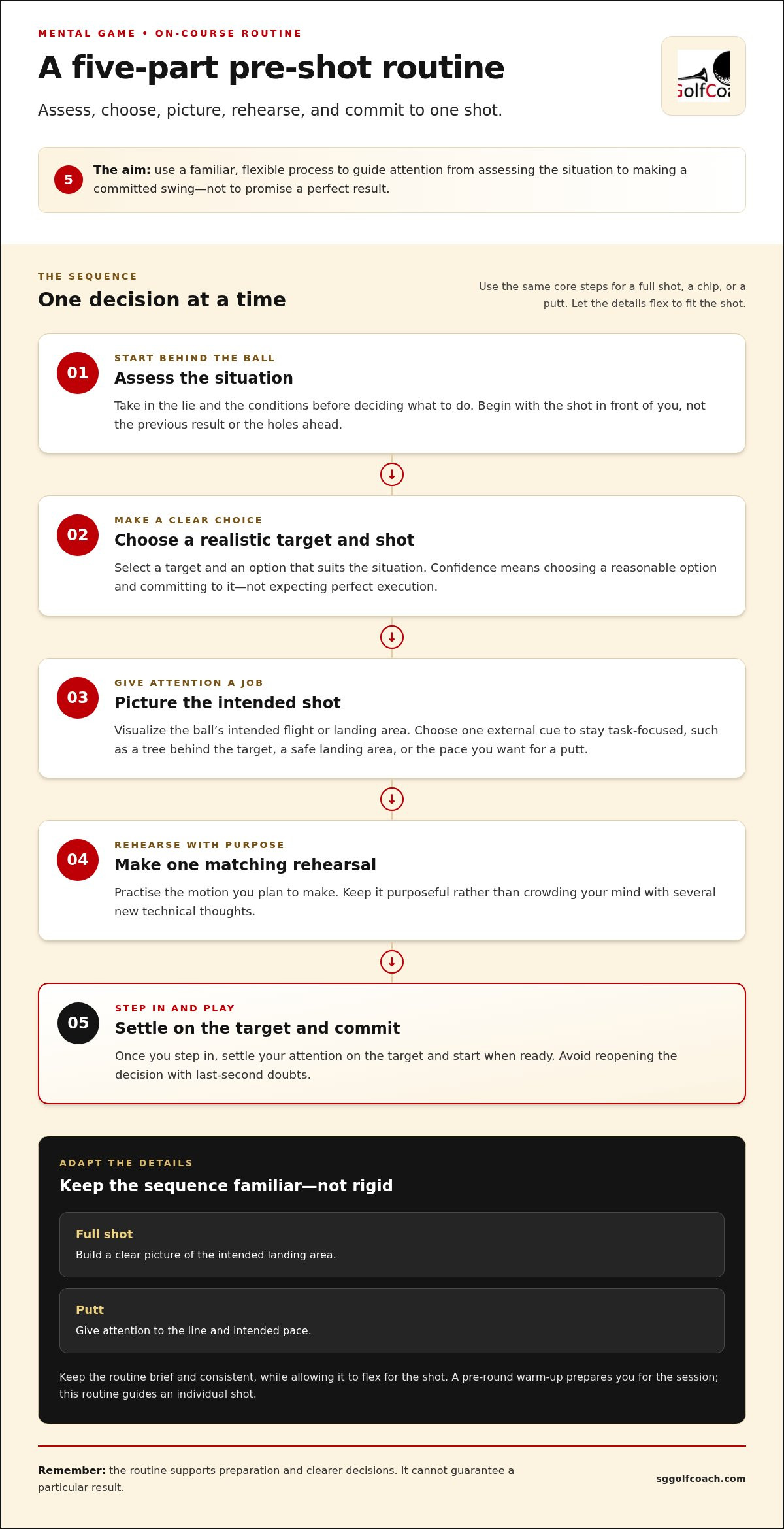
A reliable pre-shot routine guides your attention from assessing the situation to making a committed swing. It doesn’t need to look like a professional golfer’s routine, and it shouldn’t become a rigid checklist that adds pressure. The aim is a familiar process you can use for a full shot, a chip or a putt.
A pre-shot routine is a repeatable way to assess, choose, picture, rehearse and commit to one shot, not a promise of a perfect result. These practical mental game of golf tips work best when you make the sequence your own and practise it until it feels natural. A pre-round warm-up prepares you for the session; the routine below guides an individual decision.
How to build a simple routine before each shot
Begin behind the ball. Assess the lie and conditions, then choose a realistic target and a shot that suits the situation. Picture the ball’s intended flight or landing area. Take one purposeful rehearsal that matches the motion you plan to make, rather than filling your mind with several new technical thoughts. Step in, settle your attention on the target and start when you feel ready.
Keep the sequence brief and consistent, but allow it to flex. A putt may call for a look at the line and intended pace, while a full shot may need a clearer picture of the landing area. The mental fitness tips from the pros offer further perspective on using routines and managing pressure.
What should you focus on while playing?
Choose an external cue that connects you to the shot: a tree behind your target, a safe landing area or the pace you want for a putt. These cues keep your attention on the task instead of crowding your mind with several swing mechanics at once. Once you’ve stepped in, avoid reopening the decision with last-second doubts.
Focus on this shot, not a score projection or what happened on the previous hole. If you’re learning the fundamentals alongside your routine, this beginner golf lessons guide can help connect basic skills with confident preparation. Tailored instruction can also give you structured feedback as you practise routines alongside swing technique and course management. Learn more about golf coaching and instruction.
Handle Pressure and Recover After a Poor Golf Shot
A poor shot can trigger frustration, embarrassment or worry about what comes next. Feeling that reaction doesn’t mean you’re mentally weak. Even experienced golfers can feel nervous or annoyed; the useful skill is noticing the feeling and choosing how to respond rather than letting it steer your next decision.
A reset won’t change where the previous shot finished. It can help you return to the present, assess the situation and decide what to do next. Treat these steps as a starting point, not a guaranteed fix, and adjust them to what feels natural for you.
Notice: Name the reaction briefly, such as “I’m frustrated,” without judging yourself.
Breathe: Take a comfortable exhale and release any tension you notice.
Accept: Acknowledge the result. Avoid replaying the swing or demanding that the shot had gone differently.
Refocus: Turn to the next useful choice, such as a safe target or the best way to play from your current lie.
What to do after a frustrating shot
Keep the reset simple. “That’s frustrating” recognises the emotion; “I always ruin this hole” turns one result into a judgement about your ability. Register the miss, exhale comfortably and loosen your grip or shoulders if they feel tense. When you’re ready, assess the lie and choose a practical target. The purpose is to support your next decision, not erase disappointment on command.
How to respond when nerves rise
Nerves may show up as tightness, a hurried setup or repeated changes to your plan. Treat these as signals to pause briefly, not proof that you’re failing. Give yourself enough time to settle on a clear target and follow your routine while keeping play moving. Choose one simple cue, such as “smooth tempo” or “finish at the target,” rather than stacking several swing instructions.
These mental game of golf tips are skills to practise, not rules that every golfer must follow in exactly the same way. A short reset may help one player; another may prefer a quiet moment to look at the target. Notice what helps you return to a useful decision, then practise that response during routine sessions so it feels familiar when pressure builds.
Practise Golf Mental-Game Tips Away from the Course
Mental habits are easier to use under pressure when you’ve rehearsed them during ordinary practice. A driving range, putting green or screen-golf session gives you space to work on attention and decision-making alongside physical skills. Keep the experiment focused: practise one mental habit at a time so you can tell whether it feels clear and repeatable.
Track the choices you can practise, not only the results you can’t fully control. For example, notice whether you completed your routine and committed to your target. A good decision can still lead to an imperfect shot, so your score alone won’t show whether your process is developing.
A simple mental-skills practice plan
Choose one cue for the session, such as “target first.” Before selected shots, pause to choose a target, picture the intended result, rehearse and commit. Avoid hitting ball after ball without a moment to make a decision. That pause is what lets you practise the mental skill, not just the swing.
After practice, make a brief note: What felt clear? What distracted you? Did the cue help you stick with your decision? Keep the record simple, then use it to decide whether to repeat the same habit next time or make a small adjustment. If you practise on a simulator, treat each shot as a fresh decision rather than focusing only on the session’s overall score.
Review a round without dwelling on mistakes
A useful review is balanced. Note a moment when you stayed composed, chose a suitable target or followed through on a decision, even if the shot didn’t produce the result you wanted. Then identify one situation you’d handle differently next time. Keep it specific, such as choosing a safer target from a difficult lie, rather than labelling the whole round a success or failure.
Course choices and mental habits work together: a clear plan gives you something practical to focus on. Consider how your target, lie and intended shot shape affect the decision. If you’d value structured feedback as you practise, explore tailored golf coaching to work on mental routines alongside technique and course management.
Make Your Mental Game Part of a Personal Golf Development Plan
You can start independently with a simple routine and a brief review after practice or a round. If the habit feels useful and you can repeat it, build gradually. The mental game doesn’t need a separate, complicated programme: attention, confidence and composure can develop alongside swing technique and course management.
Tailored feedback may help when the same pattern keeps disrupting your play, such as rushing over important shots, changing your decision at the last moment or losing focus after a mistake. A coach can help you notice when the pattern appears and connect a practical cue, such as “finish at the target,” with a technical goal. For a broader look at instruction, read this guide to professional golf coaching.
When can coaching help with mental-game habits?
Consider structured feedback if you’ve practised a routine but find it difficult to use in a recurring situation. For example, you may commit during range practice but hesitate when choosing a target on the course. An instructor can work with you on that decision as part of your wider learning, relating your mental cue to swing technique and course management rather than promising a particular result.
SgGolfCoach offers adult and junior instruction, with one-to-one and group coaching tailored to golfers’ learning needs. Bespoke coaching can provide an individual structure for working on personal goals. The aim is to support thoughtful practice and clearer feedback, not to guarantee lower scores.
Choose a next step that fits your learning style
Start with one routine and practise it consistently before adding another technique. You might work on choosing a target before every practice shot, or use a familiar cue whenever you notice tension. Review whether you followed your process, not just whether the ball finished where you hoped. This keeps progress grounded in actions you can repeat.
If you’re learning the game, adult or junior instruction can help make those habits part of a broader development plan. Group coaching offers a shared learning setting; one-to-one guidance allows feedback to focus on your individual goals. Choose an approach that feels manageable and supports the way you learn.
For a considered next step, explore tailored golf coaching and build your mental routines alongside the rest of your game.
Build Your Next Round Around a Clearer Mindset
The most useful mental game of golf tips are the ones you can repeat: prepare for each shot with a simple routine, respond to mistakes without letting them define your next decision, and practise mental habits alongside your golf skills. Progress isn’t about never feeling pressure. It’s about returning your attention to the choice in front of you.
Start small. Choose one routine or focus cue and use it consistently in practice. Notice whether you’re following your process, not only where each shot finishes. Reflection and thoughtful feedback can help connect mental habits with swing technique and course management.
SgGolfCoach provides professional instruction for adults and juniors at different skill levels, with one-to-one, group and bespoke coaching, as well as indoor screen-golf experiences. If you’d like structured support for your next stage of learning, explore tailored golf coaching with SgGolfCoach.
Take it one decision at a time. A steadier approach can make every round a more rewarding opportunity to learn.
Frequently Asked Questions
What are the best mental game of golf tips for beginners?
Start with a simple routine you can repeat: assess the shot, choose a target, picture the result, rehearse, then commit. Keep your attention on one decision instead of trying to control every part of your swing. After each shot, note what you learned without judging your ability by the outcome. These mental game of golf tips are most useful when they feel manageable and fit naturally alongside learning golf fundamentals.
How can I stay calm under pressure in golf?
You don’t need to eliminate nerves to make a clear decision. Notice signs such as tension or a rushed setup, take a comfortable breath and return to your routine. Choose one practical cue, such as focusing on the target, rather than adding several swing thoughts. Give yourself enough time to prepare while keeping play moving. With practice, this process can help you respond to pressure in a way that suits you.
How do I stop thinking about a bad shot?
You may not be able to stop the thought immediately, but you can choose not to keep feeding it. Briefly name the reaction, such as “I’m disappointed,” and accept that the shot is finished. Then shift to the next useful decision: assess your lie, identify a realistic target and plan your response. This doesn’t change the previous result; it gives your attention somewhere constructive to go next.
Does a pre-shot routine really improve golf performance?
A pre-shot routine can support focus and help you commit to a decision, but it can’t guarantee a better score or perfect execution. Use a flexible sequence to assess the situation, select a target, picture the shot, rehearse and begin. Adjust it for a putt or a full swing rather than following a checklist mechanically. Practise the routine so it feels familiar when you need to make a clear choice.
What should I focus on during a golf swing?
Choose one simple cue that connects you to the shot, such as the target, the landing area or the intended pace of a putt. Too many technical instructions can make it harder to stay committed once you begin. If you’re working on a specific swing change, follow the cue you’ve been practising rather than adding new thoughts mid-swing. The right focus can differ between golfers and may depend on the shot.
Can mental game skills be practised at the driving range?
Yes. The driving range is a useful place to rehearse mental habits alongside your swing. Pick one cue, pause before selected shots to choose a target, then follow your preparation routine instead of hitting balls automatically. Afterwards, note whether you stayed with your plan or what distracted you. Focus on process measures, such as completing the routine and committing to the decision, not only where each ball lands.
How do I build confidence in golf?
Build confidence through preparation and evidence, not by expecting every shot to be perfect. Practise routines and shots you can use on the course, then notice when you make a sensible decision and commit to it, whatever the outcome. If the same doubts keep disrupting your learning, structured feedback can help connect mental cues with swing technique and course management. Confidence grows as you become more familiar with your own process.


Comments